
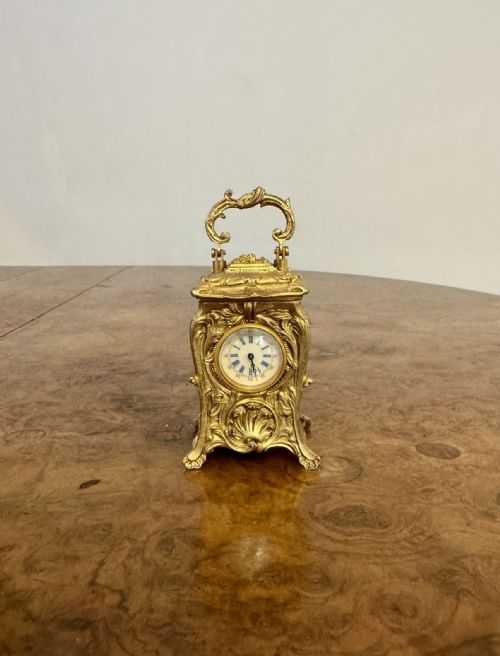


Gilt Brass Travel Clock
A gilt brass travel clock is a portable timepiece designed for transit, offering mechanical precision housed in decorative metal frames.

Gilt Brass Travel Clock
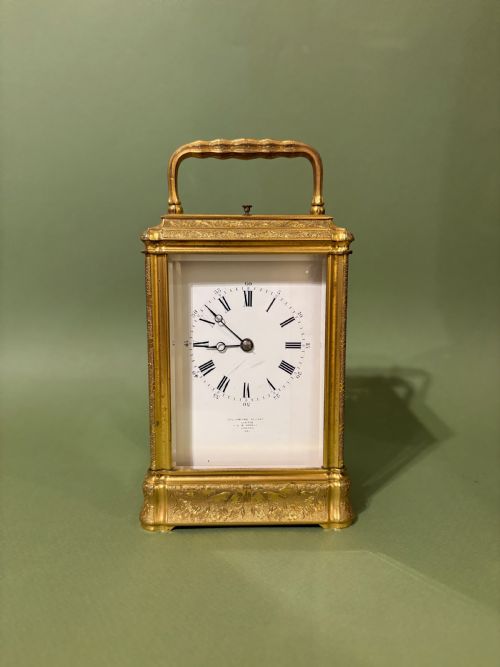
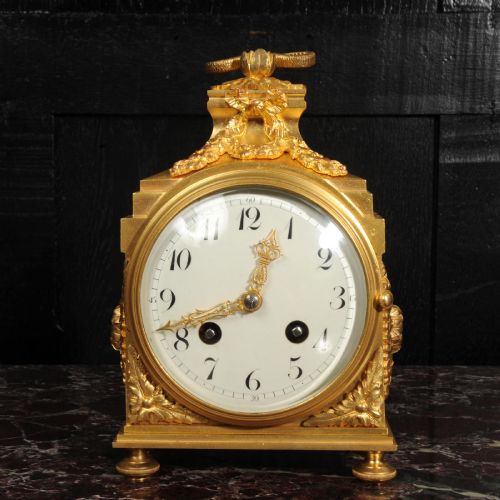
A gilt brass travel clock is typically a carriage clock produced during the nineteenth century, including the Victorian period and French Second Empire or Empire styles.
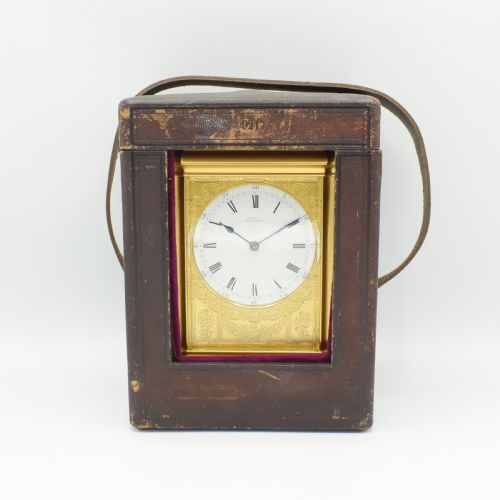
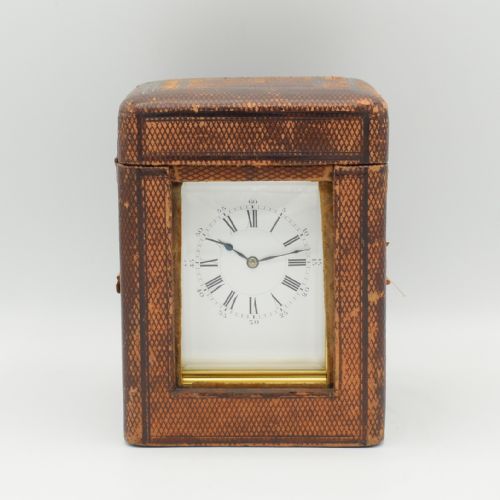
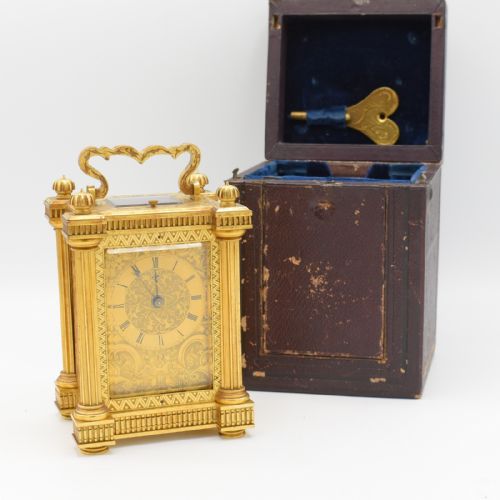
These pieces take the form of portable clocks housed in glazed metal cases, frequently supplied with travel cases for protection during journeys.
Most examples originate from French workshops or London makers, appearing in standard formats as well as miniature or large sizes.
How they were made
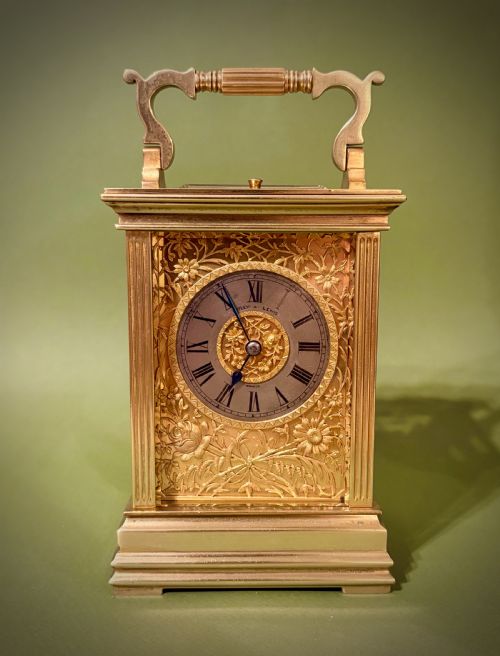
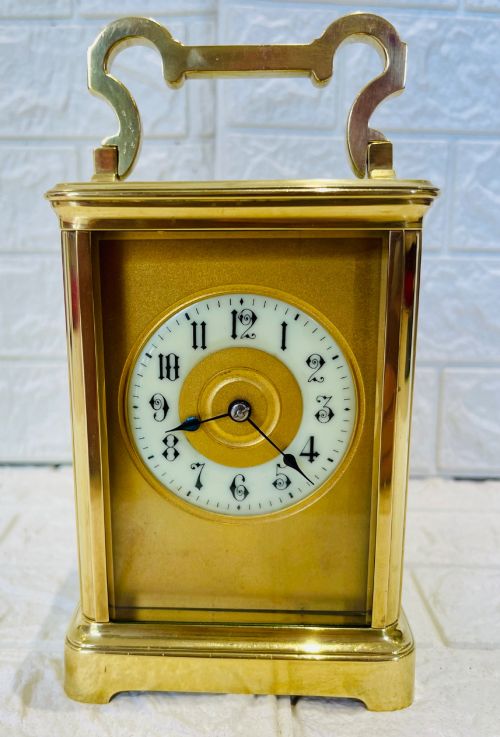
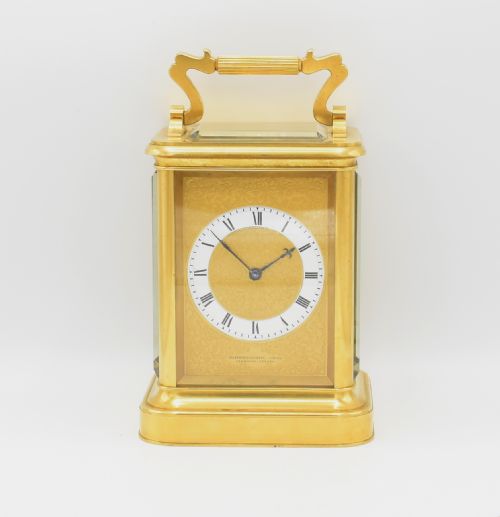
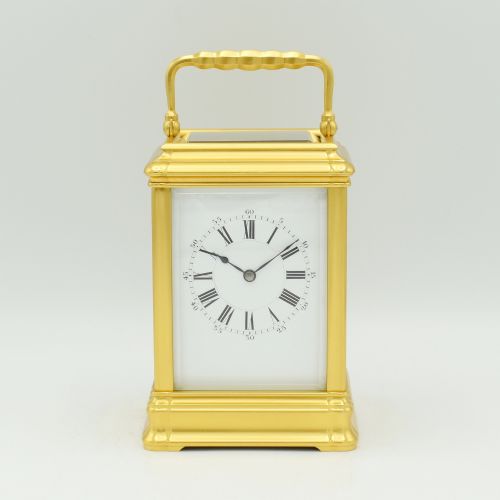
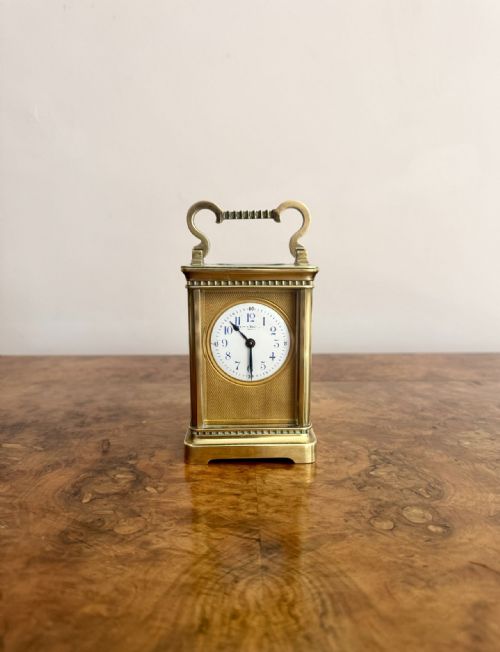
Makers constructed these clocks using brass, gilt brass, and ormolu frames fitted with glass panels to reveal the movement within.
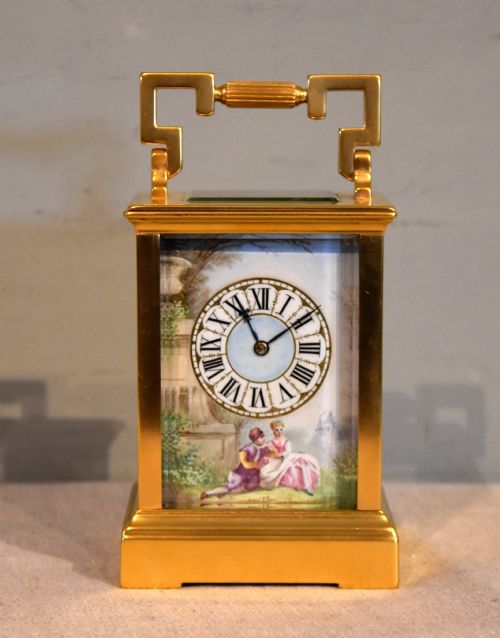
Dials utilised enamel, sometimes featuring painted scenes or porcelain mounts, paired with metal hands and precision gear trains.
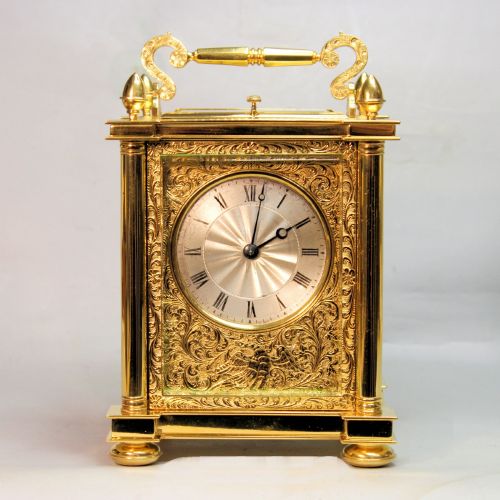
Cases often received engraved surface decoration, while exterior fittings incorporated silvered metal, bronze, and leather travel cases.
Gilt Brass Travel Clock Retail Price Guide 2026
Typical asking prices for gilt brass travel clock among the pieces listed under this phrase on Sellingantiques today, from the lower quarter to the upper quarter. They describe what is for sale here now, not the wider market.
Current listings feature pieces spanning the Victorian era, the nineteenth century, and French periods from 1850 to 1900.
What varies in quality
Quality diverges between standard timepieces and complex movements equipped with repeating mechanisms, quarter striking, or grand sonnerie functions.
The refinement of the cast and engraved gilt brass case, alongside the presence of painted enamel panels, separates standard production from superior examples.
Wokmanship in the platform escapement and the signed output of notable makers distinguish the highest grade of surviving clocks.
HENRI JACOT·COUSENS & WHITESIDE·Howell & James London·Goldsmiths Alliance Ltd·Brunelot·Gontard & Bolviller Paris·Paul Garnier·Mappin and Webb
The Gilt Brass Travel Clock Glossary
- Carriage clock
- A portable spring-driven clock designed for travel during the nineteenth century. These clocks usually feature a swinging handle on top and glass panels on all sides.
- Repeater
- A mechanism that sounds the hours and quarters upon demand when a lever or button is pressed. This complication required sophisticated internal gearing.
- Platform escapement
- The tiny horizontal assembly containing the balance wheel and hairspring located visible on top of the movement. It replaced the pendulum for portable use.
- Grand sonnerie
- A striking train that sounds the hours and the current quarter-hour automatically on every quarter. It represents a high level of horological achievement in these clocks.
Gilt Brass Travel Clock: Frequently Asked Questions
How do I wind a carriage clock?
These clocks use a dedicated winding key inserted into square arbors located on the backplate of the movement. Care must be taken not to overwind the mainspring.
Most eight-day movements require winding approximately once a week to maintain accurate timekeeping.
What is a repeating carriage clock?
A repeating carriage clock includes an extra mechanism that sounds the last hour and quarters when a button on the top is pushed down. This allowed users to tell the time in the dark.
Such repeating complications are found on many fine French examples from the nineteenth century.
Why do some clocks have travel cases?
Original leather outer cases protected the gilt brass frames and glass panels from knocks and scratches during Victorian journeys. Surviving cases add context to the clock's original purpose.
Clocks retained inside their fitted leather cases are particularly prized by collectors today.
How do I date an antique travel clock?
Dating relies on stylistic clues such as the shape of the brass case, the design of the enamel dial, and signature engravings on the backplate. Victorian and nineteenth-century French pieces often display distinct casework proportions.
Maker signatures and registration marks also help narrow down the period of production.