
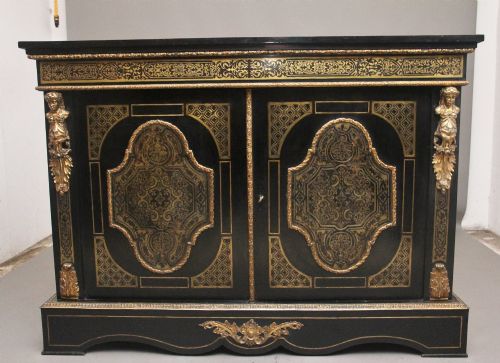
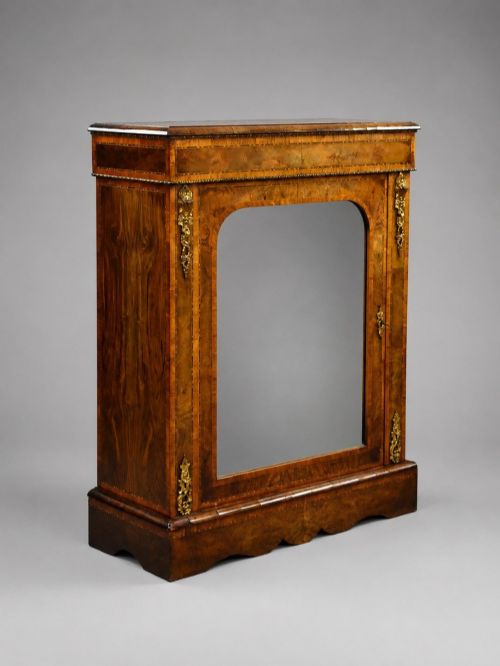
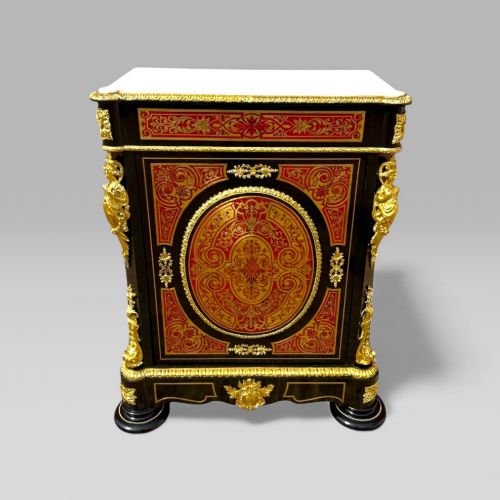


Gilt Brass Mounted Credenza
A gilt brass mounted credenza offers grand display space, combining dark timber and ornate metalwork to anchor a formal interior.
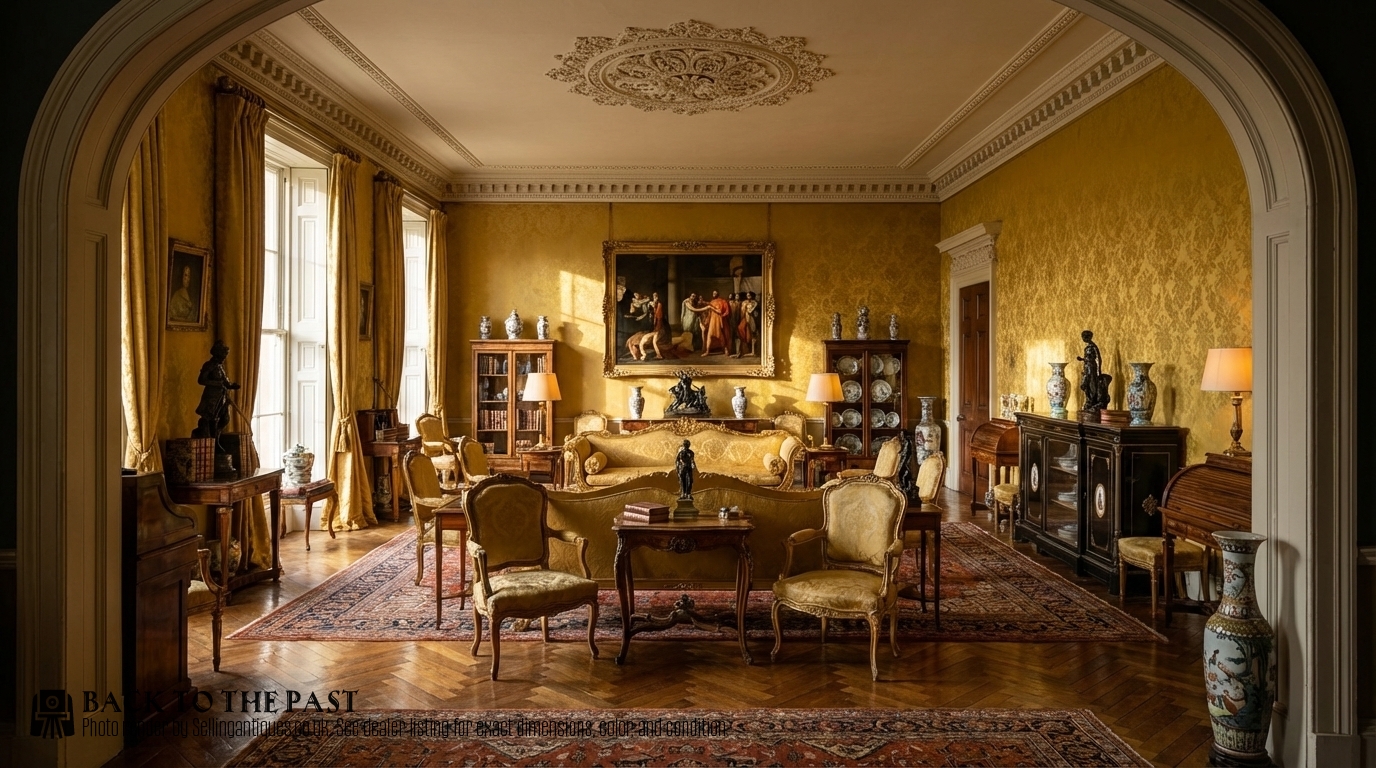
Gilt Brass Mounted Credenza
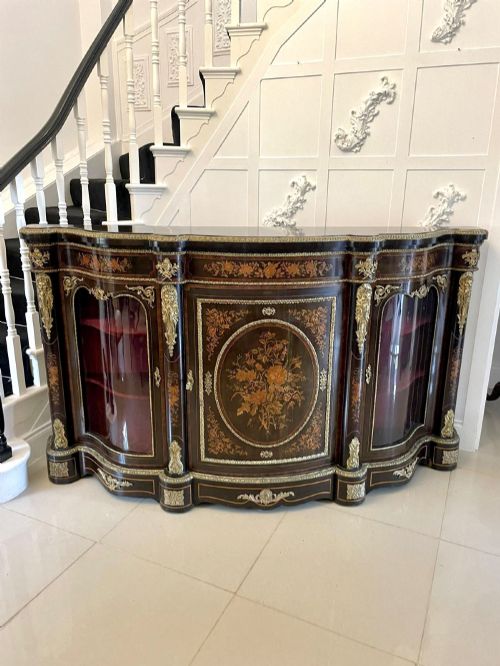
When you search for a gilt brass mounted credenza, you are looking at substantial nineteenth-century furniture designed for formal reception rooms. These pieces combine enclosed storage with prominent display surfaces, frequently taking serpentine or breakfront forms.
The most common versions met on this page are Victorian and French Napoleon III ebonised cabinets. They rely on dark woods like rosewood and walnut, contrasted with polished metal mounts and glass panels.
How they were made
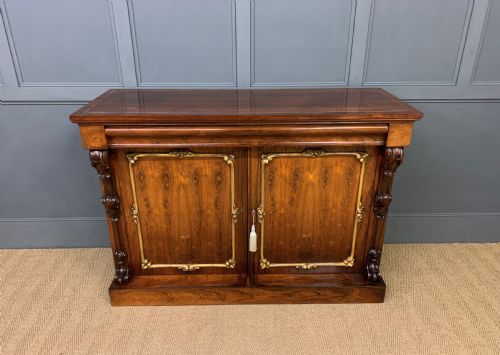
Cabinetmakers constructed carcass frames from timbers such as rosewood, mahogany and walnut, often applying ebonised finishes to mimic ebony. Surfaces frequently received intricate marquetry, parquetry or boulle work using tortoiseshell and brass inlay.
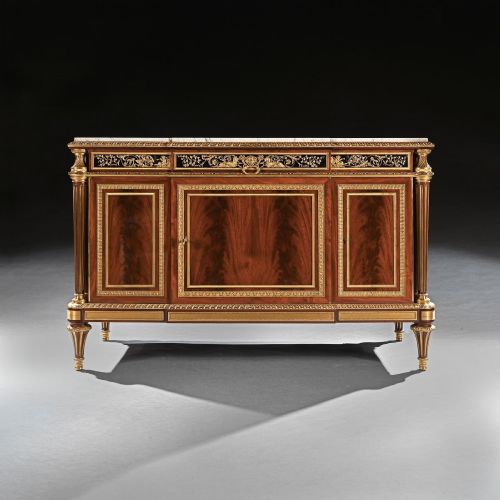
Casting and chasing created the ormolu and gilt brass mounts that edge the doors, corners and plinths. Marble tops, fitted shelving and inset ceramic plaques complete the construction of these elaborate cabinets.
Materials recorded across pieces include ormolu, brass, glass, ebonised wood, rosewood, marble, gilt bronze, and tortoiseshell.
What varies in quality
Quality rests upon the crispness of the cast brass and ormolu mounts, where hand-chasing yields sharp detail rather than soft definition. The precision of the marquetry and the selection of figured veneers likewise separate standard production from superior examples.
Internal construction, including original door locks, fitted shelving and heavy marble slabs, defines the integrity of the piece. Heavy timber framing and tight cabinet joints ensure the structure supports its decorative elements without sagging.
Henry Dasson·Louis Constantin Le Gaigneur·Gillows·Weisweiler·Riesener
The Gilt Brass Mounted Credenza Glossary
- Ormolu
- Gilded bronze used for decorative mounts on furniture. It provides a bright metallic contrast against dark timber surfaces.
- Boulle work
- Marquetry technique using brass and tortoiseshell inlaid in counterpoint patterns. It is named after the master cabinetmaker André-Charles Boulle.
- Marquetry
- Decorative veneer work forming pictorial or geometric patterns using various coloured woods. Craftsmen cut these patterns by hand to fit precisely into the surface ground.
- Serpentine
- A furniture front curving inward centrally and outward at the sides. This shape requires advanced woodworking skill to align the grain and mounts.
- Breakfront
- A cabinet facade where the central section projects forward from the flanking sides. It adds architectural depth and visual weight to large sideboards.
Gilt Brass Mounted Credenza: Frequently Asked Questions
How do I identify a Victorian credenza?
Victorian credenzas often utilise ebonised wood, walnut or rosewood carcasses with extensive marquetry and porcelain plaque inlays. They frequently appear in breakfront or serpentine shapes.
British examples from this era tend to favour burr walnut and floral marquetry. French Napoleon III pieces from the same decades often employ boulle work and heavy ormolu mounts.
Where were these cabinets used?
These cabinets were primarily placed in the principal reception rooms of grand nineteenth-century houses. They stood against drawing room walls to anchor the room's decorative scheme.
The flat marble or timber top provided a surface for lamps and ornaments. Meanwhile, the interior shelves held books, tea services or collection items.
How do Regency cabinets differ?
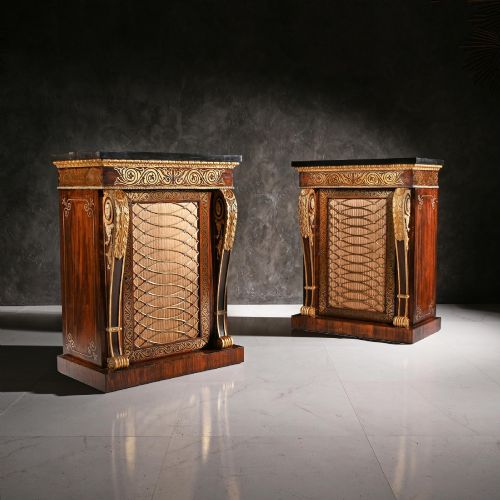
Regency cabinets date from earlier in the nineteenth century and generally show cleaner classical lines. They commonly use rosewood and feature brass inlay rather than heavy cast mounts.
Proportions are often more rectilinear compared to later Victorian serpentine designs. Brass lattice grilles frequently replace glass door panels on Regency side cabinets.