




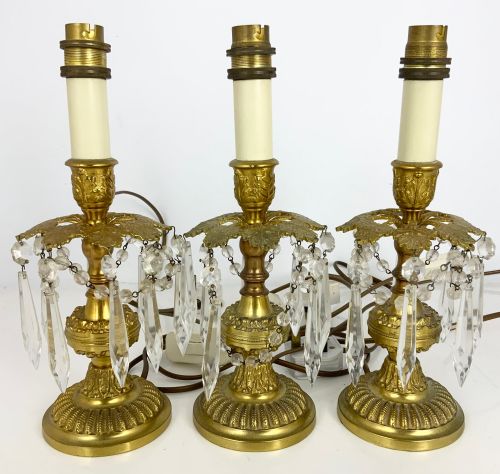


Gilt Brass Lustres
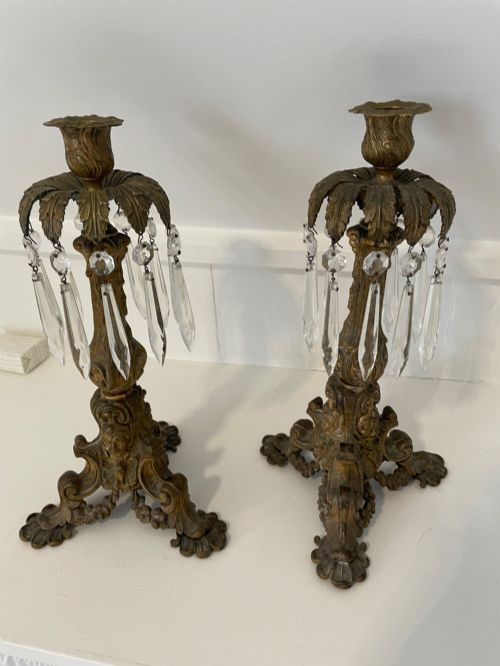
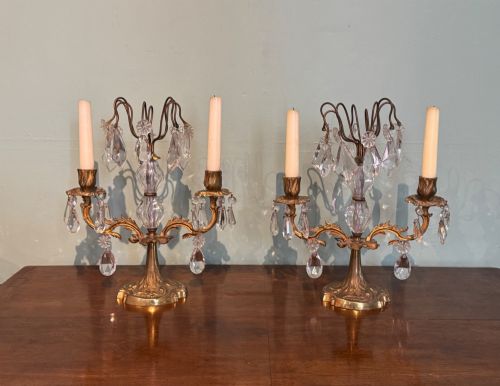
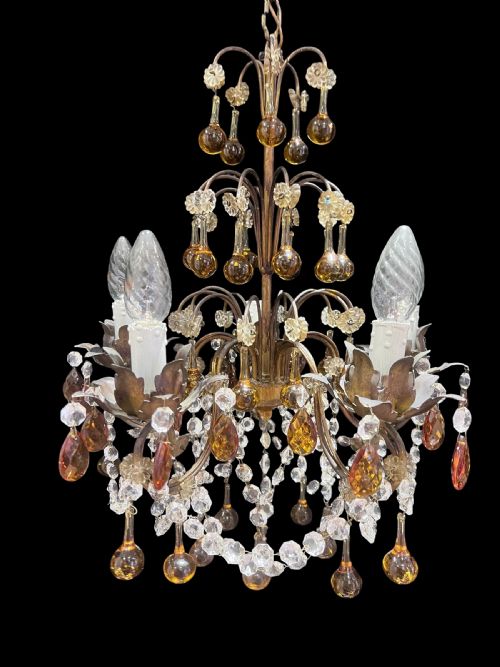
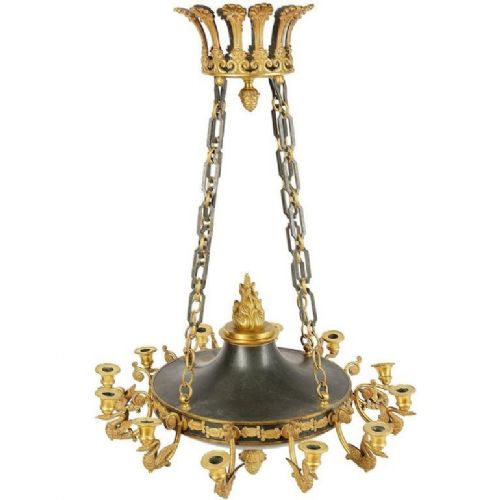
These gilt brass lustres catch the candlelight and hold it, offering a warm and decorative addition to any room.
Gilt Brass Lustres
When you search for gilt brass lustres, you are looking at decorative lighting and mantel pieces designed to hold candles or burn as lamps while reflecting light through glass drops. The examples on this page span several centuries and styles, including Regency, French Empire, and Rococo Revival, alongside pieces from the nineteenth and early twentieth centuries.
The forms you are most likely to meet here range from pairs of table candlesticks and candelabras to smaller chandeliers and table lamps, frequently dressed with cut glass or crystal pendants. These objects originate from British and continental workshops, showing strong French design influences such as French Chateau and Rococo.
The materials combine metal frames with sparkling glass elements, appearing as single items, pairs, or small sets. They serve both a practical lighting function and a decorative role on tables, sideboards, and mantelpieces.
Materials and construction
The construction relies on cast and chased metal frameworks, utilising gilt brass, gilt bronze, ormolu, and gilt metal to provide a bright metallic foundation. Artisans then fitted these structures with glass and cut crystal components, including faceted drops and coloured crystals.
Candle nozzles and arms were assembled to hold multiple lights, ranging from single branches to larger multi-light chandeliers and candelabras. Glass pendants were manually hung from the metal frames using wire loops or pins to maximise the reflection of light.
Gilt Brass Lustres Retail Price Guide 2026
Typical asking prices for gilt brass lustres among the pieces listed under this phrase on Sellingantiques today, from the lower quarter to the upper quarter. They describe what is for sale here now, not the wider market.
Assessing quality and craftsmanship
The distinction between standard examples and finer pieces lies in the crispness of the metal chasing and the depth of the gilding. Superior items display sharp detail in the cast ornament and a warmer, more enduring finish on the metal surface.
The quality of the glass components also marks a clear difference, with hand-cut crystal drops exhibiting sharper facets and greater clarity than simpler pressed glass. A harmonious proportion between the metal body and the hanging drops distinguishes the most accomplished work.
The Gilt Brass Lustres Glossary
- Lustre
- A candlestick, candelabra, or chandelier ornamented with cut glass pendants. These hanging crystals refract the candlelight to increase illumination.
- Ormolu
- Finely ground high-carat gold applied to a bronze base using a mercury amalgamation technique. This process creates a rich, durable golden surface seen on finer period pieces.
- Candelabra
- A multi-branched candlestick designed to hold several candles at once. They often incorporate glass lustres and central lighting columns.
- Cut crystal
- High-quality glass shaped with facets using a wheel to increase sparkle. It appears in drops and pendants hung from metal frames.
- Rococo Revival
- A nineteenth-century design movement favouring asymmetrical scrolls, natural motifs, and ornate curves. This style heavily influences many nineteenth-century lustres and chandeliers.
Gilt Brass Lustres: Frequently Asked Questions
What are gilt brass lustres?
Gilt brass lustres are decorative lighting fixtures and candlesticks made from metal with a gold-coloured finish and hung with glass crystals.
They were designed to hold candles and use the hanging glass drops to reflect and amplify the light within a room.
How were lustres used originally?
In period interiors, these pieces stood on dining tables, mantelpieces, and sideboards to provide both illumination and visual splendour.
The hanging crystals caught the flickering light of candles, creating a warm ambiance before the arrival of electricity.
How do I live with antique lustres?
Place them where they can catch natural daylight or evening candle flames to fully appreciate the cut glass drops.
Care should be taken during dusting to protect the delicate glass pendants and the underlying gilt surface from unnecessary abrasion.
How do I tell periods apart?
Periods are identified by their distinct decorative vocabulary, such as the formal symmetry of Regency designs or the playful, organic curves of Rococo Revival.
Examining the manufacturing techniques and the style of the metal casting helps place a piece within the nineteenth or early twentieth century.