



Early 20th Century Lustres
Early 20th century lustres capture light through cut crystal drops and lustrous glazes, offering collectors classic decorative elegance.
Early 20th Century Lustres
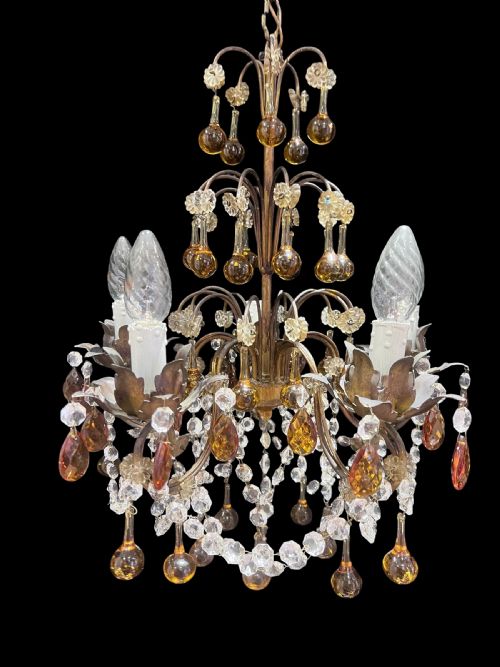
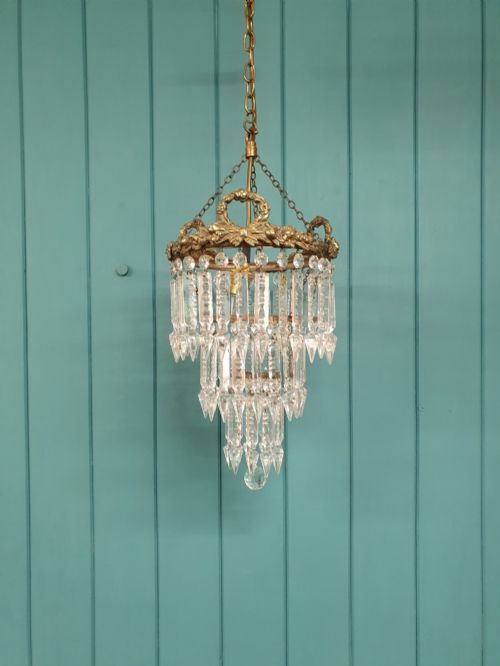
When you search for early 20th century lustres, you encounter a refined selection of chandeliers, ceiling lights, wall lights, and decorative bowls spanning the Edwardian period up to 1930. These pieces primarily merge lighting fixtures with hanging glass drops, alongside standalone ceramic bowls finished in specialised glazes.
You are most likely to meet small chandeliers measuring nine inches alongside pairs of wall lights adorned with cherubs or coloured crystals. The domestic lighting forms dominate the selection, reflecting the taste for French neoclassical and French chateau influences in Edwardian and 1930s interiors.
Materials and construction methods
Makers utilised brass, gilt metal, and gold leaf to form the structural frames of chandeliers and wall lights, pairing these metals with clear and coloured crystal glass drops. The metalwork provides a stable armature designed to catch and reflect illumination.
Ceramic vessels incorporate specialised lustre glaze techniques, notably demonstrated in pieces featuring rich decorative surface finishes. Crystal components are cut and polished to refract light across the surrounding space.
Early 20th Century Lustres Retail Price Guide 2026
Typical asking prices for early 20th century lustres among the pieces listed under this phrase on Sellingantiques today, from the lower quarter to the upper quarter. They describe what is for sale here now, not the wider market.
Wall lights featuring cherubs bring a touch of eternal childhood into twentieth-century hallways.
Distinctions in quality and execution
The sophistication of the metal casting and the precision of crystal cutting determine the visual impact of lighting fixtures. Finishes involving gold leaf display greater depth and adherence than simpler applied coatings.
Ceramic quality rests on the complexity of the lustre glaze application and the intricacy of the painted surface details. Form execution, whether in figural wall lights featuring cherubs or geometric bowls, dictates the overall refinement.
Wedgwood
The Early 20th Century Lustres Glossary
- Lustre glaze
- A type of pottery glaze containing metallic oxides that yield an iridescent sheen upon firing. This finish creates shifting rainbow reflections across ceramic bowls.
- Crystal glass
- High-clarity glass containing mineral additives to increase refractive index and brilliance. It is utilised for the hanging drops that characterise these light fittings.
- Gilt metal
- Base metal treated with a thin layer of gold or gold-coloured metallic finish. This material mimics solid gold framework whilst remaining structurally supportive.
- Edwardian
- The period spanning the reign of King Edward VII, noted for lighter, more graceful interior aesthetics. Lustres from this era often lean towards French neoclassical styling.
Early 20th Century Lustres: Frequently Asked Questions
What is an early 20th century lustre?
Early 20th century lustres refer to decorative lighting fixtures and ceramic vessels characterised by glass crystal drops or iridescent metallic glazes. These items reflect the decorative tastes of the Edwardian era and the 1930s.
The category encompasses chandeliers, wall lights with cherub motifs, and decorative bowls. Each piece utilises reflective qualities to enhance interior spaces.
Where were these pieces used?
These light fittings and decorative items were designed for principal rooms in Edwardian and interwar homes, such as drawing rooms and dining spaces. Chandeliers and wall lights provided functional illumination alongside decorative splendour.
Decorative bowls served as centrepieces on tables or sideboards. Their lustrous surfaces added visual warmth to domestic interiors.
How do I identify an Edwardian lustre?
Edwardian pieces often draw upon French neoclassical and chateau styles, featuring gilt metal frames and delicate crystal drops. The hardware and metal casting reflect the design vocabulary prevalent around the turn of the century.
Proportions tend to be refined, with smaller nine-inch chandeliers and wall sconces being typical. The incorporation of coloured crystals also points towards this decorative period.
How do I care for crystal lustres?
Maintenance involves gentle cleaning of the metal frame and careful washing of individual crystal drops to preserve their refractive clarity. Dusting should be performed regularly with a soft cloth.
Harsh chemical cleaners must be avoided to protect gold leaf, gilt metal, and specialised lustre glazes. Professional cleaning may be required for complex chandelier structures.