




Gilt Brass Centre Table
A gilt brass centre table brings grand nineteenth-century presence to a room, standing free as a striking focal point with decorative metal mounts.
Gilt Brass Centre Table
A gilt brass centre table is a freestanding piece designed to be viewed from all sides, frequently positioned in the middle of a room rather than against a wall. When searching for a gilt brass centre table, buyers encounter nineteenth-century pieces alongside Edwardian and mid-twentieth-century interpretations.
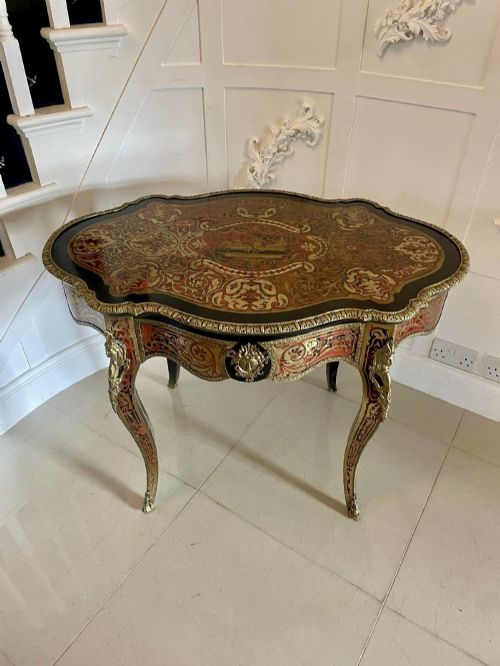
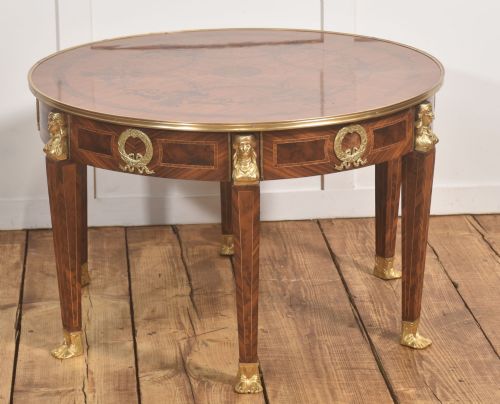
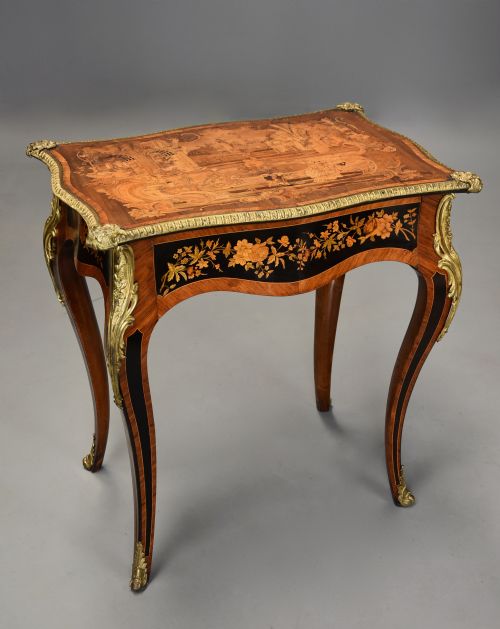
The selection ranges from French Empire and Napoleon III styles to Louis XV and Louis XVI revivals, often incorporating marquetry or boulle work. Formats span traditional centre tables and sofa tables to smaller occasional and coffee table iterations.
How they were made
Maker workshops built these tables using hardwoods such as mahogany, kingwood, rosewood, burr walnut, and ebonised wood as the structural carcass. Surfaces frequently received elaborate marquetry, tortoiseshell inlay, or brass work.
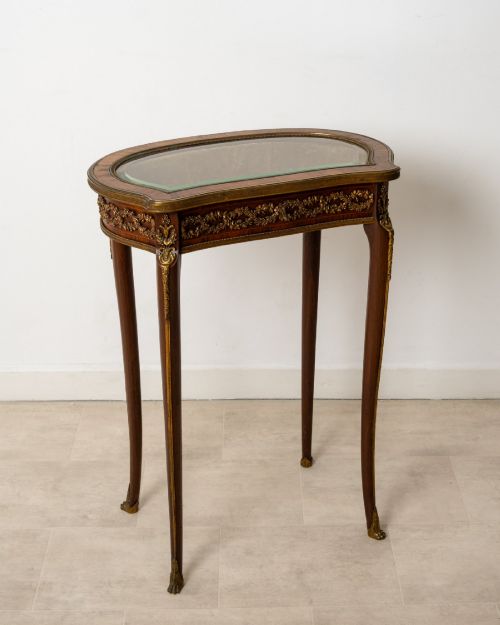
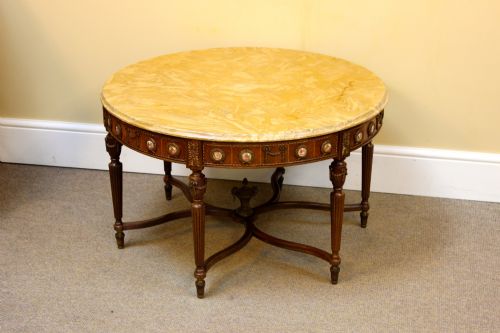
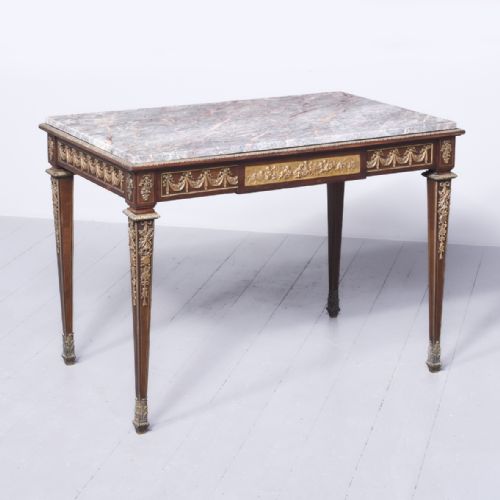
Gilt bronze, ormolu, and gilt brass mounts were cast and applied to corners, legs, and aprons, while certain models integrated inset marble or glass tops.
Listings feature woods including mahogany, kingwood, rosewood, burr walnut, and ebonised timber combined with marble and tortoiseshell.
What varies in quality
Quality rests in the crispness of the cast metal mounts and the precision of the timber inlay. Finer examples display deeply chased ormolu and meticulous marquetry that sits completely flush with the surrounding wood.
Construction methods also dictate standard, with superior pieces utilising robust secondary timbers and sophisticated framing that maintains structural integrity across freestanding designs.
François Linke·Maison Millet·A. Beurdeley
The Gilt Brass Centre Table Glossary
- Ormolu
- Gilt bronze mounted onto furniture or cast as decorative objects. The technique involves applying a finely ground gold-mercury amalgam to bronze before firing.
- Boulle
- Marquetry technique utilising brass and tortoiseshell inlaid in counter-changed patterns. Named after the royal cabinetmaker André-Charles Boulle.
- Gueridon
- A small freestanding circular table designed for occasional use. Originating in seventeenth-century France, these tables often feature central pillar supports.
- Marquetry
- Decorative veneer applied to furniture in geometrical or pictorial patterns. Craftsmen cut thin slices of wood, shell, or metal to fit tightly together.
- Freestanding
- Designed to be finished on all sides. These pieces are intended for placement in open spaces rather than pushed against room boundaries.
Gilt Brass Centre Table: Frequently Asked Questions
Where should I place a centre table?
These tables are built to be viewed from every angle, making them well-suited for the middle of a principal room or a large hallway. They create an immediate visual anchor when positioned beneath a central ceiling light or chandelier.
Ensure there is adequate clearance for foot traffic around the perimeter of the piece. They also function effectively as large sofa tables when paired with substantial seating arrangements.
How do I care for marble and gilt brass?
Dust marble tops regularly with a soft, dry cloth to prevent grit accumulation. Avoid acidic liquids such as wine or citrus juice, which can etch polished stone surfaces.
Gilt brass mounts require gentle dusting with a dry microfibre cloth. Refrain from using harsh chemical metal polishes that can strip the original gilding.
Are these tables purely decorative?
While highly ornamental, these pieces were constructed for practical domestic use. Many feature spacious wooden tops or lower shelves suited for lamps, books, and decorative objects.
Certain variations include drawers or writing surfaces, combining functional utility with elaborate nineteenth-century craftsmanship.
How do I identify French revival styles?
Louis XV revival pieces typically display asymmetrical curves, cabriole legs, and naturalistic floral mounts. Louis XVI revival items favour neoclassical symmetry, straight fluted legs, and geometric or classical motifs.
Napoleon III and Second Empire examples often combine dark ebonised woods with intricate boulle inlay and heavy gilt bronze mounts.