




Georgian Rosewood Library Table
A georgian rosewood library table brings warmth and rich grain to a study, offering a sturdy surface designed for serious reading and writing.
Georgian Rosewood Library Table
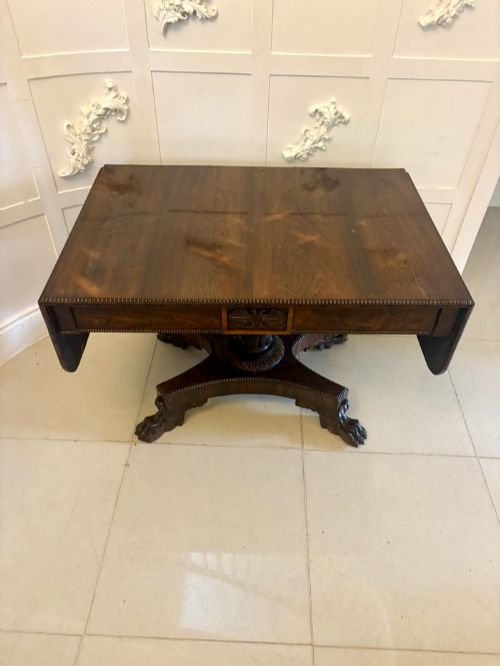
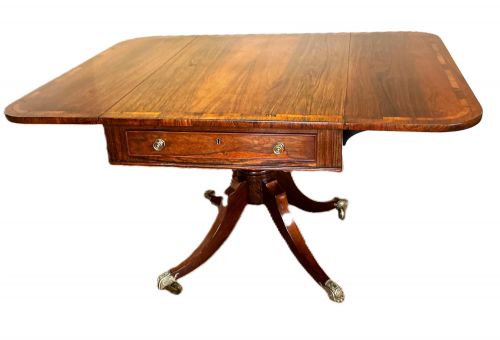
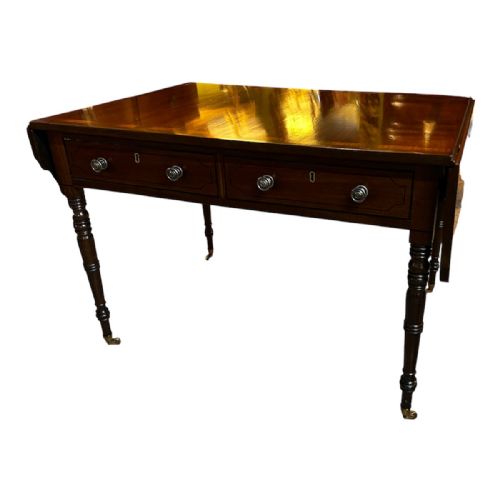
When you search for a georgian rosewood library table, you encounter substantial freestanding pieces built for writing and study. The selections on this page span the Regency, George IV, and late Georgian periods, alongside related Victorian examples.
Sofa tables and writing tables dominate the forms available. These pieces frequently feature drop flaps, pedestal bases, or brass inlays, reflecting the refined tastes of early nineteenth-century cabinet makers.
Measures of quality
The sophistication of the brass inlay and the precision of any wood marquetry distinguish finer examples from standard workshop production. Selection of the rosewood veneer also plays a major role, with well-matched grain patterns indicating superior execution.
Proportion and the integration of secondary timbers like oak reveal the care taken during construction. Pieces retaining their original surfaces and mounts command greater appreciation among collectors.
Timepieces and carriage clocks occasionally wander into the library table category.
Gillows of Lancaster·Arnold and Frodsham·Plumbly and Tupman
The Georgian Rosewood Library Table Glossary
- Library table
- A large freestanding table designed for reading and writing, finished on all sides so it can sit in the centre of a room.
- Sofa table
- A rectangular drop-flap table traditionally placed in front of a sofa, standing on pillar supports or pedestals.
- Drum table
- A circular library table containing drawers around its perimeter, mounted on a central pillar and platform base.
- Marquetry
- Decorative veneer patterns formed by fitted pieces of various woods, laid onto the structural carcase.
- Gilt brass
- Brass treated with a gold-coloured finish to add decorative contrast against dark rosewood.
Georgian Rosewood Library Table: Frequently Asked Questions
Where should I place a library table?
These pieces are designed to stand away from walls, making them ideal as centrepieces in a study or drawing room.
Their finished backs allow them to be viewed from any angle within an interior space.
How do I care for rosewood surfaces?
Keep these timbers away from direct sunlight and sudden changes in temperature to prevent the wood from drying out.
Regular dusting with a soft, dry cloth maintains the natural lustre without requiring heavy polishes.
Can I use these tables for daily writing?
Many examples include leather-lined writing surfaces that provide a suitable pad for modern stationery.
Drawers built into the frames offer practical storage for pens and paper.
How do I distinguish Regency from Victorian pieces?
Regency items date from the early nineteenth century and typically display restrained classical lines with brass mounts.
Victorian pieces from later decades often incorporate heavier proportions or more elaborate carved details.