
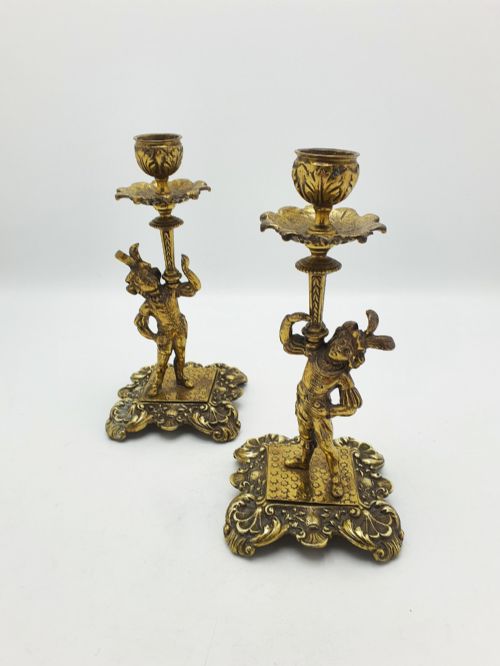
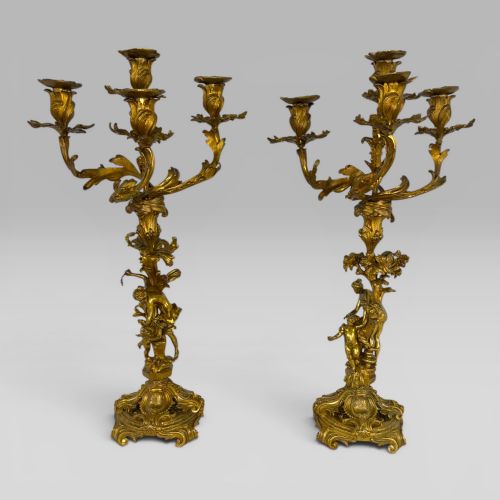
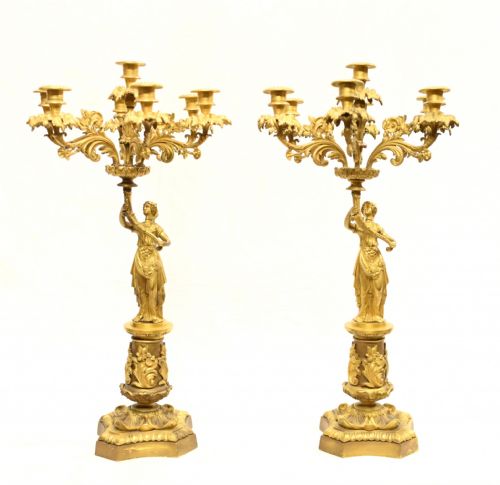


Gilt Brass Candleholder
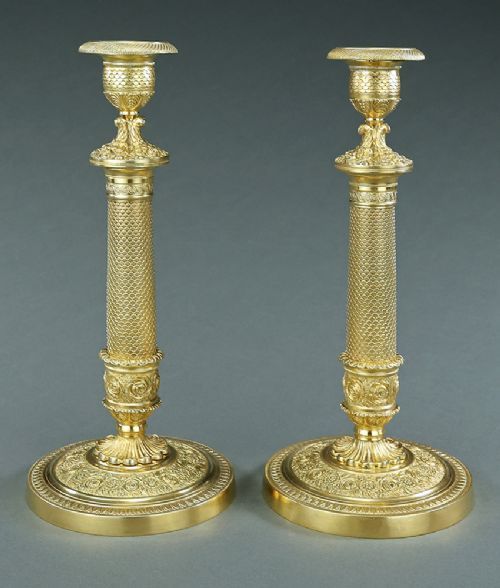
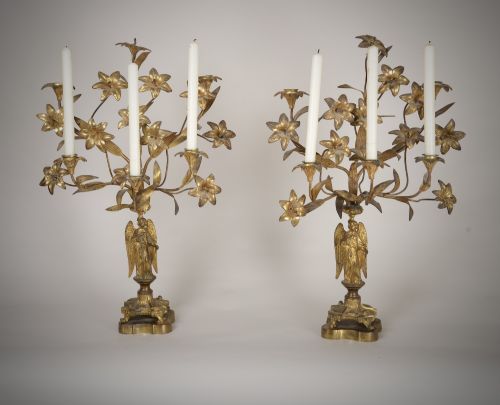
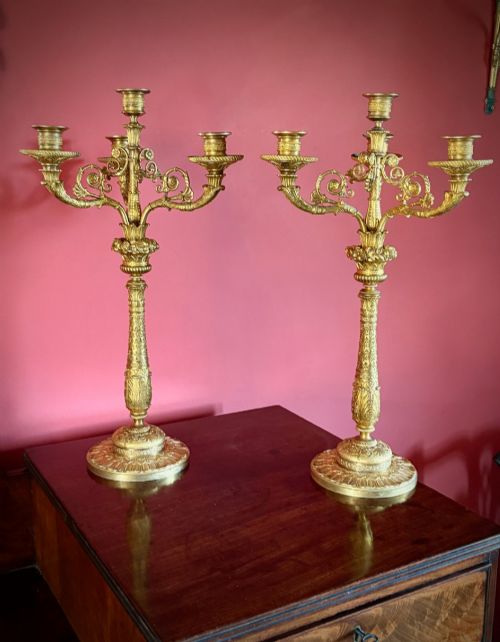
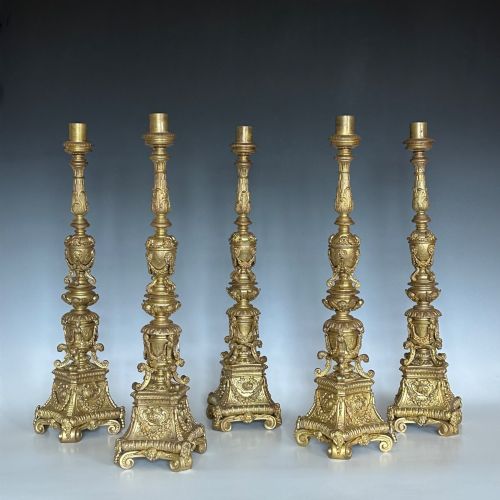
A gilt brass candleholder brings warm metallic reflection and period ornamentation to a room, drawing the eye with its gilded surface.
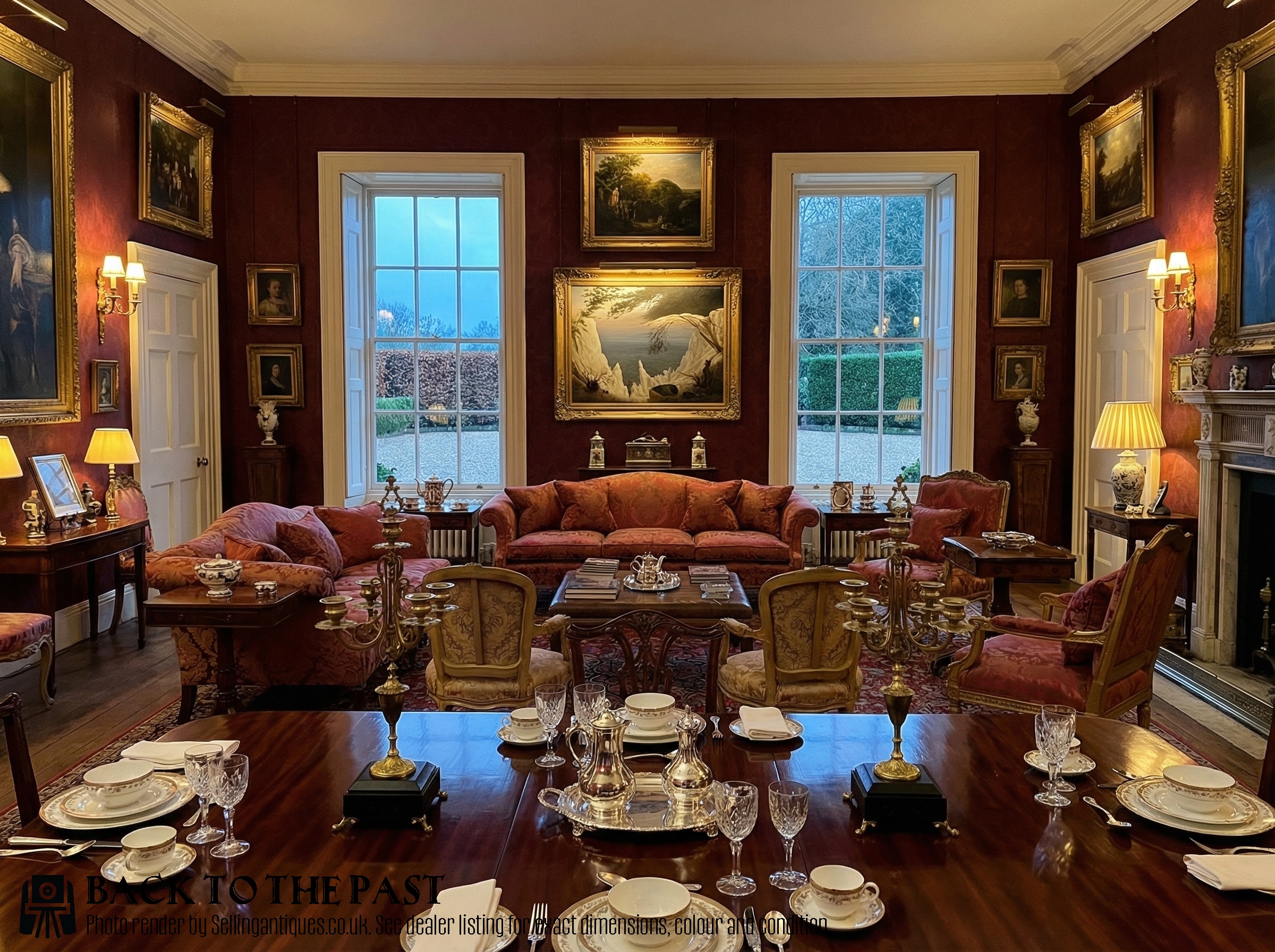
Gilt Brass Candleholder
A gilt brass candleholder is a lighting accessory fashioned from metal and finished with a golden surface, appearing across several distinct historical periods. When searching for a gilt brass candleholder, buyers encounter forms ranging from single candlesticks to multi-branched candelabra and wall-mounted sconces. These pieces span the eighteenth century, the Regency era, the nineteenth century including Victorian and Edwardian periods, and into the early twentieth century.
The objects on this page showcase diverse stylistic influences such as French Empire, French Rococo Revival, Gothic Revival, Neoclassical, and Victorian Renaissance Revival. Many examples incorporate figural elements, cherubs, dolphins, porcelain components, or marble bases to elevate their visual presence. Buyers frequently find matching pairs designed for mantelpieces, sideboards, or dining tables.
Materials and construction methods
Makers utilised metals such as brass, gilt brass, gilt bronze, and ormolu, often combining them with patinated bronze, marble, porcelain, and glass. The application of gold gilding or ormolu provided a brilliant metallic lustre over the base metal armature. Heavy cast components ensured stability, particularly on tall candelabra and pieces mounted on marble plinths.
Casting techniques allowed for intricate ornamentation, from classical scrollwork and floral motifs to figural cherubs and ecclesiastical designs. Surface finishes varied from polished ormolu highlights to contrasting patinated bronze details, creating depth within the decorative schemes of the period.
Several Victorian models feature playful dolphins and cherubs happily holding up heavy metal branches for your evening dining.
Evaluating quality and execution
Subtlety in the application of gilding and the weight of the cast metal distinguish superior studio output from standard commercial production. Well-preserved original gilding and intact structural assemblies maintain the integrity of the design across different periods.
The Gilt Brass Candleholder Glossary
- Ormolu
- Finely ground high-carat gold mercury-gilded onto a bronze or brass object. This technique imparts a rich, warm golden finish characteristic of French decorative arts.
- Candelabra
- A branched candlestick designed to hold multiple taper candles simultaneously. These fixtures often feature central stems with removable or fixed arms.
- Gilt Bronze
- Bronze metal treated with a thin layer of gold leaf or gold wash. It provides durable metallic enrichment across Neoclassical and Revival pieces.
- Girandole
- An ornamental branched candlestick or wall sconce, frequently incorporating mirrors or reflective backplates to amplify candlelight.
- Ecclesiastical
- Pertaining to items created for church use or styled with religious motifs. These pieces often appear in Gothic Revival settings.
Gilt Brass Candleholder: Frequently Asked Questions
How do I clean a gilt brass candleholder?
Dust the surface gently with a soft, dry cloth to remove everyday particles. Avoid abrasive polishes and liquid cleaners that can strip away historic gilding.
For stubborn grime, use a slightly damp cloth with mild soap, drying the metal immediately afterwards with a lint-free towel.
Were these pieces meant for daily use?
Most antique lighting accessories served both functional and decorative purposes in period interiors. They provided crucial illumination before electric lighting while displaying social status.
Today, many owners use them with standard taper candles or display them purely as sculptural decorative objects.
How do I identify a French Empire piece?
French Empire pieces typically feature strict symmetry, classical military motifs, and clean architectural lines inspired by antiquity. They often combine bright ormolu with dark patinated bronze.
Proportions remain robust, with heavy cast elements resting on solid marble or stepped metal bases.