

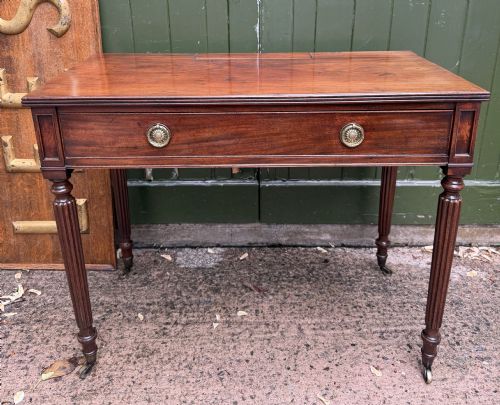


Gillows of Lancaster Desk
A gillows of lancaster desk combines rational provincial cabinet-making with the polished assurance of London design houses.
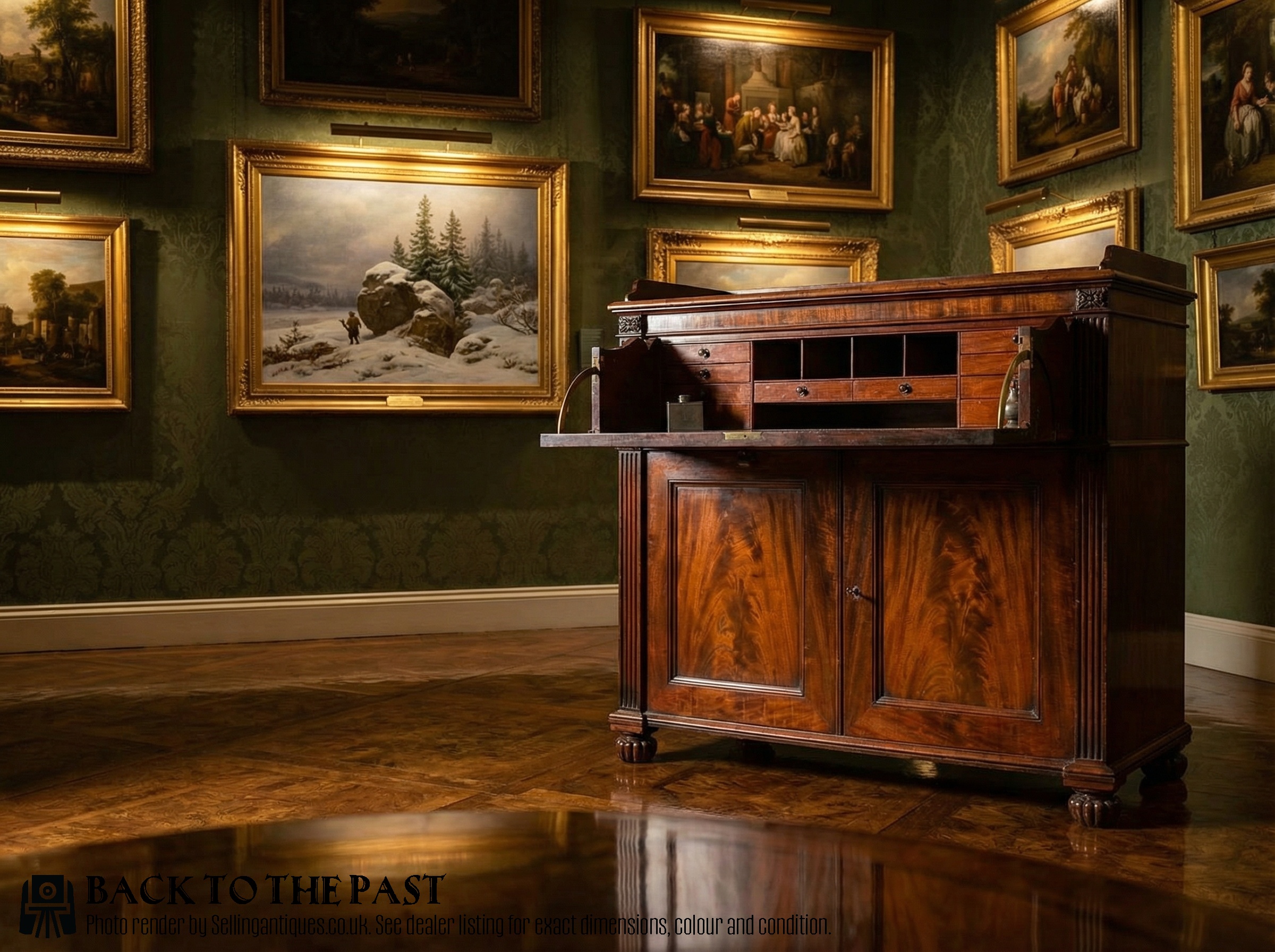
Gillows of Lancaster Desk
A gillows of lancaster desk encompasses pieces built by the celebrated firm operating from Lancaster and London across the Georgian, Regency and Victorian eras. These items range from compact Davenport forms and Carlton House desks to expansive twin-pedestal partners furniture and fitted secretaire chests.
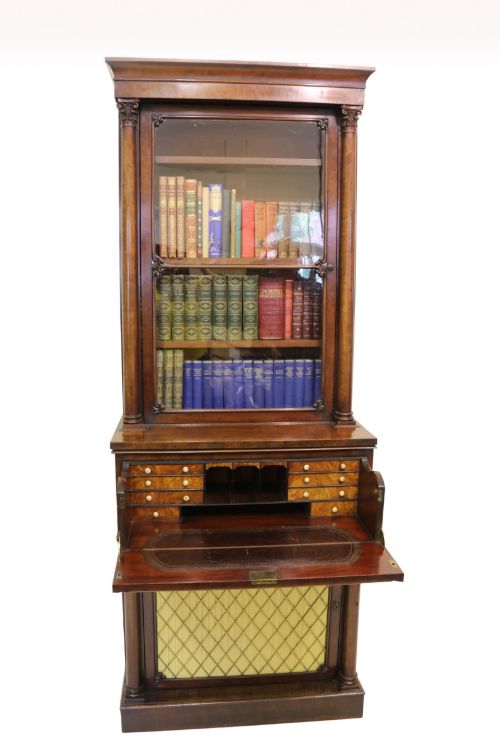
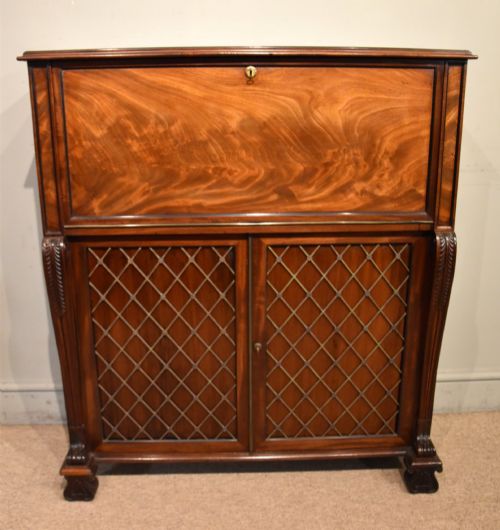
The version most commonly encountered on this page is the mahogany writing table or secretaire desk dating from the early nineteenth century. These pieces often feature brass hardware, leather inset writing surfaces, and restrained classical proportions characteristic of the Regency period.
Buyers also meet variations executed in satinwood, rosewood and walnut, reflecting the shifting tastes of the firm over its long operational history. Whether stamped, attributed or designed in the manner of the workshop, each piece demonstrates practical utility coupled with refined craftsmanship.
Materials and construction
Makers utilised dense timbers such as Cuban mahogany, flame mahogany and rosewood, selected for grain figure and structural stability. Secondary woods like oak and pine appear in drawer linings and internal carcases, demonstrating robust joinery traditions.
Surface detailing relied on brass handles, locks and castors, alongside fitted interiors featuring tooled leather writing surfaces and secret compartments. Inlater Victorian examples, marquetry inlay and subtle carving introduce decorative richness without compromising the underlying utility.
Gillows of Lancaster Desk Retail Price Guide 2026
Typical asking prices for gillows of lancaster desk among the pieces listed under this phrase on Sellingantiques today, from the lower quarter to the upper quarter. They describe what is for sale here now, not the wider market.
Secret compartments hidden behind dummy book spines remind us that nineteenth-century correspondents took their privacy very seriously indeed.
Judging quality in a gillows of lancaster desk
Quality rests primarily on the selection of timber figures, such as matched flame mahogany veneers or finely figured satinwood, and the crispness of secondary detailing like cockbeaded drawer edges. Stamped signatures or paper labels provide definitive attribution, though unsigned pieces attributed through construction methods still command attention for their joinery.
Structural integrity and the preservation of original brass hardware, leather writing panels and internal fittings dictate the standing of individual items. Desks retaining their complete operational mechanisms, secret drawers and well-maintained timber patination represent the pinnacle of the maker's output.
Gillows of Lancaster
The Gillows of Lancaster Desk Glossary
- Secretaire
- A piece of furniture containing a pull-down writing drawer that conceals small pigeonholes and letter drawers. This form allows a chest of drawers or bookcase to function as a compact writing desk.
- Davenport
- A small, box-like desk featuring a sloping, leather-lined writing surface above a pedestal of drawers. The design originated in the late eighteenth century and offers substantial storage within a minimal floor footprint.
- Cockbeading
- A narrow, rounded moulding projecting around the edges of drawer fronts. This detail protects the drawer edges from impact and provides a clean visual boundary.
- Partners desk
- A large freestanding pedestal desk designed with drawers and cupboards on both sides so two people can work opposite each other. These pieces often feature extensive leather surfaces and substantial internal capacity.
- Flame mahogany
- A veneer cut from the branch junction of a mahogany tree to produce a dramatic, flickering grain pattern. Cabinet-makers reserved this material for prominent exterior surfaces.
Gillows of Lancaster Desk: Frequently Asked Questions
How do I identify a genuine gillows of lancaster desk?
Look for maker stamps on the top edge of drawer frames, alongside characteristic construction traits like dovetailing and numbered components. Structural precision and documented provenance further confirm attribution.
Examine secondary woods and hardware details, as the firm maintained rigorous standards across both marked items and pieces attributed through design archives.
What is a Davenport desk used for?
A Davenport served as a compact writing desk for correspondence and record-keeping in private sitting rooms or bedrooms. Its sloping top provided a comfortable writing angle while small interior compartments kept stationery organised.
Lower drawers swung out to the side for additional storage, making the form efficient for domestic use without dominating a room.
How should I care for an antique leather writing surface?
Maintain the leather by dusting gently with a dry cloth and avoiding direct sunlight or excessive heat sources. Conditioning balms formulated for antique leather help prevent drying and cracking.
Keep liquids away from the writing plane and use blotters or writing mats to protect the historical surface from daily wear.
What distinguishes a Regency desk from a Victorian one?
Regency desks typically display classical restraint, clean architectural lines, and mahogany or rosewood veneers with minimal brass mounts. They reflect early nineteenth-century interpretations of ancient Greek and Roman forms.
Victorian pieces often introduce darker walnut, elaborate marquetry inlay, revival styles like Rococo or Jacobean, and heavier proportions suited to later nineteenth-century interiors.