



Gillows Credenza Cabinet
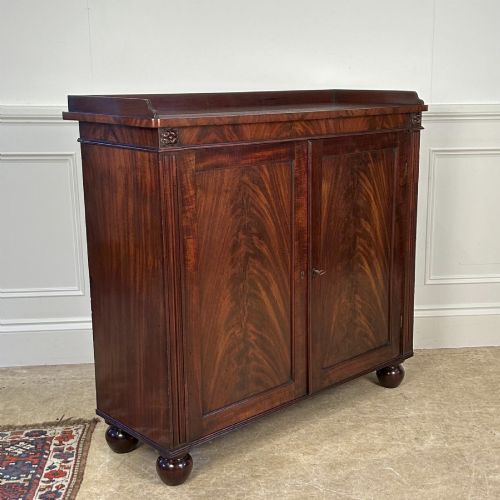
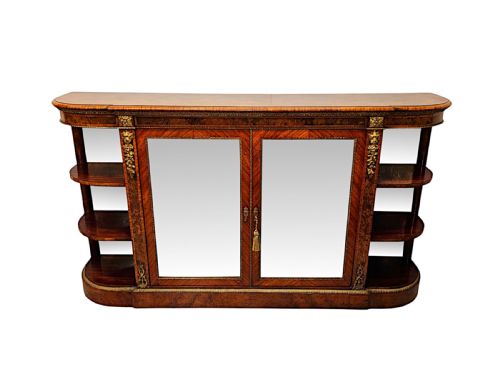
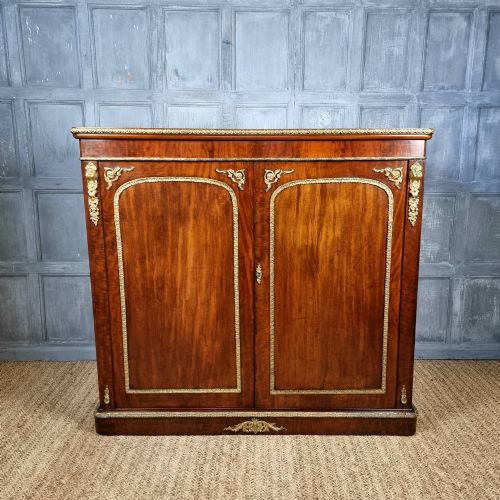
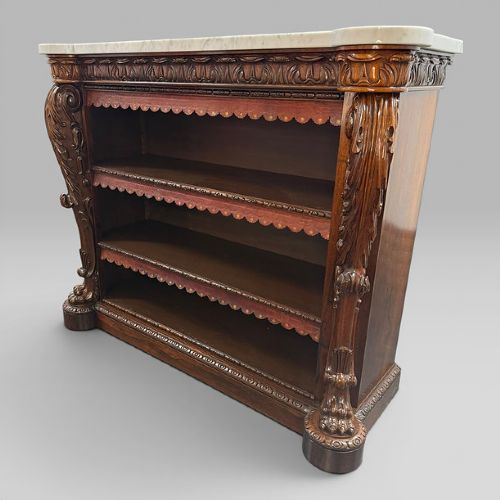
These gillows credenza cabinet pieces bring together refined cabinetry and architectural presence, offering disciplined storage that anchors a formal room.
Gillows Credenza Cabinet
When searching for a gillows credenza cabinet, you encounter low display and storage pieces spanning the Georgian, Regency, William IV, and Victorian periods. The forms range widely across side cabinets, credenzas, bookcases, chiffoniers, and press cupboards.
Most examples you meet on this page originate from the 19th Century, drawing on Regency, Victorian, George IV, and Sheraton Revival styles. These items often feature specific workshop attribution or stamps confirming their origin.
The selection encompasses diverse utilitarian forms alongside decorative display pieces, reflecting the workshop's transition through George III, Victorian, and 1880 aesthetic movements.
How they were made
Craftsmen utilised substantial timbers including mahogany, rosewood, burr walnut, satinwood, and oak, often combining structural woods with decorative veneers. Glass, mirror glass, marble, and leather frequently complement the primary cabinet structure.
Decoration relied heavily on brass, ormolu mounts, gilt brass, and intricate marquetry or inlay work. These applied elements accentuated the architectural lines of the side cabinets and chiffoniers.
Gillows Credenza Cabinet Retail Price Guide 2026
Typical asking prices for gillows credenza cabinet among the pieces listed under this phrase on Sellingantiques today, from the lower quarter to the upper quarter. They describe what is for sale here now, not the wider market.
The documented periods span from George III through Regency, William IV, Victorian, and into the 1880 Arts and Crafts movement.
What varies in quality
Quality rests upon the selection of timber veneers and the precision of the cabinetwork, from simple mahogany frames to elaborate burr walnut and marquetry surfaces. Stamped signatures or documented workshop attributions elevate certain examples above unlabelled production.
The sophistication of the mounts, whether ormolu or gilt brass, and the integration of secondary materials like marble tops and mirror glass determine the overall execution of each piece.
Gillows·Bruce Talbert
The Gillows Credenza Cabinet Glossary
- Credenza
- A low cabinet, typically featuring central doors flanked by curved or straight glass compartments, designed for display and storage.
- Chiffonier
- A compact sideboard or low cabinet equipped with shelves and enclosed lower storage, popular during the Regency and Victorian periods.
- Ormolu
- Gilded bronze ornamentation applied to furniture for decorative contrast against dark woods like rosewood and mahogany.
- Secretaire
- A cabinet or desk incorporating a pull-down writing flap that conceals small drawers and pigeonholes.
- Marquetry
- Decorative patterns formed by the insertion of various coloured veneers into a primary wood foundation.
Gillows Credenza Cabinet: Frequently Asked Questions
How do I identify a Gillows piece?
Look for maker marks, workshop stamps, or distinct construction traits that align with documented pieces from the firm.
Attribution often relies on characteristic timber selection, brass detailing, and specific proportions seen across documented side cabinets and chiffoniers.
Where were these cabinets used?
These pieces traditionally stood in formal entertaining spaces such as dining rooms, drawing rooms, or libraries for serving and display.
In modern interiors, they function well as credenzas or sideboards while retaining their period character.
What woods were commonly used?
Makers employed rich hardwoods including mahogany, rosewood, burr walnut, and satinwood, occasionally utilising oak for internal structures.
Veneers and contrasting inlays provided decorative surface patterns across the front panels.
How do Regency and Victorian styles differ?
Regency designs lean towards classical restraint with architectural lines and restrained brass mounts, reflecting early nineteenth-century neoclassical tastes.
Victorian versions frequently introduce heavier proportions, intricate marquetry, and richer burr walnut veneers.