
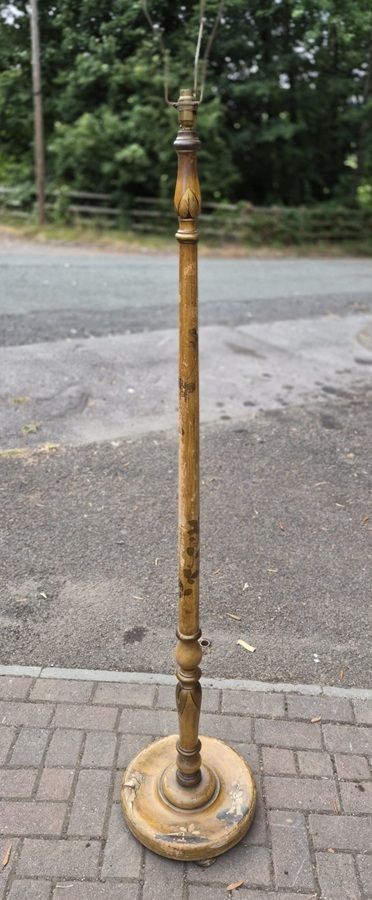
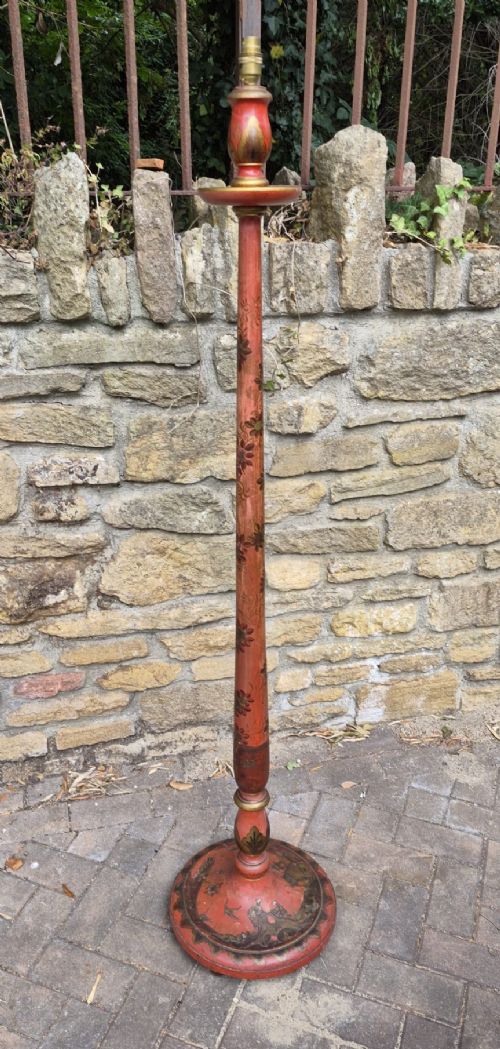
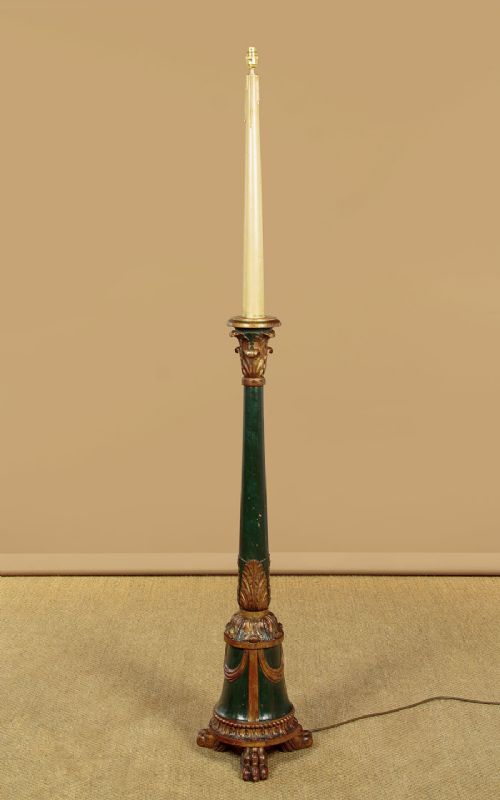


Gilded Wood Standard Lamp
A gilded wood standard lamp brings height and warm metallic reflection to a room, drawing the eye upwards with carved ornament and painted detail.
Gilded Wood Standard Lamp
A gilded wood standard lamp provides upright floor lighting through tall wooden shafts finished in gold leaf, gesso or paint. The pieces on this page span several centuries, reaching back to the eighteenth century through the nineteenth and into the early twentieth century.
The selection includes standard lamps alongside related forms such as floor lamps, table lamps and tall lamps. Revival aesthetics dominate the form, with styles ranging from Italian Baroque and Venetian Baroque to Neoclassical Revival and Edwardian Chinoiserie.
Chinoiserie examples introduce painted decoration on backgrounds of crimson or lacquer, while Italian and French interpretations rely on carved wooden figures and scrolling giltwork. Buyers encounter both single floor standing columns and pairs of lamps originating from workshops across Britain and continental Europe.
How they were made
Makers shaped structural columns from solid timber, applying layers of gesso to smooth the surface before laying fine sheets of gold leaf or metal leaf by hand. Carved wood details, including floral motifs and figurative elements, received direct application of pigment or polychrome paint where chinoiserie schemes were desired.
Brass fittings and fabric elements integrate with the wooden structure to house electrical components or historical lighting adapters. Lacquer finishes protect painted scenes on nineteenth and twentieth century bodies while retaining the subtle textures characteristic of hand applied preparation.
Materials recorded across the inventory include solid wood, giltwood, gesso, brass, fabric, lacquer and gold leaf.
What varies in quality
The standard of carving defines the upper tier of these pieces, where depth of relief and crispness of detail show the hand of a skilled artisan rather than mechanical production. Original surface treatments, particularly untouched gold leaf and genuine period polychrome paint, elevate a piece above later refinishing.
Proportion and structural balance separate simpler utility pieces from grander architectural examples intended for formal reception rooms. The integration of decorative elements like figurative stands or elaborate lacquered panels determines the visual presence of the lamp within an interior.
The Gilded Wood Standard Lamp Glossary
- Giltwood
- Wood that has been coated with gold leaf or gold dust over a prepared ground. This technique creates a luminous surface that catches ambient light.
- Gesso
- A plaster mixture applied to wood surfaces as a smooth base for gilding and painting. It allows intricate carved details to remain sharp beneath metal leaf.
- Parcel Gilt
- A method where only specific parts of an object are gilded while other areas show painted or polished wood. This creates contrast between metallic highlights and darker surfaces.
- Polychrome
- The practice of decorating surfaces in multiple colours. It appears on figurative stands and painted lamp bodies from Venetian and English workshops.
Gilded Wood Standard Lamp: Frequently Asked Questions
How do I wire a vintage standard lamp safely?
Most antique floor lamps require rewiring to meet modern safety standards while preserving the original internal channel or adding discreet modern flex. A qualified electrician can thread modern wiring through the central wooden core without altering the exterior appearance.
Original brass lamp holders can often be retained and restored internally, ensuring that the top fitting matches the period character of the gilded wood column below.
What is the difference between giltwood and painted lamps?
Giltwood lamps rely on gold leaf applied over gesso to create a reflective metallic surface that ages with a warm patina. Painted lamps utilise pigments, sometimes with chinoiserie motifs, offering narrative scenes or colourful floral patterns.
Some pieces combine both techniques through parcel gilding, where gold highlights specific carved elements against a painted or natural wood background.
How do I tell an eighteenth century lamp from a later revival piece?
Earlier pieces exhibit hand tool marks, dense timber weights and traditional joinery methods appropriate to their period of origin. Revival pieces from the nineteenth and twentieth centuries often emulate Louis XVI or Baroque styles using machinery alongside traditional hand carving.
Examining the wear patterns on the gesso and the composition of the wood beneath provides clues to the exact age of the construction.
Where should I place a tall standard lamp in a room?
Tall floor lamps suit corners or spaces beside heavy upholstery where their height can balance architectural proportions. Their gilded or painted surfaces reflect light from lamps and windows, brightening darker areas of a reception room.
Pairing matching lamps on either side of a fireplace or sideboard creates symmetry derived from classical interior design traditions.