





Classical Painted Light
Classical painted light brings together hand-painted surfaces and classical forms, offering a decorative glow that anchors a room.
Classical Painted Light
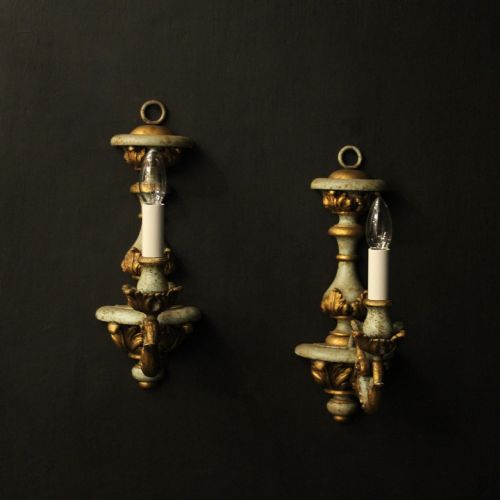
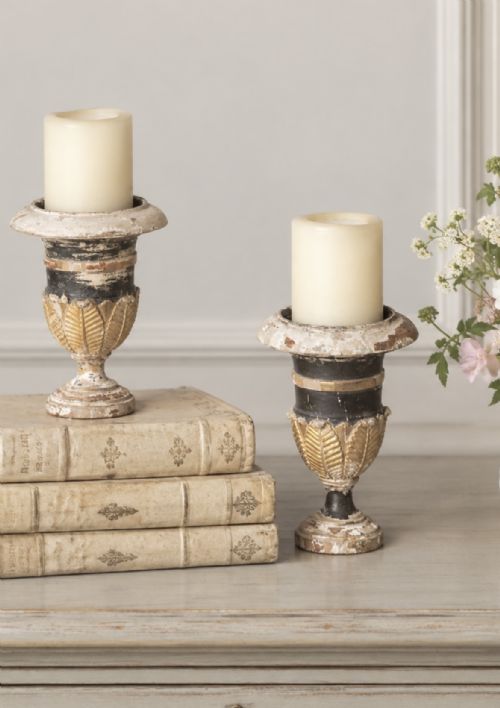
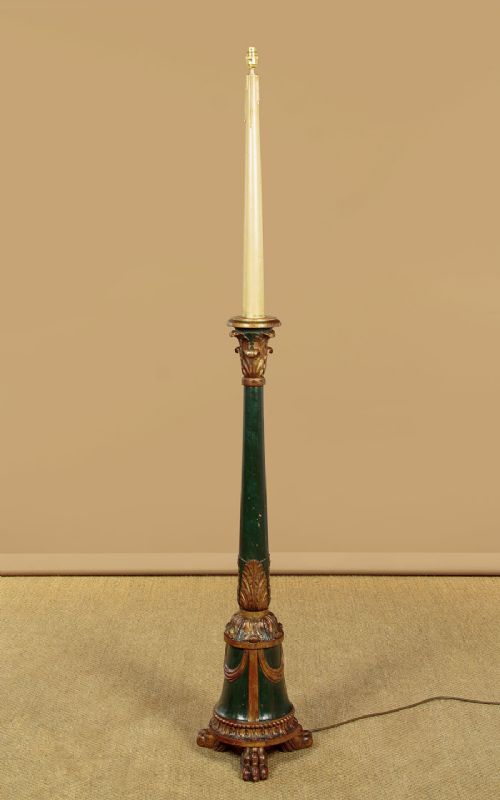
Classical painted light pieces unite historical styles with pigmented surfaces, spanning table lamps, wall lights, and standard lamps. Buyers encounter 19th-century works alongside early 20th-century items.
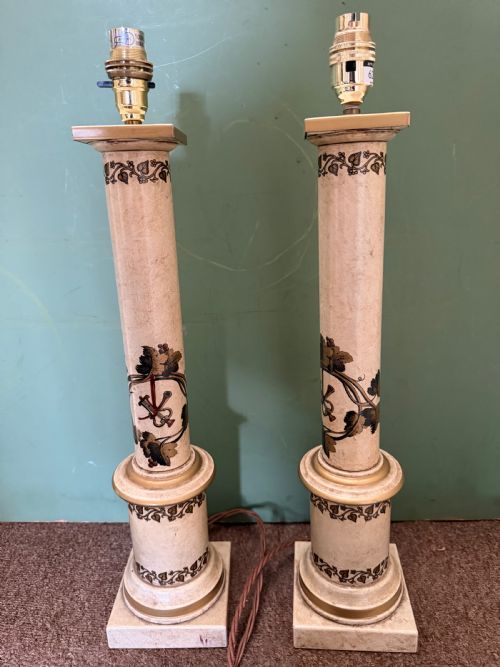
Italian and French origins dominate the selection, often taking the form of porcelain vases, tole-peinte columns, and majolica bodies. Many pieces emerge as pairs, particularly wall lights and candlesticks.
Revival styles shape the selection heavily, with French Neoclassical, French Empire, and Renaissance Revival aesthetics appearing alongside Art Nouveau designs.
Materials and construction
Porcelain and metal form the structural core of these pieces, frequently enhanced by applied paint, toleware finishes, and hand-gilding. Brass and ormolu mounts provide structural framing and decorative contrast to the painted ceramic bodies.
Surface decoration relies on manual pigment application, capturing pastoral scenes, botanical motifs, and solid polychrome hues. Glazes and fired colours protect the painted details across Victorian and later twentieth-century iterations.
Listings feature items spanning the 18th, 19th, and early 20th centuries, utilising porcelain, brass, ormolu, and carved wood.
Quality factors
The sophistication of the hand-painted detailing dictates the tier of the piece, separating standard decorative wares from masterworks with fine brushwork. Painted landscapes and floral arrangements show distinct levels of artistic execution.
The integration of metal mounts, such as cast ormolu and brass fittings, distinguishes superior examples. Heavier bronze castings and finer porcelain bodies like Sèvres-style porcelain elevate the standing of an object.
L & F Moreau·Samuel Alcock
The Classical Painted Light Glossary
- Tole-peinte
- Painted sheet metal, typically tin or steel, used extensively for decorative lamp bodies and shades. This technique allows for rich surface colours and intricate patterns.
- Ormolu
- Gilt bronze mounts applied to furniture, porcelain, and lighting. The technique involves applying a gold amalgam to bronze.
- Maiolica
- Italian tin-glazed earthenware featuring bright painted colours. It provides a smooth white ground for detailed pictorial scenes.
- Plafonnier
- A ceiling-mounted glass light shade that sits flush or close to the ceiling. These fixtures often feature painted glass panels.
- Spelter
- A zinc alloy frequently cast into figures and lamp bases, especially during the nineteenth and early twentieth centuries. It serves as a more affordable alternative to bronze.
Classical Painted Light: Frequently Asked Questions
How do I wire an antique lamp?
Rewiring requires a qualified electrician to install modern flexible cord and compliant lamp holders while preserving the original body.
Historic metal and ceramic bodies need careful handling to avoid damaging aged surfaces during internal rewiring.
Where should I place wall lights?
Wall lights suit flanking mirrors, fireplaces, or architectural doorways in living spaces and hallways. Pairs create symmetrical illumination across a room.
Height placement depends on ceiling proportions and eye level, typically ensuring direct light sources remain diffused.
How do I clean painted porcelain?
Dust surfaces gently with a soft dry brush to remove particulate matter without disturbing fragile paint layers.
Avoid chemical cleaning agents and abrasive cloths, which can strip hand-applied pigments and nineteenth-century gilding.
What defines French Empire style?
French Empire style draws heavily on classical Roman and Greek motifs, incorporating strict symmetry and formal dignity. Ormolu mounts and rich porcelain colours define the aesthetic.
Lighting from this tradition often utilises columnar forms and urn shapes with military or mythological references.