

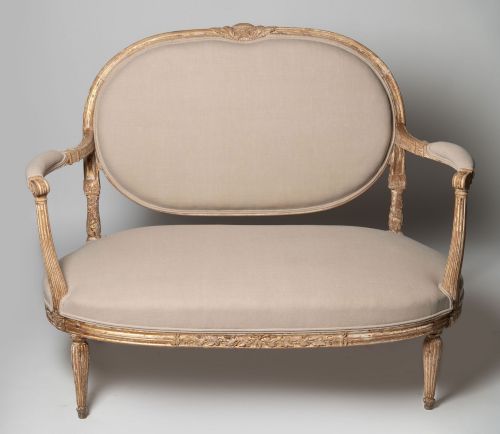
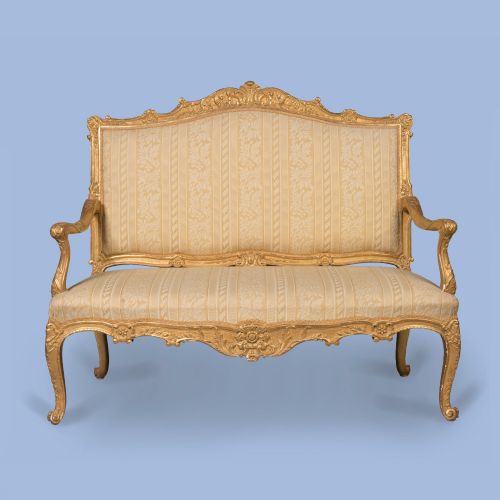


Gilded Wood Settee
A gilded wood settee brings sculptural presence to a room, offering grand seating shaped by centuries of European craftsmanship.
Materials and construction
Makers constructed the primary frames of these settees using solid timber and beech, selecting woods capable of supporting intricate hand-carved details. Structural stability relied on traditional joinery techniques, ensuring the expansive length of a sofa frame remained rigid under weight.
Surface finish involved the application of gold leaf or paint over prepared grounds, sometimes paired with ebonisation or painted contrasts. Upholsterers then finished the seats and backs using textile coverings, including velvet and patterned fabrics secured to the internal webbing and padding.
Distinctions in quality
Quality in a gilded wood settee rests on the depth and crispness of the wood carving, where hand-chiseled detail outshines shallow or machine-molded decoration. The proportion of the frame and the fluidity of the curves, particularly in pieces following French Rococo or Neoclassical models, dictate the visual balance of the seating.
The integrity of the original gilt surface also defines the upper tier of examples, distinguishing pieces with undisturbed gold leaf from later overpainting or heavy restoration. Furthermore, attribution to known makers or documented workshops elevates a piece through superior joinery and refined regional execution.
Gilded Wood Settee Retail Price Guide 2026
Typical asking prices for gilded wood settee among the pieces listed under this phrase on Sellingantiques today, from the lower quarter to the upper quarter. They describe what is for sale here now, not the wider market.
Listings feature wood, beech, and timber frames finished in gold leaf and giltwood, paired with velvet and textile upholstery.
Giles Grendey
The Gilded Wood Settee Glossary
- Giltwood
- Timber coated with gold leaf applied over a prepared gesso and bole ground. This technique creates a luminous metallic surface that catches light across carved ornamentation.
- Canapé
- A decorative French upholstered sofa, typically featuring an exposed wooden frame and an open arm design. These pieces formed part of formal eighteenth and nineteenth-century salon seating arrangements.
- Regency
- An English design period spanning the early nineteenth century, characterised by classical restraint, architectural lines, and often incorporating painted and gilded finishes.
- Rococo Revival
- A nineteenth-century design movement that resurrected the asymmetrical curves, C-scrolls, and naturalistic floral motifs of the eighteenth-century French court.
- Ebonised
- Timber treated with a chemical stain or black finish to imitate expensive ebony wood. This dark ground frequently serves as a contrast for parcel gilt highlights.
Gilded Wood Settee: Frequently Asked Questions
Where did people place gilded settees?
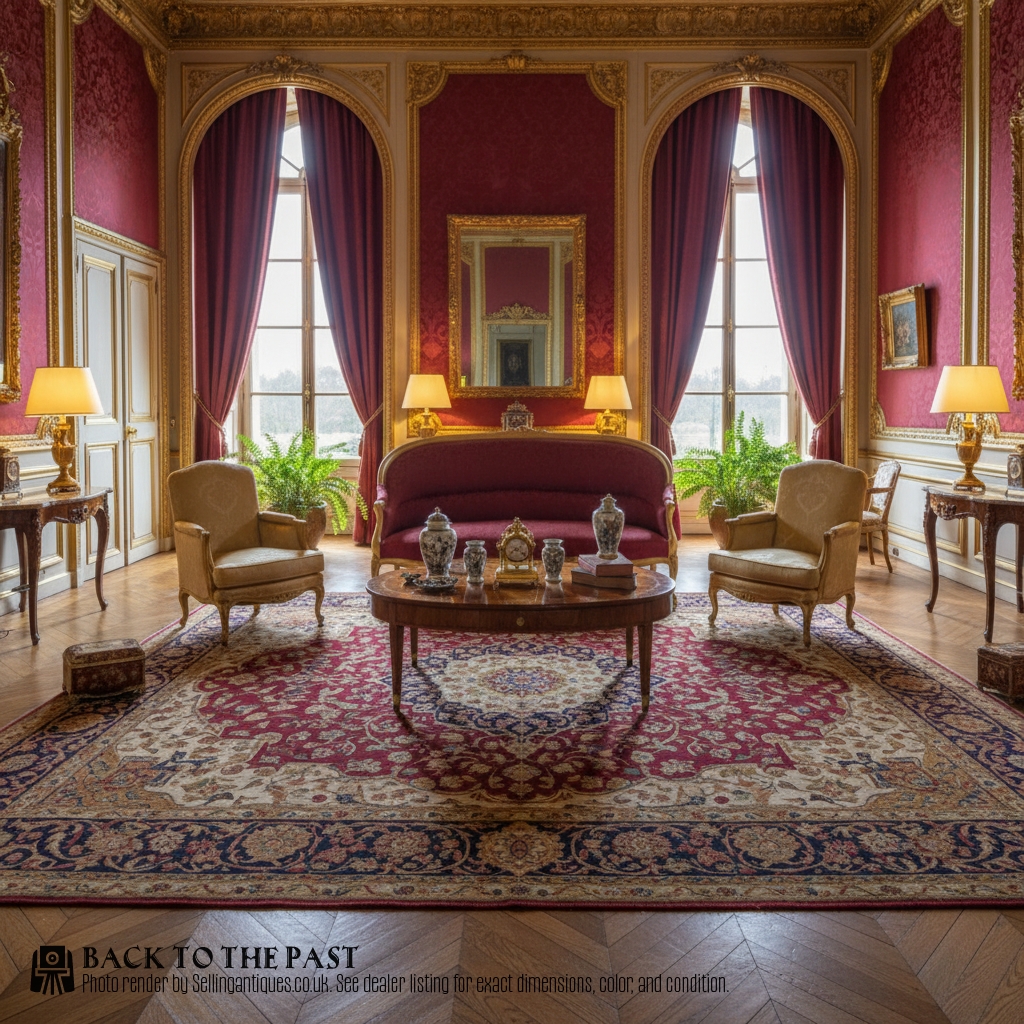
These large seating pieces stood in formal drawing rooms, receiving parlours, and state apartments where hosts entertained guests. Their ornate frames and gilded surfaces were intended to project status and wealth.
In domestic settings, they functioned as principal seats of honour, often positioned against primary walls or arranged as part of matching salon suites.
How do I identify a French style settee?
French style settees typically display characteristic regional ornamentation, such as the asymmetrical floral cartouches of the Louis XV manner or the straight tapered legs and fluted columns of Louis XVI design.
Carved wooden frames finished in gold leaf or paint, combined with open arms and upholstered backs, provide the visual cues that separate these continental forms from English furniture.
Can I use a antique settee daily?
Many antique settees remain structurally sound for regular sitting, provided the internal frame and joinery have been properly maintained over the decades. The weight capacity depends on the original timber construction and any subsequent restoration work.
Buyers often pair these historic frames with durable contemporary upholstery textiles to suit modern domestic living requirements without compromising the exterior aesthetic.
What is the difference between a sofa and a settee?
Historical terminology often treats these terms interchangeably, though eighteenth and nineteenth-century makers frequently used settee to describe a formal upholstered seat designed for multiple occupants.
Sofas and canapés on this page share similar structural proportions, with variations appearing primarily in the height of the backrest, the shape of the arms, and regional naming conventions.