
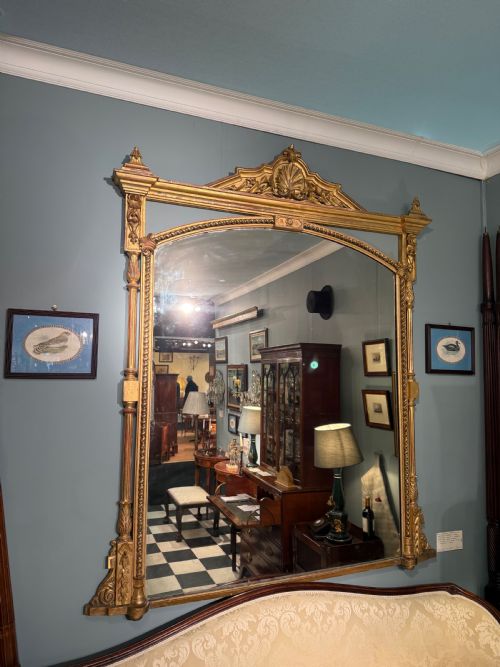
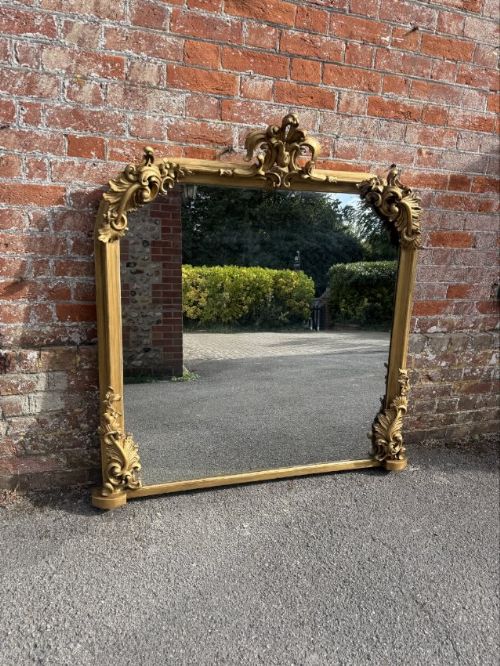
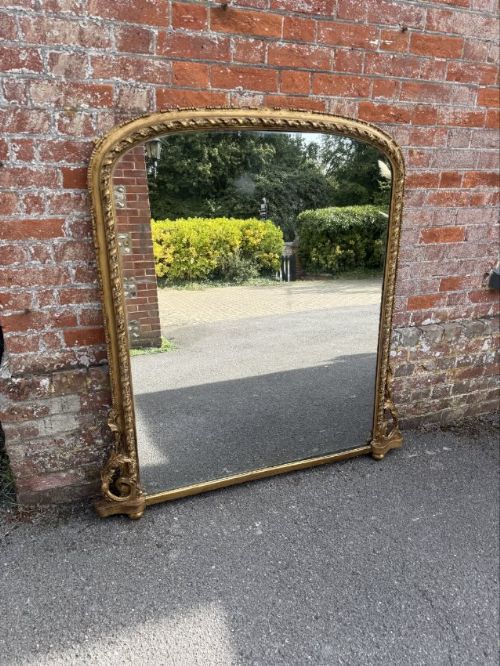
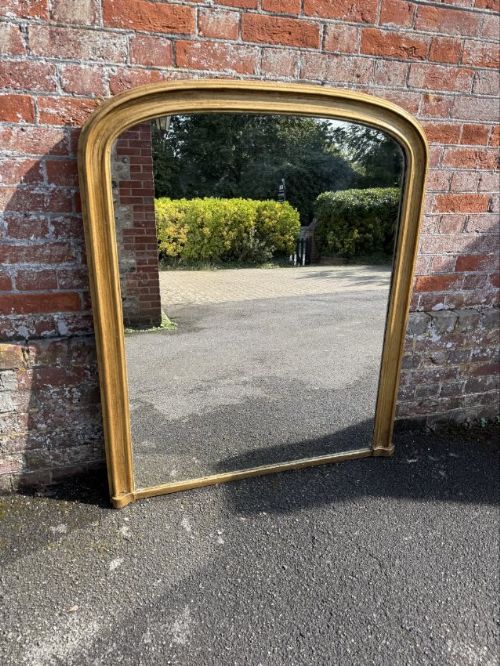

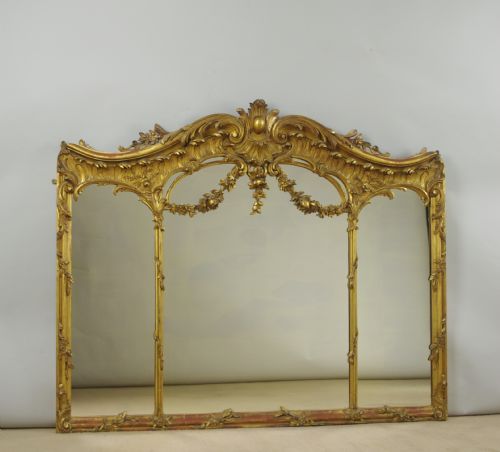


Gilded Wood Fireplace Mirror
A gilded wood fireplace mirror brings architectural presence and reflected light to a room, functioning traditionally above a mantelpiece.
Gilded Wood Fireplace Mirror
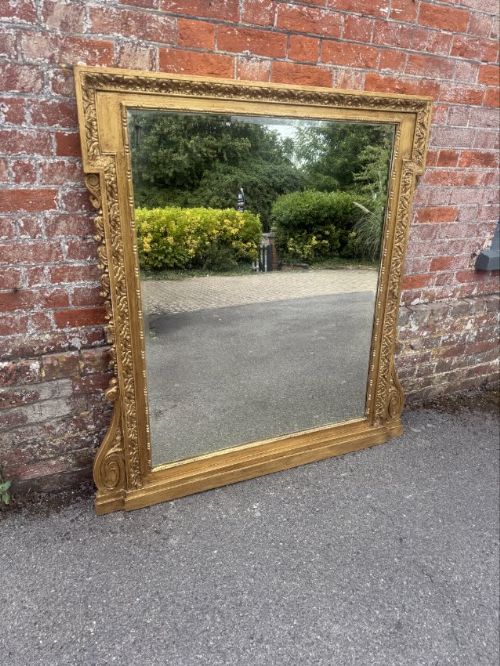
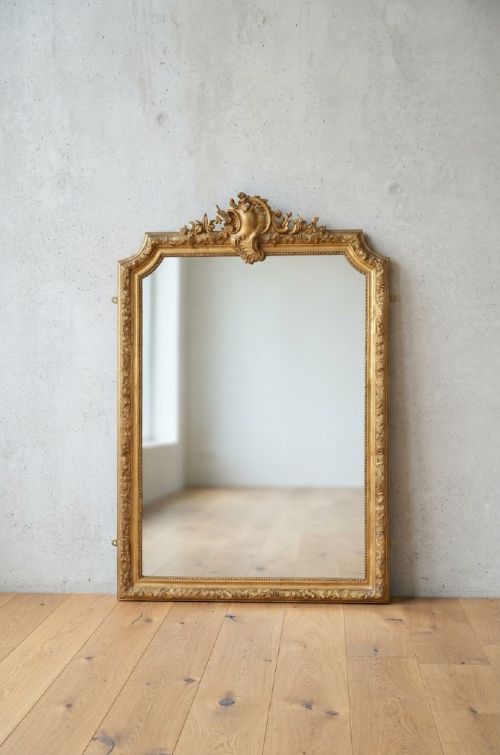
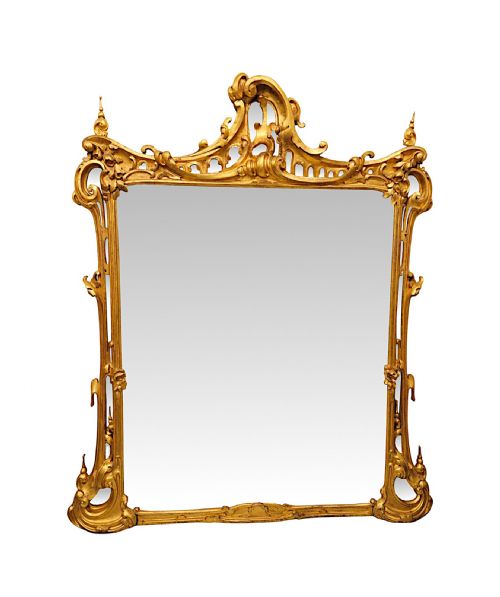
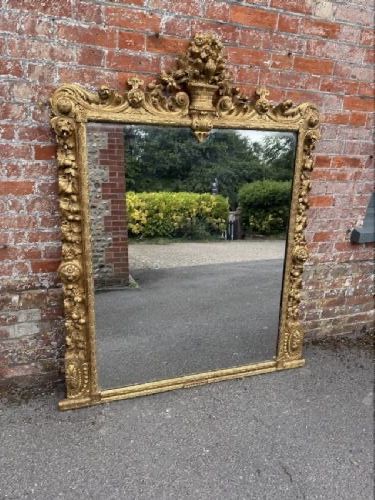
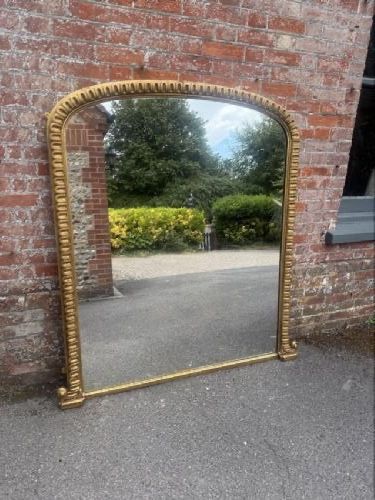
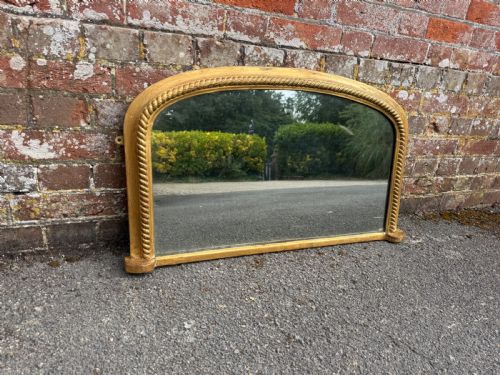
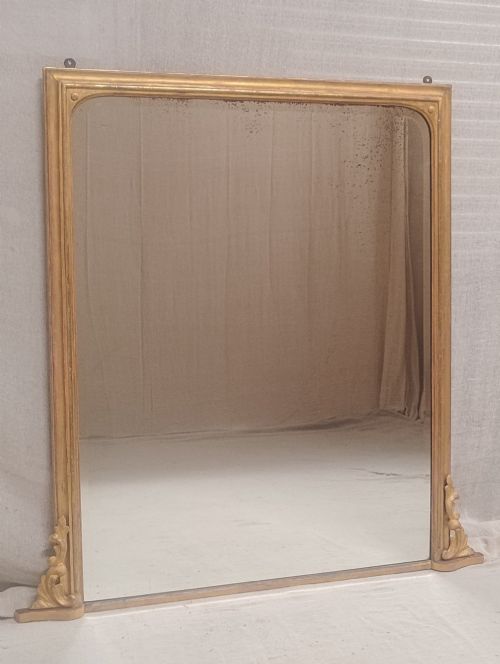
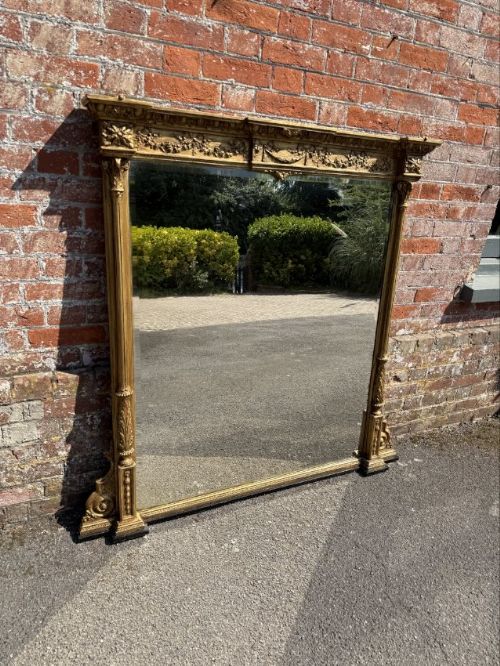
When searching for a gilded wood fireplace mirror, collectors encounter substantial overmantel mirrors designed to sit above chimney breasts. The selections span the nineteenth century, including Victorian pieces alongside Regency, French Chateau, and Chinese Chippendale styles.
Most examples present as large wall mirrors with arched, shaped, or rectangular tops built to command a principal reception room. These heavy furnishings often feature architectural framing such as columns, rope twists, or ribbed mouldings.
Originating largely from English and French workshops, these pieces function primarily as grand focal points. The format frequently employs triple plates or expansive single glass panels to amplify natural daylight within historical interiors.
Materials and construction methods
The underlying structure of these frames relies upon sturdy timber such as pine and carved wood, providing a stable carcass for decorative detailing. Artisans applied layers of gesso over the wooden base to build up intricate relief ornaments and mouldings.
Gold leaf or liquid gilt was then meticulously laid upon the prepared gesso surface to achieve a brilliant metallic sheen. Mirror glass was fitted securely into the finished rebate, often secured by original backboards.
Listings span the nineteenth century, featuring Victorian, Regency, and Louis Philippe periods constructed from pine, gesso, and gold leaf.
Assessing craftsmanship and execution
Quality within these mirrors rests upon the depth and precision of the hand-carved wooden elements and the crispness of the moulded gesso relief. Superior examples maintain rich, unblemished layers of gold leaf that retain their luminosity across intricate scrollwork and architectural columns.
The integrity of the original mirror glass and the rigidity of the heavy timber frame further distinguish finer pieces from simpler utilitarian items.
The Gilded Wood Fireplace Mirror Glossary
- Overmantel mirror
- A large wall mirror specifically scaled to hang on the wall directly above a fireplace mantelpiece. These frames often incorporate architectural motifs to complement the hearth below.
- Gesso
- A plaster-like mixture applied to a wooden frame to create a smooth surface for gilding. Artisans carved intricate decorative details directly into this hardened material.
- Giltwood
- Timber that has been coated with gold leaf or metallic paint. This finish provides the bright reflective surface characteristic of these antique frames.
- Triple plate
- A mirror construction featuring three distinct glass panels set within a single frame. This layout is frequently observed in wide nineteenth-century overmantel designs.
Gilded Wood Fireplace Mirror: Frequently Asked Questions
Where should I hang a fireplace mirror?
These mirrors traditionally anchor the space directly above a mantelpiece, reflecting the room and drawing the eye upward.
Because of their substantial weight and scale, they require secure wall fixings tied directly into structural masonry or heavy studs.
How do I identify a nineteenth-century overmantel?
Nineteenth-century examples typically employ heavy pine carcasses coated in gesso and gold leaf, often featuring arched tops and architectural columns.
Examining the construction of the wooden backboards and the silvering on the glass helps confirm the period of manufacture.
What is the difference between French and English styles?
English nineteenth-century pieces often favour architectural column framing and disciplined geometric lines suited to domestic hearths.
French and Louis revival variants tend toward more elaborate rococo curves, cushion frames, and sweeping naturalistic ornamentation.
Can these mirrors stand on a mantel?
While many historical overmantels rested their weight directly on the mantel shelf while anchored to the wall, modern placement usually requires wall hanging for safety.
The sheer scale and weight of these carved frames demand robust professional installation regardless of placement.