


Gilded Wood Accent Seating
Gilded wood accent seating brings flash and formal presence into a room through carved frames and metallic leaf.
Gilded Wood Accent Seating
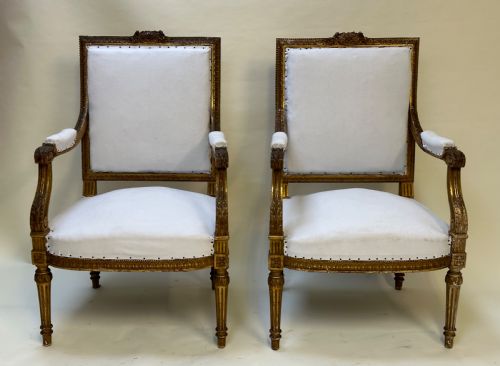
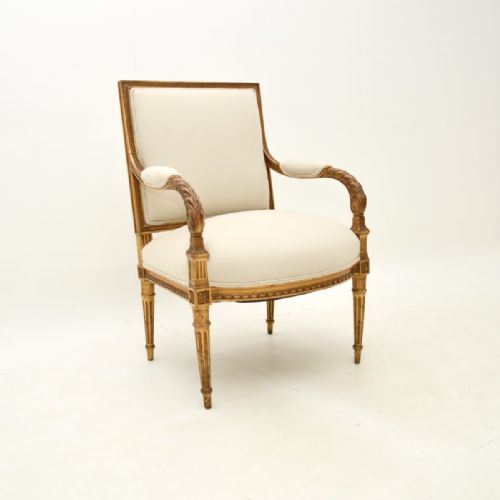
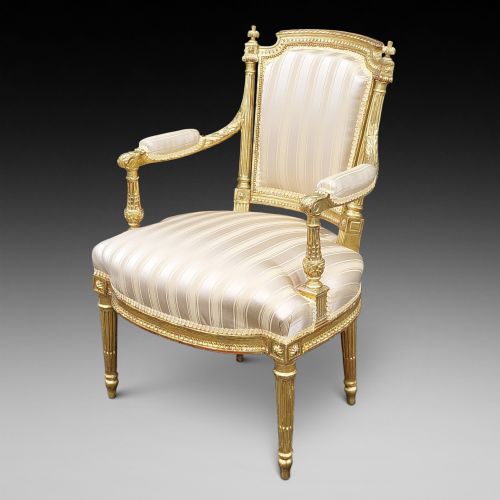
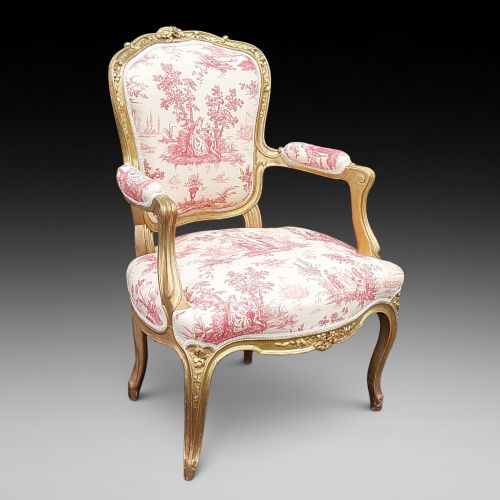
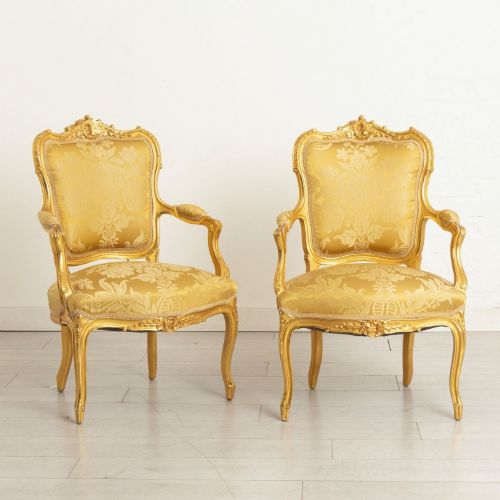
When searching for gilded wood accent seating, collectors encounter ornamental chairs and stools designed to draw the eye in a parlour, bedroom or salon. The selection on this page consists predominantly of nineteenth-century armchairs, side chairs, and small seating forms originating from French and Italian workshops.
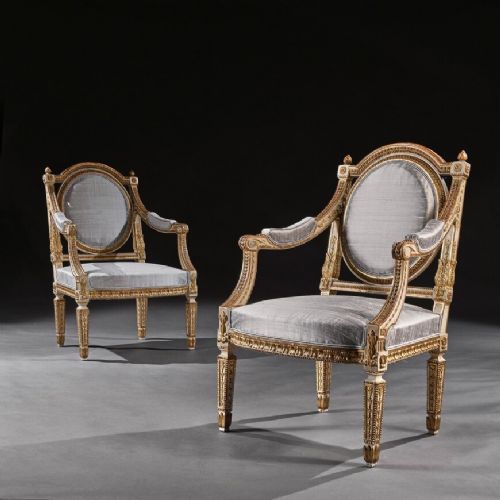
The dominant aesthetic draws heavily on continental vocabularies, particularly Louis XVI style, Rococo revival, and neoclassical design. Pieces range from grand open armchairs upholstered in silk or velvet to compact bedroom chairs and low window seats with gilt legs.
Materials and construction
The underlying frames are constructed from solid timbers such as beech, walnut, and general wood stock, shaped through traditional carving techniques before finishing. Artisans applied thin sheets of gold leaf or paint directly over gesso preparations to build up the metallic surface.
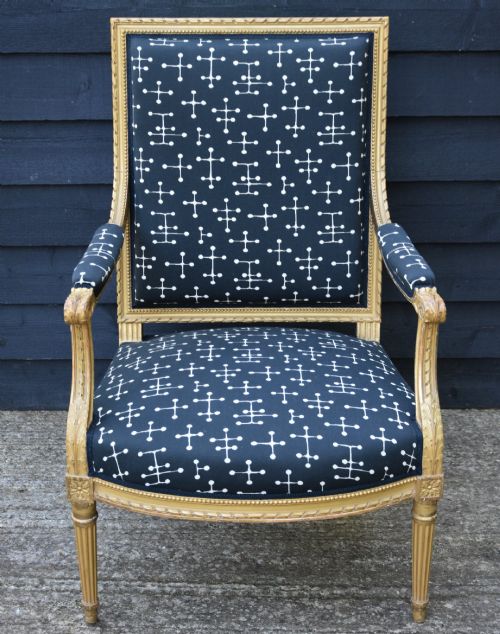
Upholstery forms an integral part of the finished piece, utilising traditional stuffing materials enclosed in textiles like silk, velvet, and patterned fabric. Structural support is occasionally reinforced with brass elements or secondary framing to maintain stability across delicate open arms and cabriole legs.
Even a humble bedroom chair demands a touch of theatre when finished with ebonised wood and bright gilt legs.
Judging quality in gilt seating
Quality rests significantly on the crispness and depth of the wood carving, where hand-chiseled detail outclasses flat or machine-molded surface decoration. The application of the gold leaf itself dictates longevity, with burnished surfaces reflecting superior craftsmanship compared to flat painted substitutes.
Structural integrity through the joints and the fidelity of the period style determine the standing of an individual piece. Original upholstery systems and period fabric choices add historical weight, whereas poor secondary repairs to the gilt surface diminish visual cohesion.
Lamb of Manchester
The Gilded Wood Accent Seating Glossary
- Giltwood
- Timber coated with gold leaf over a prepared gesso ground. This finish provides the characteristic metallic sheen seen across historical French and Italian frames.
- Fauteuil
- An open-arm armchair with upholstered back and seat, featuring exposed wooden arms. These chairs were staples of formal French salon seating arrangements.
- Bergere
- An enclosed armchair with upholstered sides and a padded back, typically featuring a loose seat cushion. They offer a deeper, more substantial sit than standard open chairs.
- Curule stool
- A traditional X-shaped seating form inspired by ancient Roman folding seats. Examples in this category often feature giltwood or painted frames.
- Neoclassical
- A design style inspired by classical antiquity that emphasises straight lines, symmetry, and restrained ornamentation. It stands in direct contrast to the curved exuberance of Rococo.
Gilded Wood Accent Seating: Frequently Asked Questions
How do I place an accent chair?
These chairs function best in spaces where their decorative frames can be appreciated from multiple angles, rather than pushed strictly against a wall. Pair an armchair with a small side table or position a stool at the foot of a bed.
Because the gilt finish and silk or velvet upholstery draw substantial visual weight, balance the seating against simpler surrounding furnishings to avoid crowding the room.
Are these chairs comfortable to sit on?
Comfort varies depending on the specific form, as salon and side chairs were built primarily for upright posture during formal gatherings. Bergere chairs and padded armchairs offer a deeper, more relaxed sit suitable for reading or general lounging.
Many pieces rely on historical upholstery methods that feel firmer than modern cushioning, though newer fabric updates often incorporate supportive modern interiors.
How do I distinguish French and Italian pieces?
French designs in this selection frequently follow courtly fashions like Louis XVI and Rococo revival, emphasising refined symmetry, delicate floral carving, and balanced proportions. Italian pieces often lean into bolder neoclassical or Barocchetto interpretations with heavier carving and distinctive painted accents.
Both regional traditions utilised high-quality giltwood, but the underlying silhouette and decorative motifs usually signal the country of origin.
How do I care for giltwood frames?
Protect the fragile gold leaf surfaces by keeping chairs away from direct sunlight and excessive humidity, which can cause the underlying gesso and wood to crack or flake. Dust the carved details gently with a dry, soft cloth rather than using liquid polishes.
Avoid applying chemical cleaners to the metallic finish, as harsh agents will strip away the delicate leaf layer over time.