



Gilded Wall Mirror Set
These gilded wall mirror set pieces bring grand decorative presence to a room, combining large mirrored glass with matching consoles and frames.
Gilded Wall Mirror Set
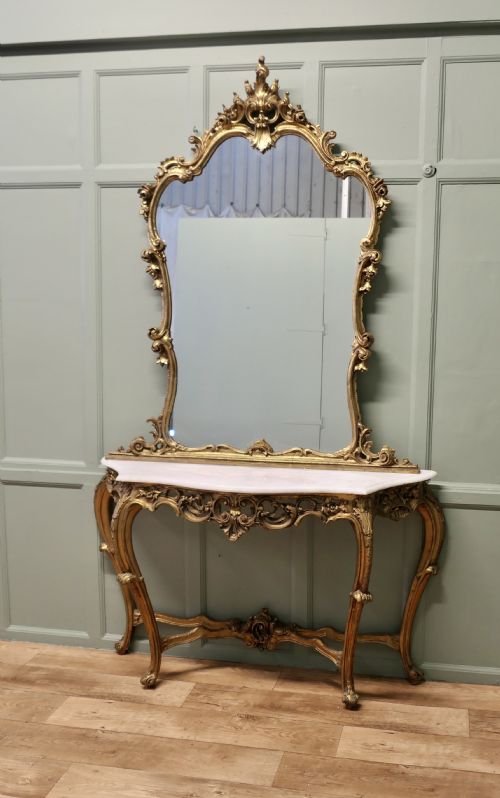
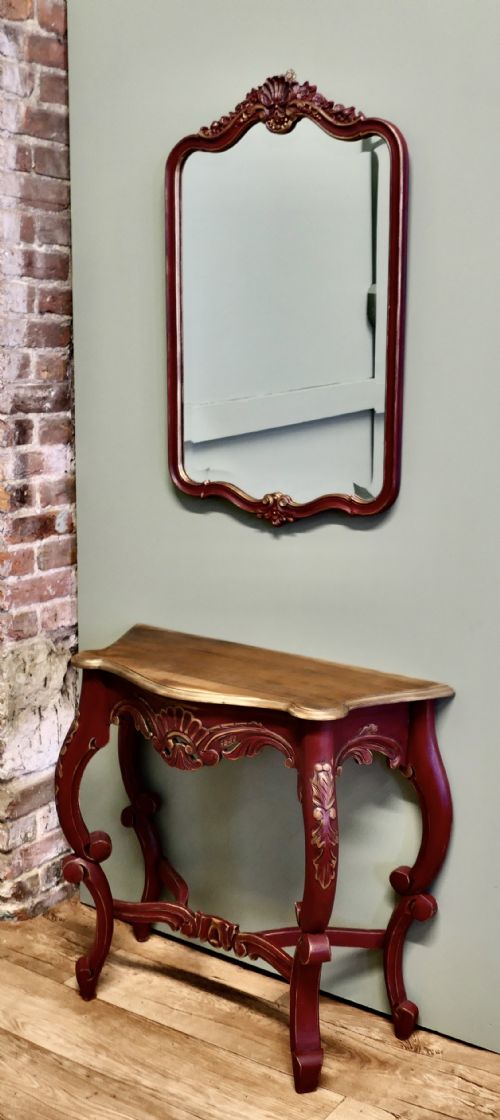
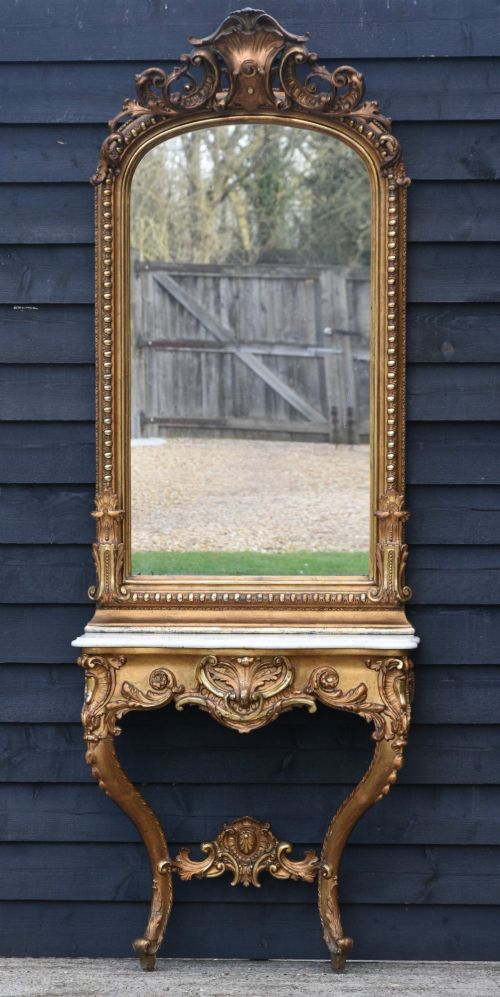
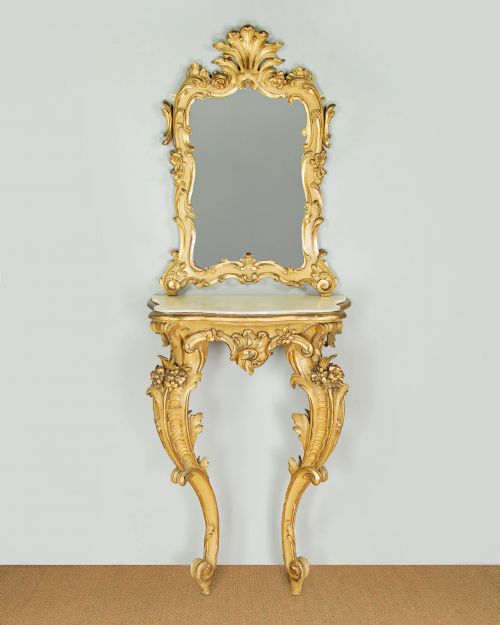
A gilded wall mirror set brings together decorative looking glasses and matched furniture, most frequently appearing as console tables paired with pier mirrors from the nineteenth century. These combinations often incorporate marble tops on the tables and elaborate carved frames for the glass.
The selections span various iterations including French and Italian Rococo Revival pieces, alongside Neoclassical designs and twentieth century examples. Buyers frequently encounter console table and mirror combinations designed to sit flush against a wall in reception spaces.
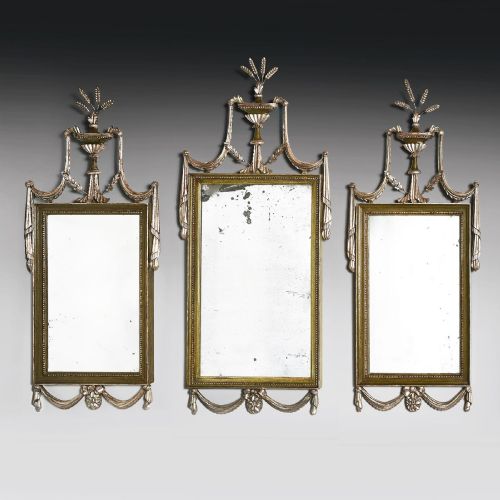
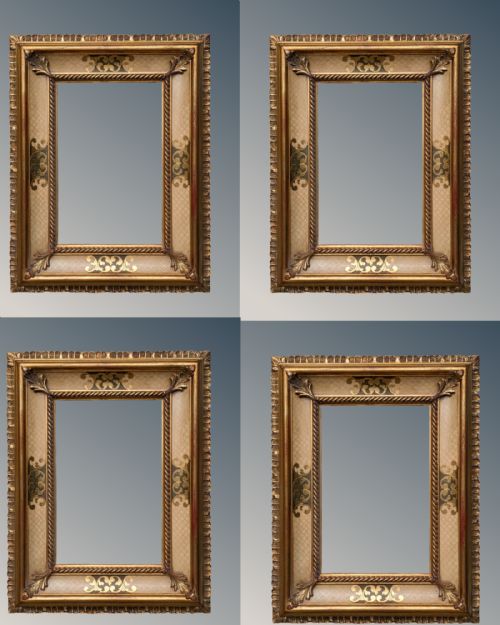
Beyond table sets, the category encompasses groups of picture or wall frames sharing identical surface treatments and ornamentation. These ensembles reflect historical interior schemes where matching gilt furnishings created a cohesive decorative impact.
Materials and construction methods
Construction relies heavily on timber substrates shaped and assembled to form complex carved frames and table bases. Artisans applied gesso over the wood to build up intricate relief ornaments before gilding.
Surfaces received finishes in giltwood or silver leaf, catching the light and defining the sculptural details characteristic of revival styles. Marble slabs were fitted to console tables, providing durable and decorative surfaces beneath the tall wall mirrors.
Some sets retain their original green painted highlights beneath the silver leaf, adding an unexpected flash of colour behind the glass.
Distinctions in quality and execution
The depth and crispness of the hand-carved detail separate standard decorative pieces from finer examples. Skilful execution in the gesso and gilding work ensures the ornamentation retains sharp definition rather than appearing softened by thick over-application.
Integration between the console table and its matching mirror indicates the original design intent and harmony of the ensemble. Consistency in the silver leaf or giltwood ageing across both items points to a unified origin rather than assembled pairings.
Gillows Of Lancaster·Charles Nosetti
The Gilded Wall Mirror Set Glossary
- Giltwood
- Wood carved and coated with gold leaf or metal leaf to create a brilliant metallic surface. This finish defines the ornate frames and console tables found across nineteenth century examples.
- Gesso
- A plaster-like mixture applied to wood bases as a smooth ground for gilding and relief carving. It allows artisans to shape intricate decorative motifs before applying gold or silver leaf.
- Console Table
- A table supported against a wall by console brackets or legs, frequently paired with a matching wall mirror. These tables often feature inset marble tops.
- Pier Mirror
- A tall mirror specifically designed to hang on the wall space between windows. They frequently sit directly above console tables in matching sets.
- Rococo Revival
- A nineteenth century design style characterised by asymmetrical scrolls, C-curves, and naturalistic plant motifs. This aesthetic heavily influences the carved frames and table bases in these collections.
Gilded Wall Mirror Set: Frequently Asked Questions
What is a gilded wall mirror set?
A gilded wall mirror set comprises matching decorative mirrors and furniture, most commonly combining a console table with a tall wall glass. These pieces are unified by giltwood, gesso, or silver leaf finishes and ornate carved details.
Historically designed to complement each other within grand interiors, they function as a single visual unit when placed against a wall.
How were these sets used originally?
These ensembles were placed in principal reception rooms, often positioned on the pier wall between windows to reflect natural light deeper into the space. The accompanying console table provided a surface for decorative objects while anchoring the mirror visually.
Their grand proportions and reflective glass served to amplify the sense of space and illumination in nineteenth and early twentieth century homes.
How do I care for giltwood and gesso surfaces?
Giltwood and gesso require gentle maintenance using a soft, dry cloth to remove dust without disturbing the delicate metallic leaf. Moisture and harsh cleaning agents must be avoided entirely to prevent lifting or flaking of the finish.
Keeping the pieces away from direct heat sources and strong sunlight protects both the wooden substrates and the applied surface treatments over time.
How do I distinguish nineteenth century styles?
Nineteenth century pieces often draw heavily on Rococo Revival or Neoclassical aesthetics, distinguished by either flowing asymmetrical scrolls or symmetrical architectural lines. The materials, such as heavy timber frames with gesso relief and inset marble tops, point directly to this period of revivalism.
Examining the construction methods and the wear of the giltwood helps differentiate genuine nineteenth century manufacture from later twentieth century interpretations.