
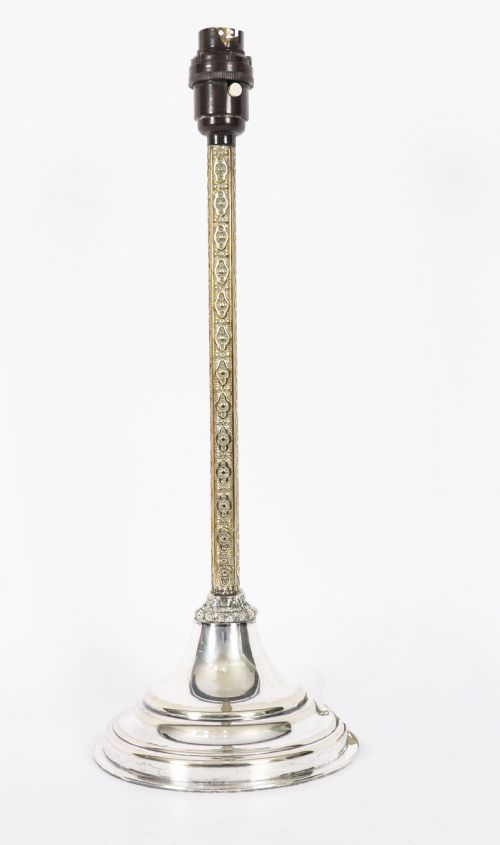
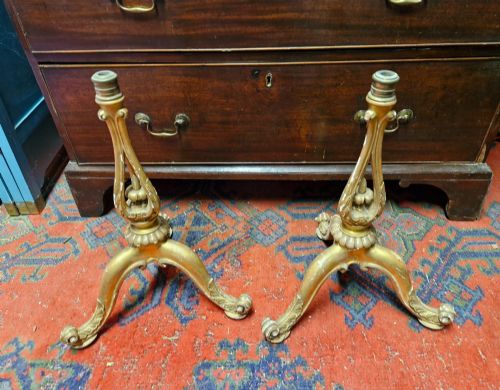
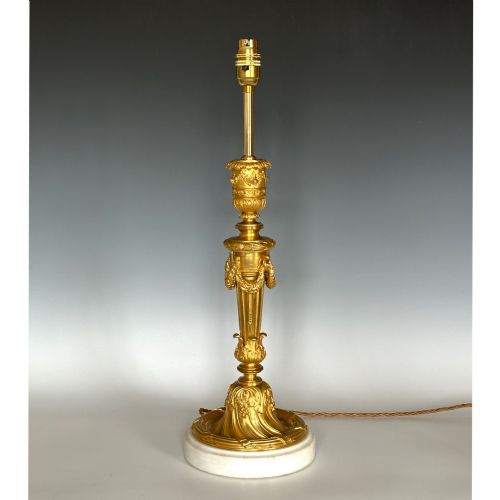
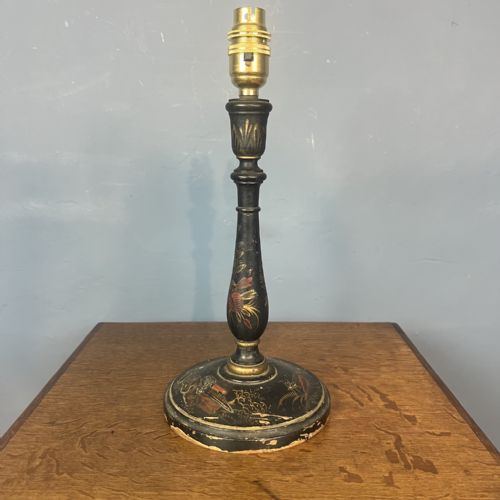


Gilded Table Lamp Base
A gilded table lamp base brings warmth and surface reflection to a room, drawing the eye with carved detail or cast metal.
Gilded Table Lamp Base
A gilded table lamp base is a vertical support designed for lighting, surfaced in gold leaf, giltwood, or ormolu. When searching for a gilded table lamp base, a buyer encounters pieces originating from the nineteenth century into the early twentieth century, spanning Victorian, Edwardian, and continental styles.
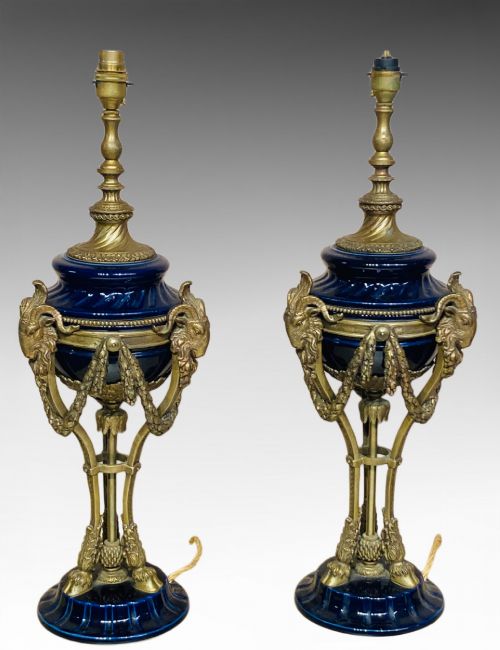
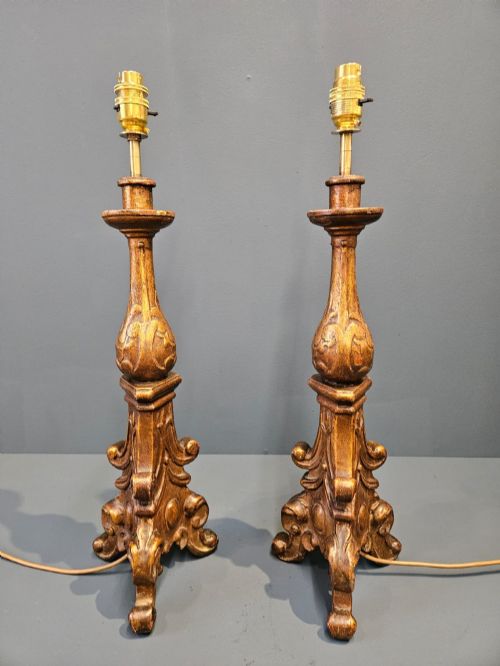
The selection on this page centres heavily on converted oil lamps, pricket sticks, and classical vases adapted for electricity. Forms range from turned timber and carved Italian giltwood to cast brass, ormolu, and Japanese Satsuma ceramics mounted with gilded fittings.
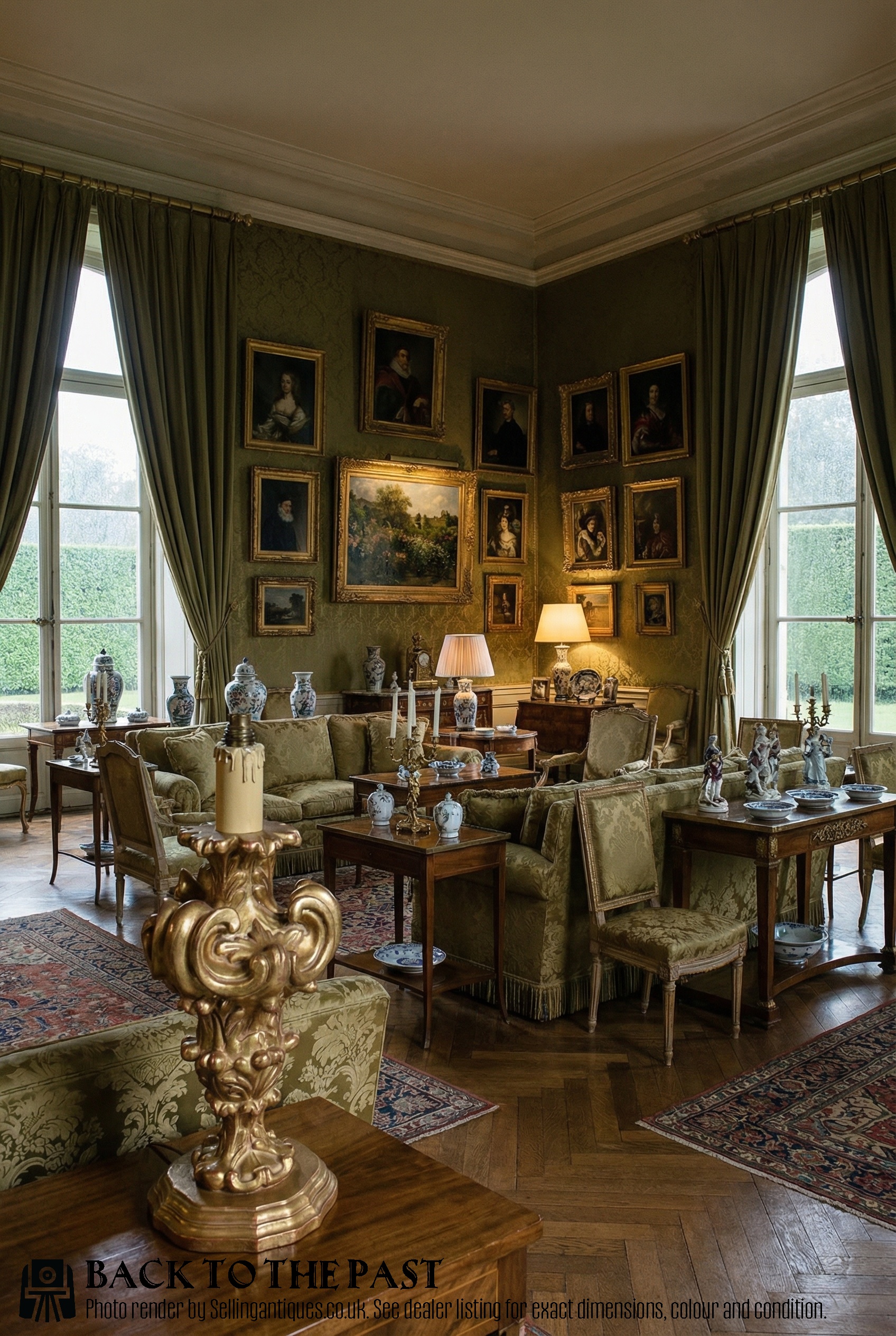
Victorian and continental pieces dominate the inventory, often showing French Empire, Louis XV, or Chinoiserie influences. Buyers frequently find pairs as well as singular tall standards intended for side tables or occasional surfaces.
Materials and Construction
Carvers shaped timber, gesso, and giltwood by hand, laying thin gold leaf over prepared grounds to achieve a brilliant metallic sheen. Metalworkers employed cast brass, bronze, and ormolu, utilising mercury gilding or electroplating to coat the base surfaces.
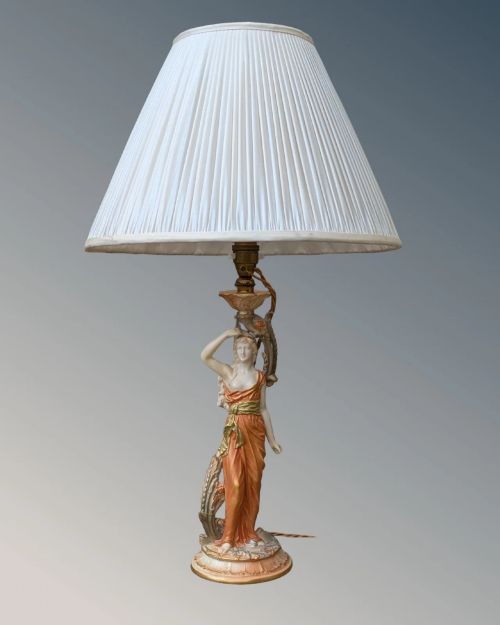
Makers combined mixed media, pairing carved stone, onyx, and porcelain with gilded metal mounts and structural brass stems. Ceramic bodies from Chinese ginger jars to Japanese Satsuma ware were drilled and fitted with metal collars to hold electrical components.
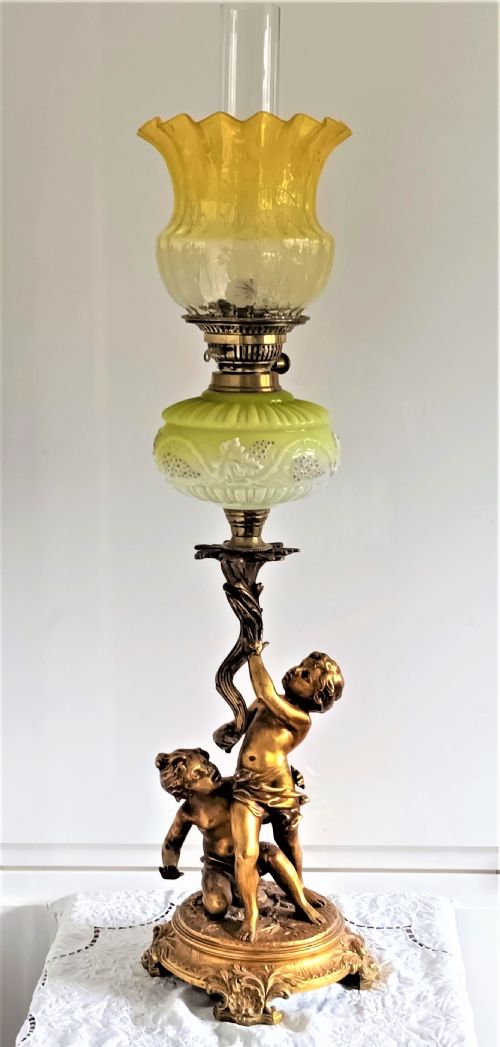
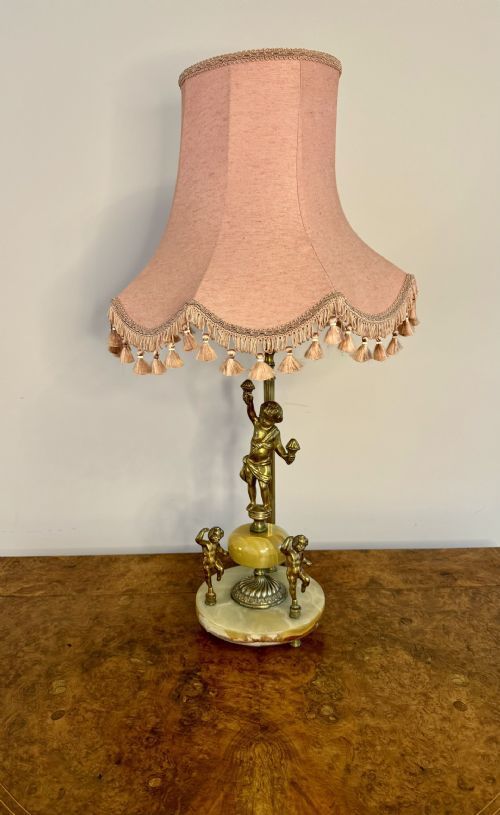
Young girls blowing kisses and playful cherubs frequently perch upon nineteenth-century French ormolu columns, holding light aloft with permanent cheer.
Assessing Quality
Quality rests upon the crispness of the carving or the precision of the metal casting. Hand-chased ormolu and deeply carved giltwood show sharp relief and careful articulation, whereas lesser examples rely on soft plaster moulds or flat stamping.
The integrity of the gilding itself marks the division between standard and superior pieces. Original gold leaf or mercury gilding retains a warm, layered depth, while poor or unsympathetic later re-gilding flattens the underlying detail.
Mappin & Webb·George Bullock·Royal Worcester
The Gilded Table Lamp Base Glossary
- Ormolu
- Finely detailed gilded bronze, cast and chased, widely used in French furniture and lighting mounts during the eighteenth and nineteenth centuries. This technique provides a heavy, luminous finish.
- Giltwood
- Timber, usually soft wood or gesso-coated wood, covered in thin sheets of gold leaf. It offers a rich, reflective surface favoured in classical and baroque designs.
- Pricket stick
- A candlestick or lamp base featuring an upward-pointing metal spike rather than a socket. These were originally designed to hold large wax tapers.
- Chinoiserie
- European decorative style inspired by Chinese art and aesthetics, popular in lacquerwork and painted lamp bodies. It reflects eighteenth and nineteenth-century interpretations of Eastern motifs.
Gilded Table Lamp Base: Frequently Asked Questions
What is a gilded table lamp base?
A gilded table lamp base is a structural support for lighting coated in gold leaf, giltwood, or cast bronze ormolu.
These pieces range from converted nineteenth-century oil lamps and altar sticks to decorative ceramic vases fitted for modern wiring.
How do I date a lamp base?
Dating relies on identifying the underlying material, decorative style, and construction methods characteristic of specific periods like the Victorian era or the Edwardian years.
Stylistic cues such as French Empire mounts or Japanese Satsuma ceramic bodies provide further chronological markers.
Were these always electric lamps?
Most antique examples began life as oil lamps, candlesticks, altar sticks, or decorative vases before conversion.
Maker adaptations and later rewiring transformed these functional objects into table lamps for domestic lighting.
How do I style a gilt lamp?
A gilded lamp adds vertical height and reflective metallic texture to side tables, cabinets, and desks.
Pairing them with neutral fabric shades allows the carved wood or cast metal base to remain the focal point of the arrangement.