



Gilded Room Divider
A gilded room divider offers functional elegance, partitioning spaces with the reflective warmth of gold leaf and lacquer across multi-panel frames.
Gilded Room Divider
A gilded room divider serves to partition interior spaces while introducing architectural presence through multi-panel construction. When searching for a gilded room divider, buyers encounter folding screens originating from various periods, including the eighteenth and nineteenth centuries.
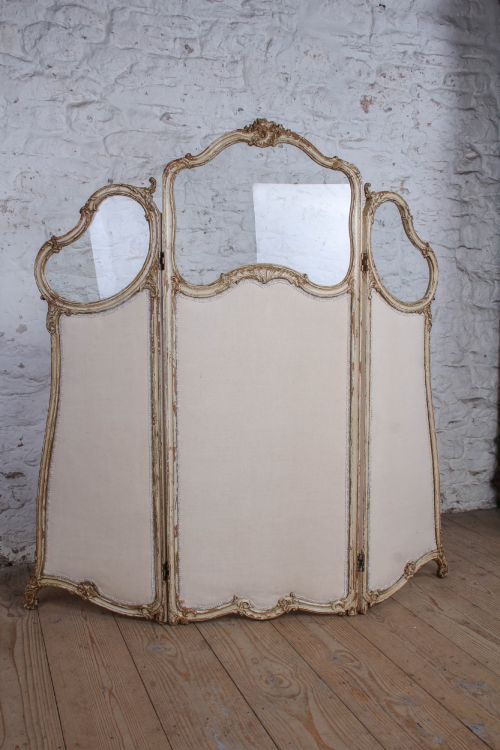
The pieces listed here span distinct aesthetic traditions, featuring French Rococo Revival, Chinoiserie, Regency, and Chinese Republic Era influences. Folding screens and dressing screens dominate the selection, utilising varying panel counts from three-fold vanity configurations up to extensive eight-fold expanses.
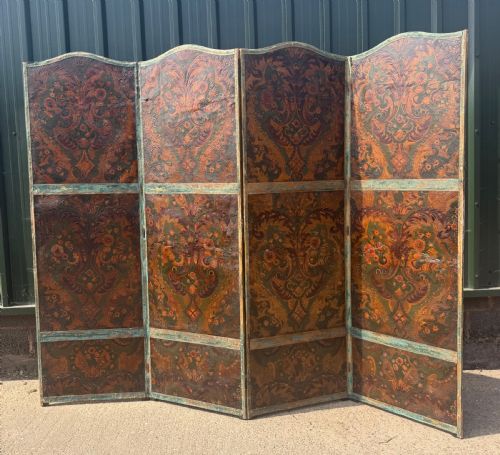
Materials vary widely across these folding screens, incorporating painted canvas, tooled leather, lacquer, and glass within wooden frames. Continental and East Asian origins appear frequently, alongside specific interpretations such as Dutch leather work and French Aubusson textile panels.
Construction and materials
Makers constructed these frames primarily from wood, applying gold leaf, giltwood, or brass detailing to achieve the characteristic metallic finish. Panels frequently incorporate painted canvas, Cordoban leather, or lacquer surfaces applied over structural supports.
Techniques range from hand-painting and gilt embossing to integrating glazed panels and Aubusson tapestry inserts. Lacquer work and polychrome decoration require layered application processes executed on wood or canvas substrates.
Gilded Room Divider Retail Price Guide 2026
Typical asking prices for gilded room divider among the pieces listed under this phrase on Sellingantiques today, from the lower quarter to the upper quarter. They describe what is for sale here now, not the wider market.
Several screens boast enough folds to hide an entire orchestra behind them.
Distinctions in craftsmanship
The refinement of the surface decoration separates standard examples from exceptional pieces, particularly in the execution of hand-painted Chinoiserie or gilt embossing. The depth and handling of the gold leaf or giltwood carving dictate the visual impact of the frame.
Paul Sormani
The Gilded Room Divider Glossary
- Giltwood
- Wood that has been treated with gold leaf or a gold-coloured metallic finish. This technique creates a luminous surface that catches ambient light within an interior.
- Chinoiserie
- European artistic style reflecting Chinese decorative motifs, popular in furniture and screen design. Artisans utilised this aesthetic to introduce exotic pictorial narratives onto lacquer and canvas surfaces.
- Cordoban leather
- Heavy, embossed, and painted leather originating from Spain, often enriched with silver or gold. This material provides a durable and ornate surface suitable for multi-panel screens.
- Aubusson
- Tapestry woven in the French town of the same name, frequently integrated into furniture and screens. These textile panels introduce soft woven textures alongside rigid wooden and gilded frames.
- Vanity screen
- A smaller multi-panel screen traditionally utilised in dressing rooms or bedrooms for privacy. These pieces typically feature three folds and delicate glass or fabric inserts.
Gilded Room Divider: Frequently Asked Questions
How were gilded room dividers used?
These screens divided large rooms into intimate zones and shielded occupants from draughts near doors or windows. They also served as dressing screens in private chambers.
In grand interiors, folding screens functioned as decorative focal points against plain walls. Their portability allowed owners to alter the layout and visual flow of a room easily.
Where should I place a room divider?
Position a folding screen perpendicular to a wall to create a cosy seating corner or to partition an open-plan space. They work effectively in bedrooms, living rooms, and dressing areas.
Ensure the panels receive adequate ambient light to highlight the gold leaf, lacquer, or painted details without exposing fragile materials to direct sunlight.
How do I count screen panels?
Panels are counted individually as upright sections connected by hinges, such as a three-fold or eight-fold configuration. Each vertical leaf contributes to the overall width of the screen.
Wider screens with more panels offer greater coverage and stability when arranged in a zig-zag formation across a floor.
What is the difference between Chinoiserie and Japanese screens?
Chinoiserie screens reflect European interpretations of Chinese motifs, featuring fantastical landscapes and figures painted on lacquer or canvas. Japanese screens typically originate from East Asian traditions, showcasing distinct pictorial styles.
Both traditions utilise folding panel construction but employ different vocabularies of flora, fauna, and narrative scenes.