
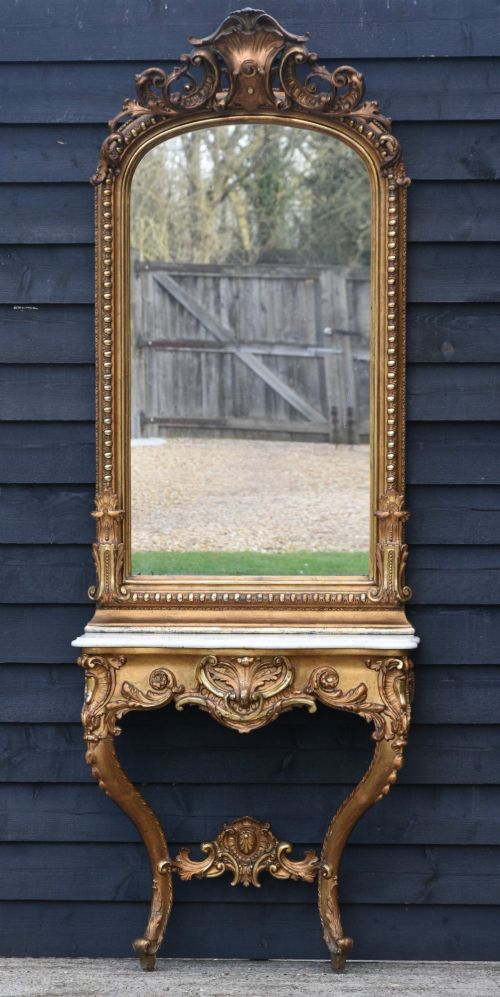
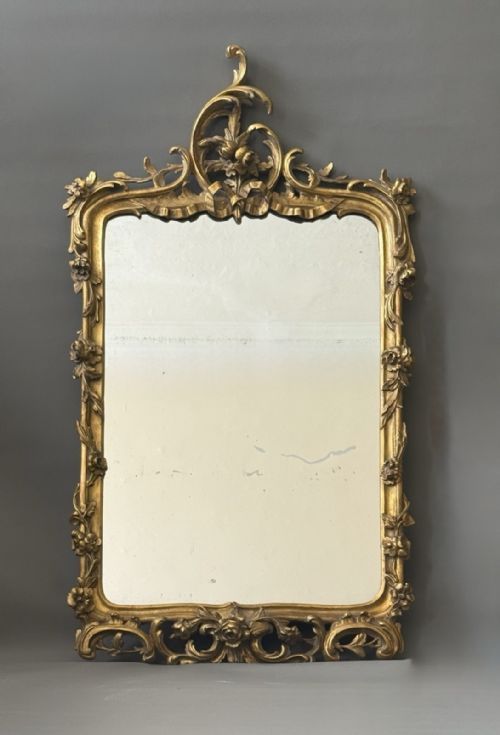
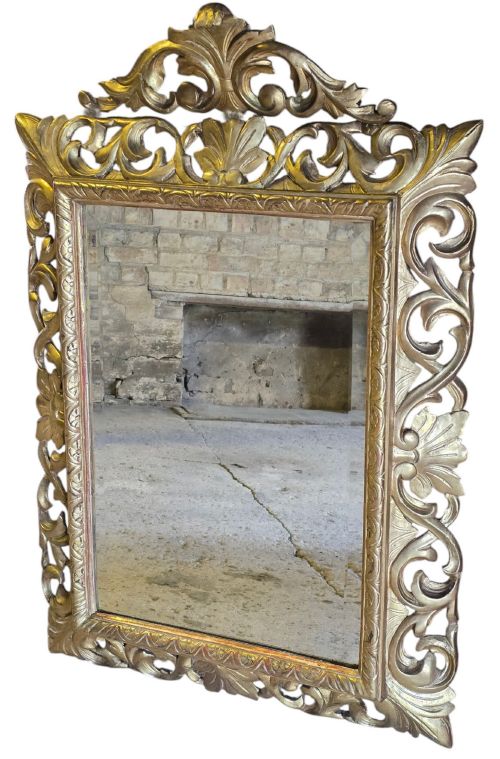
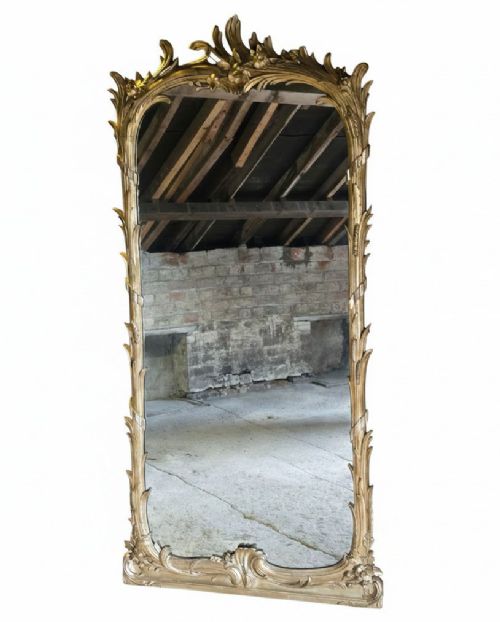
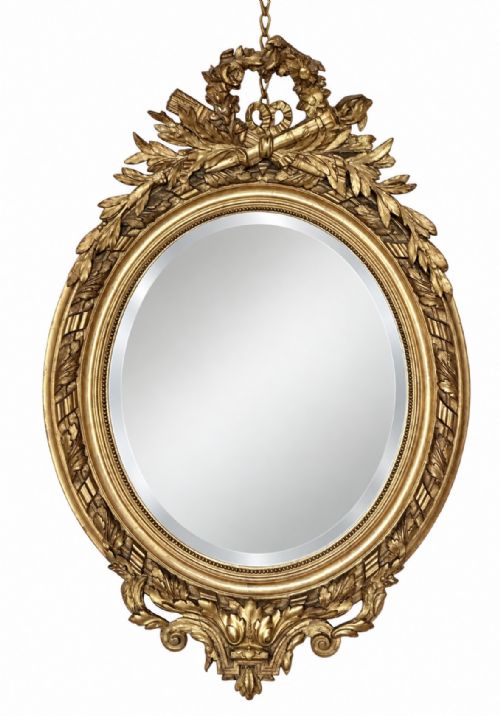
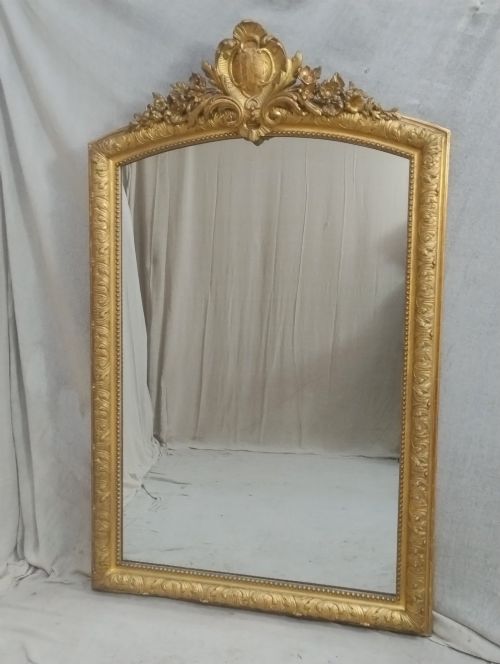


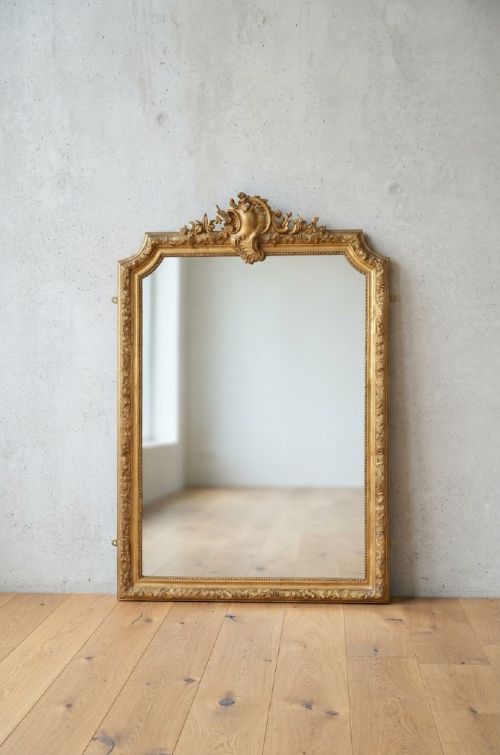
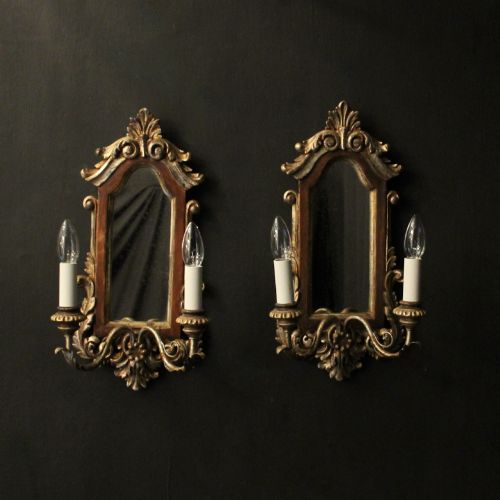
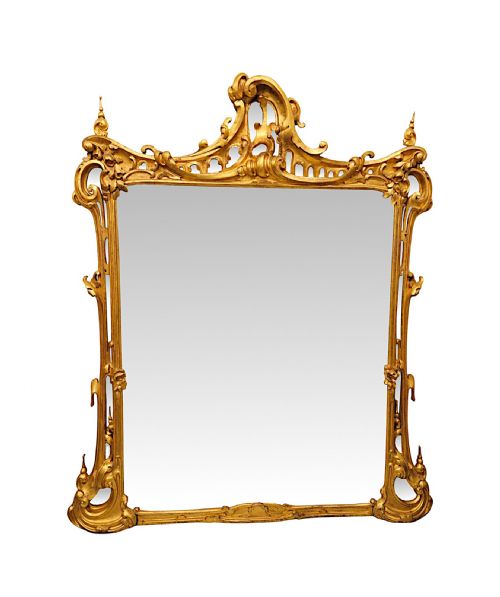
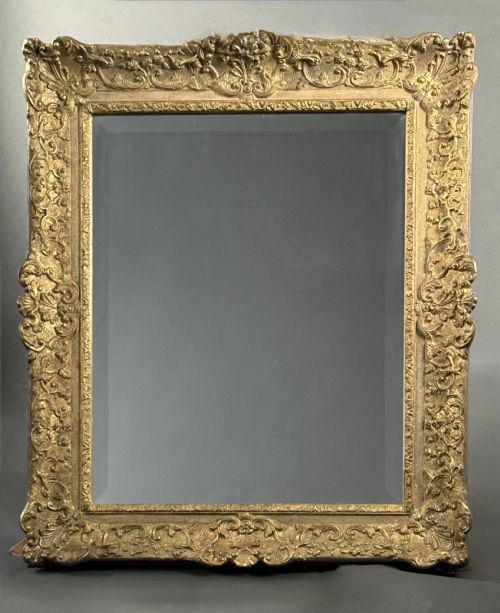
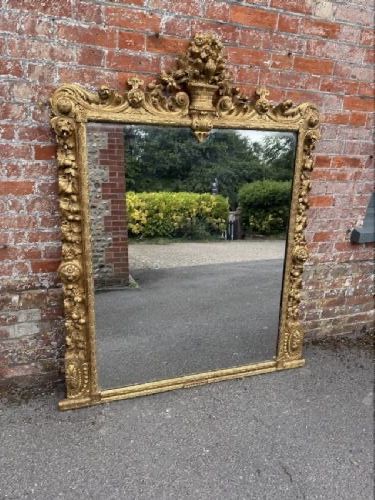
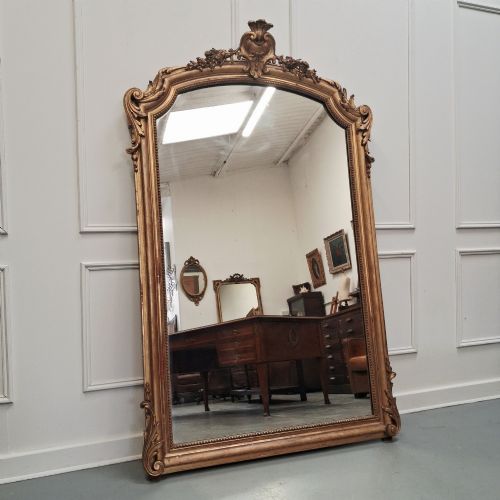
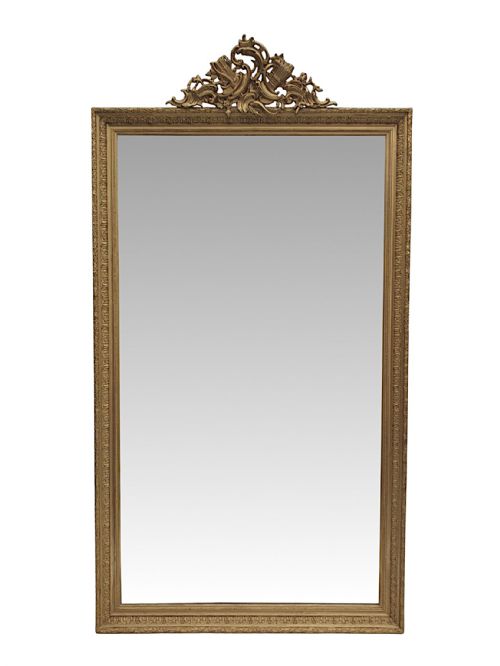
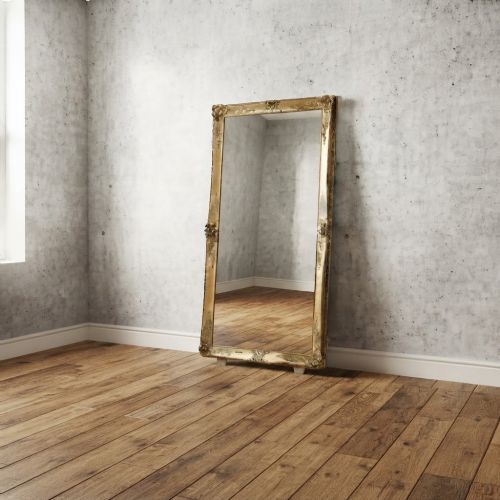
Gilded Rococo Mirror
These gilded rococo mirror pieces bring dramatic curved ornamentation and gleaming metallic surfaces to any interior.
What these pieces are
A gilded rococo mirror captures the ornate, scroll-heavy aesthetic typical of the Rococo Revival, Louis XV style, and Victorian eras. These decorative objects primarily manifest as substantial wall mirrors and large overmantel mirrors designed to anchor a room.
The pieces appearing in these listings stretch across the nineteenth century, including specific dates such as eighteen-sixty, eighteen-eighty, nineteen-hundred, and general nineteenth-century examples. Origin points span across English, French, Italian, and Venetian workshops.
Forms range from intimate drawing room mirrors to grand overmantels and girandoles. Buyers seeking this phrase look for authentic period character driven by asymmetrical curves, elaborate carving, and gilded finishes.
How they were made
Maker construction relies heavily on organic materials like carved wood, gesso, and composition, layered with delicate applications of gold leaf, water gilding, or paint. Supporting structures utilise timber, while metallic elements incorporate giltwood, gilded brass, and gilded metal.
Craftsmen shaped the characteristic asymmetrical scrolls and flowing motifs through intricate wood carving combined with moulded composition details. The resulting wooden bases received meticulous layers of gesso and gold leaf to achieve a brilliant reflective sheen.
Retail Price Guide 2026
Typical UK retail prices for gilded rococo mirror, calculated from the Sellingantiques database of over a million retail prices indexed since 2003. This retail price guide relies exclusively on Sellingantiques data; no external sources or auction records are used, so the figures do not describe the wider market.
Materials recorded across the inventory include glass, giltwood, gesso, carved wood, gold leaf, paint, composition, brass, and metal.
What varies in quality
Quality separates through the depth and precision of the hand-carved wooden ornament compared to mass-molded composition details. Superior examples exhibit crisp undercut foliage and scrolls that retain their sharpness beneath successive layers of gilding.
The integrity of the original gilt surface and the quality of the glass plate distinguish finer specimens. High-end pieces show harmonious patination where the gold leaf has aged evenly across the complex contours of the frame.
The Gilded Rococo Mirror Glossary
- Giltwood
- Wood that has been coated with gold leaf or powder. This finish gives the carved frames their characteristic metallic brilliance and protection.
- Gesso
- A plaster-like mixture applied to wood frames to create a smooth surface for gilding. It allows craftsmen to model fine details before applying gold leaf.
- Overmantel mirror
- A large mirror designed specifically to hang above a fireplace mantel. These pieces frequently dominate the wall space in nineteenth-century interiors.
- Girandole
- A decorative wall mirror featuring attached candle sconces. The reflective glass multiplies the candlelight within a drawing room.
- Water gilding
- A traditional technique using liquid size to adhere gold leaf to gesso. This method allows the gold to be burnished to a high gloss.
Frequently Asked Questions
Where should I hang an overmantel mirror?
These large mirrors traditionally sit directly above a fireplace mantelpiece to reflect light and anchor the room's proportions.
Ensure the wall fixings securely support the substantial weight of the carved wooden frame.
How do I clean a giltwood frame?
Dust the ornate carved surfaces very gently using a soft, dry brush to protect the delicate gold leaf layer.
Avoid using any liquid cleaners or chemical polishes which can strip the historic gilding.
What is the difference between Rococo Revival and Louis XV style?
Louis XV style refers closely to the eighteenth-century French origins of the asymmetrical scrollwork.
Rococo Revival encompasses the later nineteenth-century interpretations seen across English and European pieces.
How can I tell if gilding is original?
Examine the surface under magnification to check for the fine micro-cracking and wear patterns typical of aged gold leaf.
Original water gilding shows subtle variations in tone across the high points of the carved gesso.