

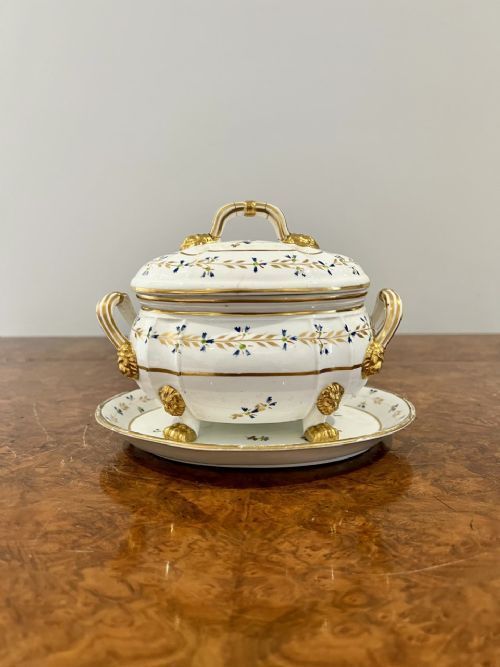


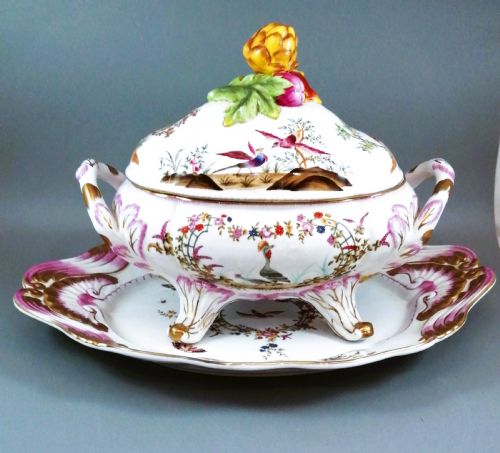


Gilded Porcelain Vegetable Dish
These gilded porcelain vegetable dish examples bring Regency and Victorian dining tables to life with rich gilding, vibrant enamel work and practical lidded forms.
Gilded Porcelain Vegetable Dish
A gilded porcelain vegetable dish or tureen brings formal nineteenth century dining service forms straight to the modern table. These covered vessels were designed to keep cooked vegetables warm and present them with elegance during grand meals.
The pieces most frequently met on this page date from the nineteenth century, including the Regency and Victorian periods, featuring notable makers from English and continental workshops. Forms range from intimate sauce tureens with matching ladles to large soup tureens complete with stands.
Makers utilised durable ironstone alongside fine porcelain and soft-paste porcelain to shape these useful tableware items. Collectors find various regional styles represented, spanning French Rococo Revival, Continental Rococo and Chinoiserie Mandarin patterns.
How they were made
Potters shaped these vessels using porcelain, soft-paste porcelain and ironstone, building robust bodies capable of holding hot food. Glaze was applied before firing to create a smooth, vitreous surface that protected the underlying ceramic body.
Decoration relied on hand-painted enamel and gold leaf or gilt highlights, often accentuating handles, rims and finials. Skilled artisans painted intricate motifs such as Chinoiserie scenes and armorial crests directly onto the fired glaze.
Gilded Porcelain Vegetable Dish Retail Price Guide 2026
Typical asking prices for gilded porcelain vegetable dish among the pieces listed under this phrase on Sellingantiques today, from the lower quarter to the upper quarter. They describe what is for sale here now, not the wider market.
What varies in quality
Quality rests heavily on the crispness of the moulded relief work and the precision of the hand-painted enamel and gilding. Finer pieces display sharply defined handles, smooth glaze application and richly burnished gold leaf that holds its lustre.
The distinction between standard commercial output and exceptional production often shows in the complexity of the painted pattern and the weight of the ceramic body. Pieces associated with prominent period factories generally exhibit superior potting technique and more refined decorative detail.
Crown Derby·Flight Barr And Barr·Masons Ironstone·Chamberlain Worcester·Coalbrookdale·Turner
The Gilded Porcelain Vegetable Dish Glossary
- Tureen
- A deep covered vessel used for serving soups, sauces or vegetables at the table. These items usually include a matching lid and sometimes a fitted stand.
- Ironstone
- A dense, durable type of ceramic patented in the nineteenth century to imitate Chinese porcelain. It offers great strength for everyday tableware while accepting enamel decoration well.
- Soft-paste porcelain
- A ceramic composition made from clay, glass and other materials rather than true china clay. It was fired at lower temperatures, producing a warm glaze and a slightly softer body.
- Gilt
- A thin layer of gold or gold leaf applied to the surface of porcelain or metal. It provides a decorative metallic finish that catches the light on handles and borders.
- Imari
- A decorative style characterised by underglaze blue, iron red and gold details inspired by Japanese export wares. English factories frequently adopted this palette during the Regency period.
Gilded Porcelain Vegetable Dish: Frequently Asked Questions
What is a gilded porcelain vegetable dish used for?
These covered vessels served to hold and retain heat for vegetables, soups or sauces during nineteenth century dinner parties. Today, they function as striking centrepieces or practical tableware for special gatherings.
Collectors often display them on sideboards or use them to serve dishes at formal meals, appreciating their combination of utility and decorative presence.
How do I identify a Regency period tureen?
Regency tureens typically date from roughly eighteen hundred to eighteen twenty, displaying neoclassical or early revival shapes. Look for crisp porcelain bodies, refined gilding and distinct factory patterns associated with that era.
Many pieces from this timeframe carry specific period characteristics such as Imari palettes or finely painted armorial crests.
What is the difference between porcelain and ironstone?
Porcelain is a fine, vitrified ceramic material fired at high temperatures, often prized for its translucency and delicate appearance. Ironstone is a heavier, sturdier earthenware body developed to resist chipping while maintaining a smooth glazed surface.
Both materials were decorated with enamel and gilt, but ironstone offers a much thicker and more robust construction suitable for heavy service.