





19th Century Porcelain Serving Bowl
These 19th century porcelain serving bowl pieces bring heavy hand-painted enamel and gilt ornament directly to the table.
19th Century Porcelain Serving Bowl
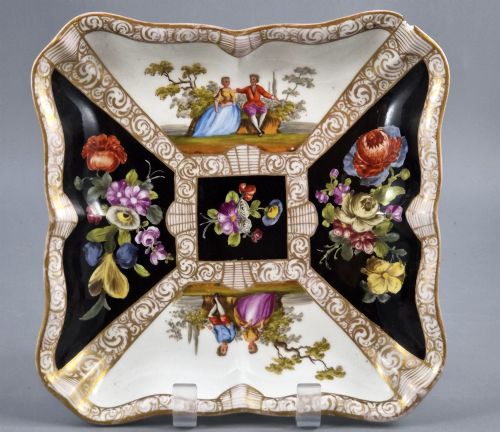
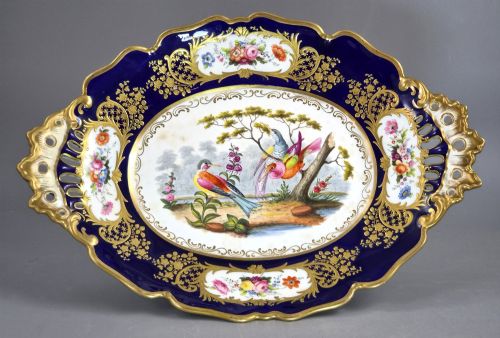
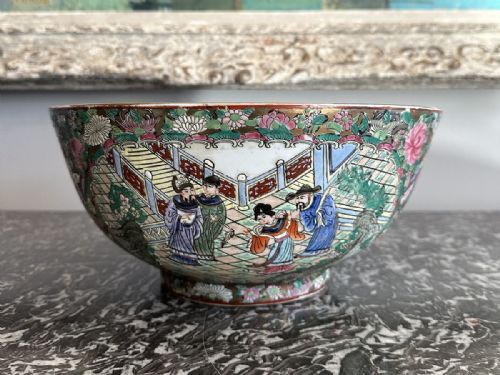
A 19th century porcelain serving bowl covers large table vessels designed for presentation, from soup tureens to square dishes and canton bowls. The pieces visible here span English, German, French, and Asian origins, crossing periods from the Georgian era through to the late nineteenth century.
Meissen, Coalport, and Mason's Ironstone represent the core makers, alongside French works by Louis Pierre Malpass and Edmé Samson. Forms range from heavy ironstone tureens with lids to fine hard-paste porcelain dishes decorated with birds, floral scenes, and Chinoiserie patterns.
Materials and methods
Makers utilised hard-paste porcelain and ironstone as the primary bodies, finished with cobalt underglaze, enamel paint, and gold leaf or standard gilding. Surface decoration frequently combines hand-painted botanical or avian motifs with black grounds or gilt flowers.
Kiln techniques of the period allowed for complex forms such as soup tureens with lids and square dishes, often incorporating moulded rococo revival scrollwork or japonesque transfers.
19th Century Porcelain Serving Bowl Retail Price Guide 2026
Typical asking prices for 19th century porcelain serving bowl among the pieces listed under this phrase on Sellingantiques today, from the lower quarter to the upper quarter. They describe what is for sale here now, not the wider market.
Current listings demonstrate a strong presence of 19th-century European porcelain, featuring English ironstone, German Meissen, and French decorative dishes.
Distinguishing quality
Quality rests in the precision of the hand-painting, particularly on avian or botanical subjects where fine brushwork distinguishes mass production from superior studio output. The crispness of moulded relief and the preservation of gold leaf across handles and rims also mark the tier of a vessel.
The weight of the porcelain body and the depth of cobalt underglaze indicate whether a dish served everyday dining or high-status display. Maker attribution, such as factory marks from Meissen or Coalport, further separates standard wares from notable factory productions.
Coalport·Meissen·Mason’s Ironstone·Samson·Louis Pierre Malpass
The 19th Century Porcelain Serving Bowl Glossary
- Ironstone
- A heavy, durable type of earthenware patent-registered in the nineteenth century to imitate porcelain. It provides a sturdy body for large tureens and serving dishes.
- Hard-paste porcelain
- A true ceramic composition fired at very high temperatures, producing a dense, vitreous body. It resists scratching and takes rich enamel colours well.
- Cobalt underglaze
- A blue pigment applied to the ceramic body before the final glaze and firing. This technique protects the vibrant blue colour from wear during daily use.
- Gilt
- A thin layer of gold applied to the surface of porcelain for ornamentation. It highlights moulded edges, handles, and borders on nineteenth-century serving vessels.
- Chinoiserie
- European artistic styles reflecting Chinese motifs and motifs of East Asia. This aesthetic appears frequently on nineteenth-century dishes and tureens.
19th Century Porcelain Serving Bowl: Frequently Asked Questions
How were serving bowls used?
Nineteenth-century serving vessels held soups, vegetables, or desserts at formal dining tables, often accompanied by matching tureens and plates.
Larger bowls functioned as centrepieces for presentation before food service began.
Can I use these bowls daily?
Most pieces survive from an era of display and careful service rather than rough modern kitchen use.
Hand washing protects fragile enamel painting and delicate gold leaf from detergent damage.
How do I identify Meissen porcelain?
Meissen pieces often feature crossed swords marks painted beneath the glaze alongside hand-painted bird or floral motifs.
German production from this period frequently pairs crisp white hard-paste porcelain with heavy gilding.
What is ironstone?
Ironstone is a dense, durable ceramic developed to withstand heavy dining room use while resembling true porcelain.
Tureens and large dishes utilise this heavy body for added strength.