




Gilded Porcelain Mantel Clock
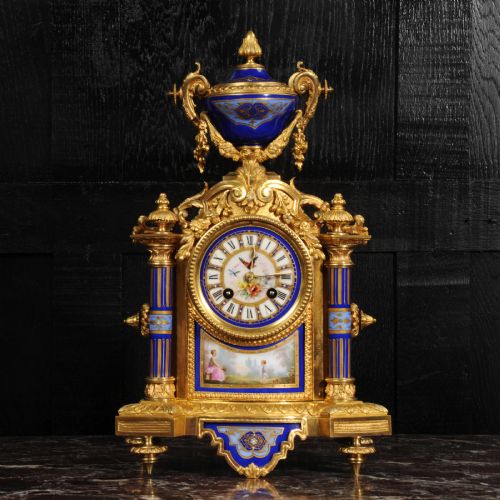
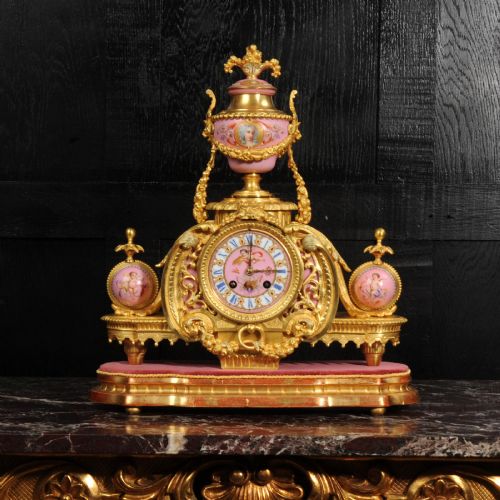
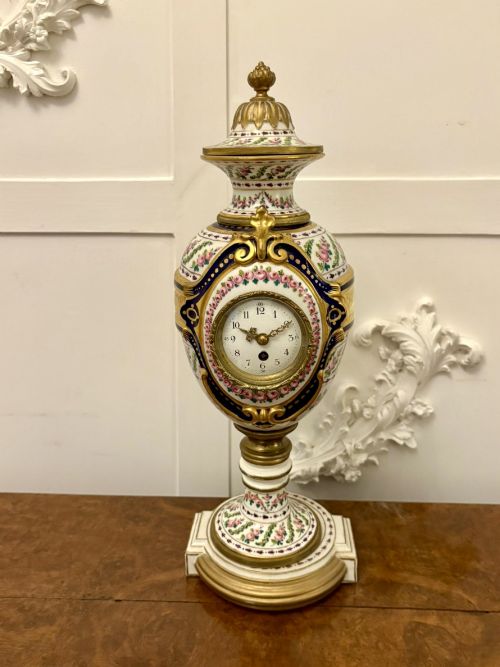
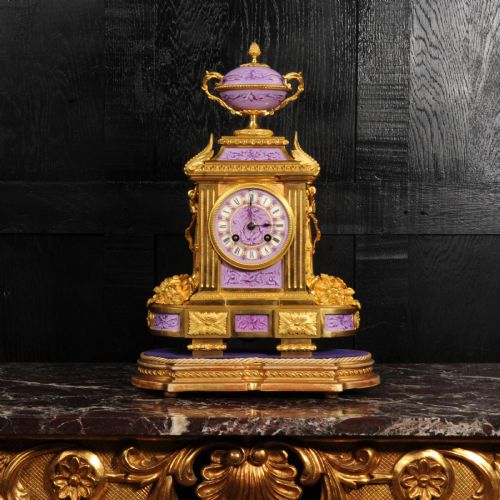
These gilded porcelain mantel clocks combine opulent ormolu mounts with hand-painted ceramic panels, bringing nineteenth-century French domestic splendour to any interior.
Gilded Porcelain Mantel Clock
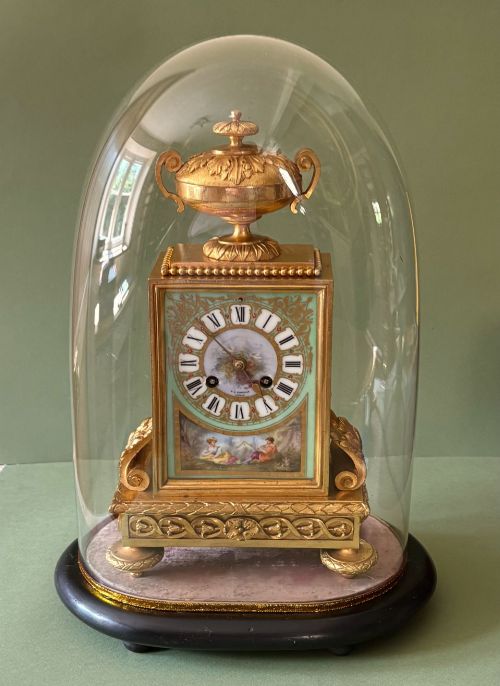
When you search for a gilded porcelain mantel clock, you encounter nineteenth-century French horology dominated by Victorian-era production from the eighteen-fifties through to nineteen-hundred. These pieces typically take the form of table clocks, urn-shaped mantel clocks, or multi-piece garniture sets complete with matching side vases.
The dominant aesthetic draws heavily from French Rococo Revival, Louis XVI Revival, and Napoleon III styles. Workshop origins frequently trace to Paris, encompassing domestic boudoir pieces and grander architectural mantel designs.
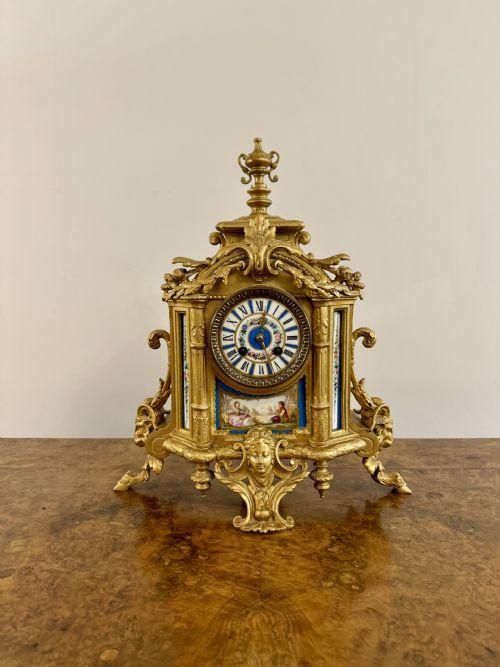
The objects combine timekeeping mechanics with decorative ceramic arts, often housing painted porcelain panels depicting pastoral scenes or floral motifs alongside enamelled dial chapters.
Assessing quality
Quality separates ordinary production from exceptional craftsmanship through the crispness of the ormolu casting, the delicacy of the hand-painted porcelain details, and the reputation of the movement maker.
The integration between the ceramic body and the metal mounts dictates overall refinement, alongside the complexity of the architectural case styling and the presence of fully restored, running mechanical movements.
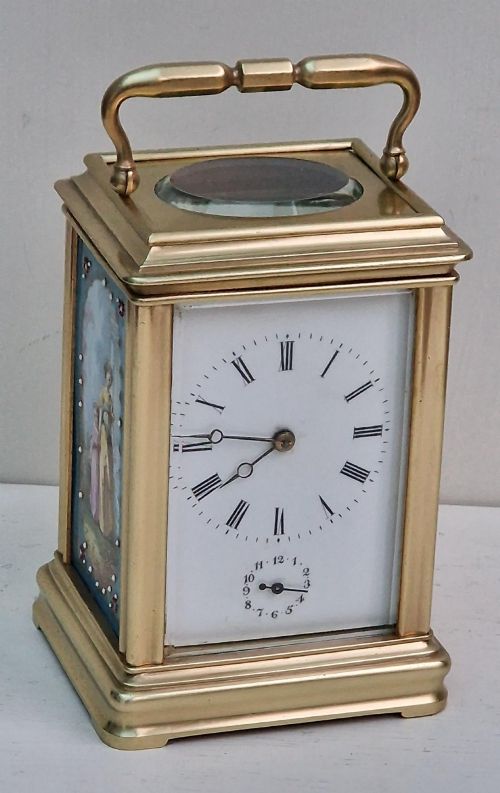
Object types include standalone mantel clocks, carriage clocks, and multi-piece garniture sets with matching urns.
Japy Freres·Achille Brocot·PH Mourey·Le Roy Et Fils·Vincenti Of Paris·Miroy Freres
The Gilded Porcelain Mantel Clock Glossary
- Ormolu
- Gilt bronze created by applying a finely ground high-carat gold-mercury amalgam to a bronze object, which is then heated to drive off the mercury. This technique produced a rich, enduring golden surface on nineteenth-century clock mounts.
- Garniture
- A set of matching decorative objects, typically comprising a central mantel clock flanked by two matching vases or urns. These ensembles created a balanced decorative arrangement on a nineteenth-century fireplace mantel.
- Cartouche
- An ornamental panel or plaque, frequently shaped like a scroll or shield, used on clock dials to frame individual hour numerals. They are commonly rendered in white enamel with dark painted numbers.
- Crystal Regulator
- A type of nineteenth-century mantel clock featuring bevelled glass panels on all four sides, allowing a clear view of the pendulum and delicate brass movement. The cases are usually constructed from gilt brass or ormolu.
- Sèvres
- A term denoting porcelain made by the historic French state-supported manufactory, or applied to pieces decorated in that distinct Rococo and neoclassical style. Genuine pieces and quality revival items alike display meticulous hand-painted details.
Gilded Porcelain Mantel Clock: Frequently Asked Questions
What periods do these clocks date from?
The pieces span the nineteenth century, with particular concentrations in the eighteen-fifties, sixties, and seventies during the Victorian and Napoleon III eras. Later examples extend into the turn of the twentieth century.
Production during these decades was centred largely in France, drawing on revivalist design movements such as Louis XVI and Rococo.
How do clock garniture sets function?
Garniture sets comprise a central mantel clock accompanied by matching side ornaments, usually designed as vases, urns, or candelabra. They were intended to be displayed together on a fireplace mantel or console table as a unified decorative scheme.
The matching side pieces echoed the materials, porcelain panels, and ormolu mounts of the main clock case.
How do I care for a gilt metal clock?
Care requires keeping the piece away from direct sunlight and excessive moisture to protect the delicate hand-painted porcelain and the underlying gilding. Dusting should be done gently with a soft, dry brush without chemical polishes.
Mechanical movements benefit from professional servicing by a horologist every few years to ensure the brass gears remain properly lubricated.
Are these clocks suitable for daily use?
Many of these pieces house fully restored mechanical movements capable of keeping accurate time and striking the hours. Regular winding keeps the gear train functioning smoothly.
However, due to their age and delicate porcelain components, they require careful handling and placement away from heavy vibrations.