
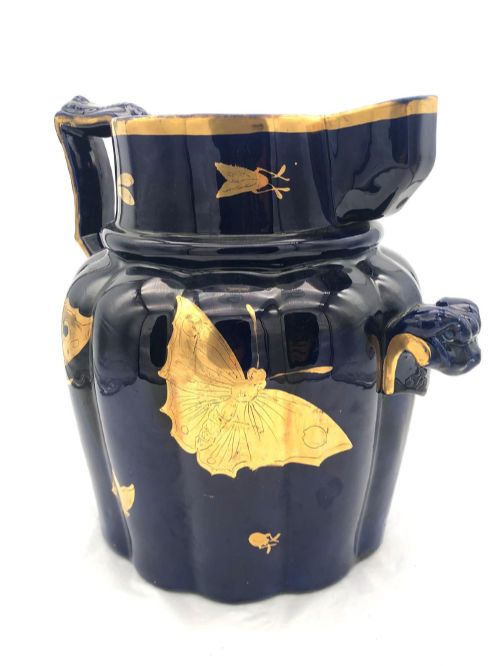
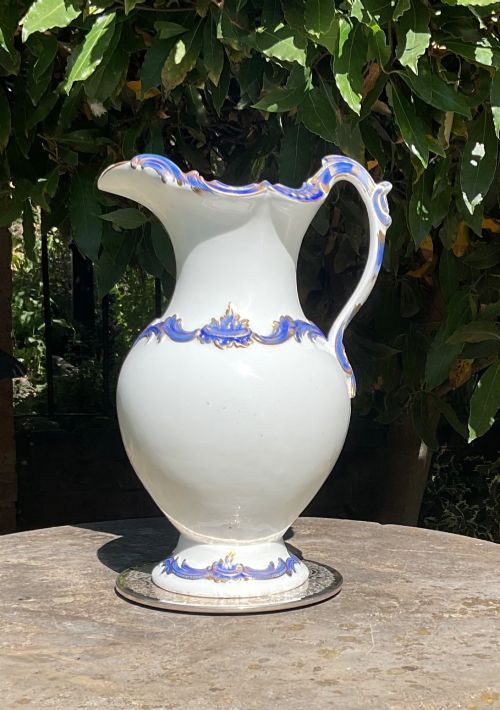
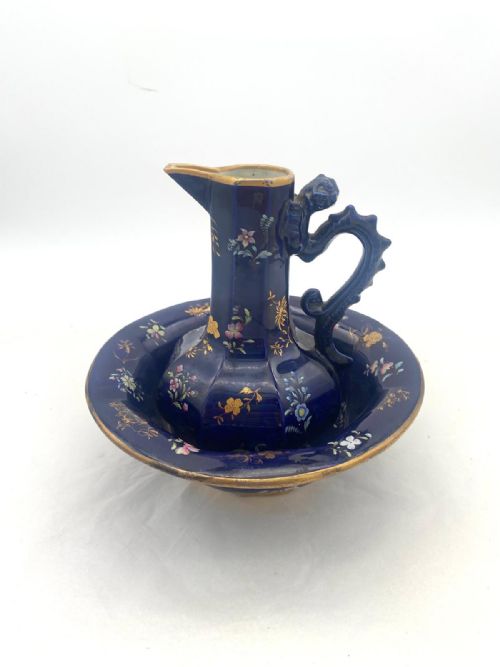
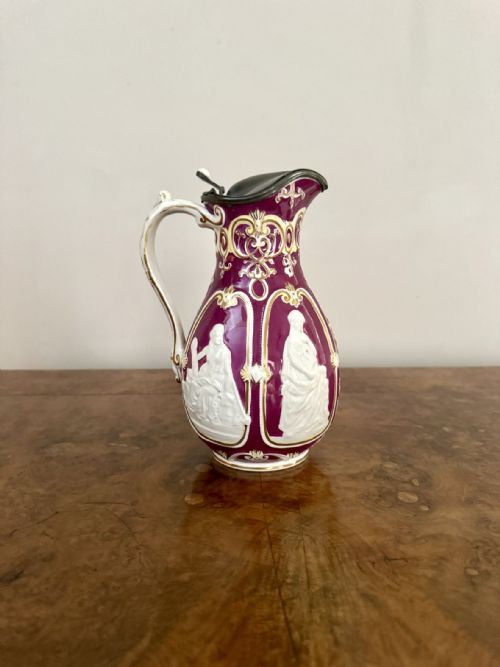
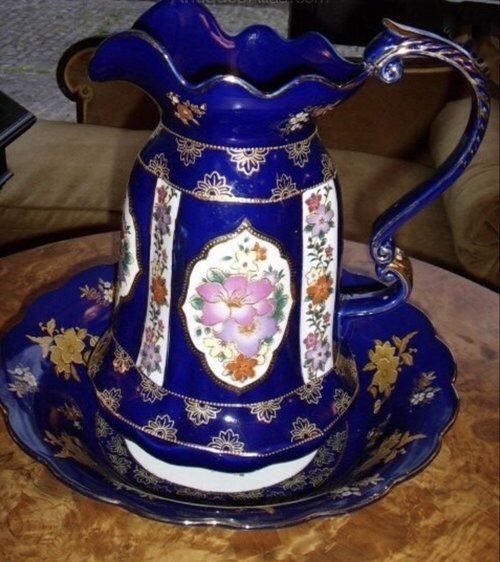
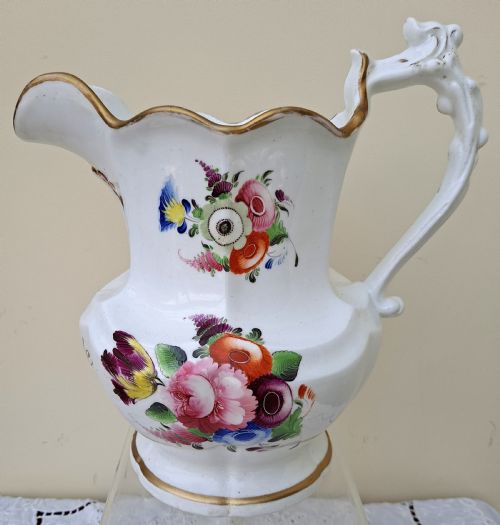


Gilded Porcelain Jug
A gilded porcelain jug brings luminous gold leaf and rich enamel onto fine ceramic bodies, offering both functional utility and striking cabinet presence.
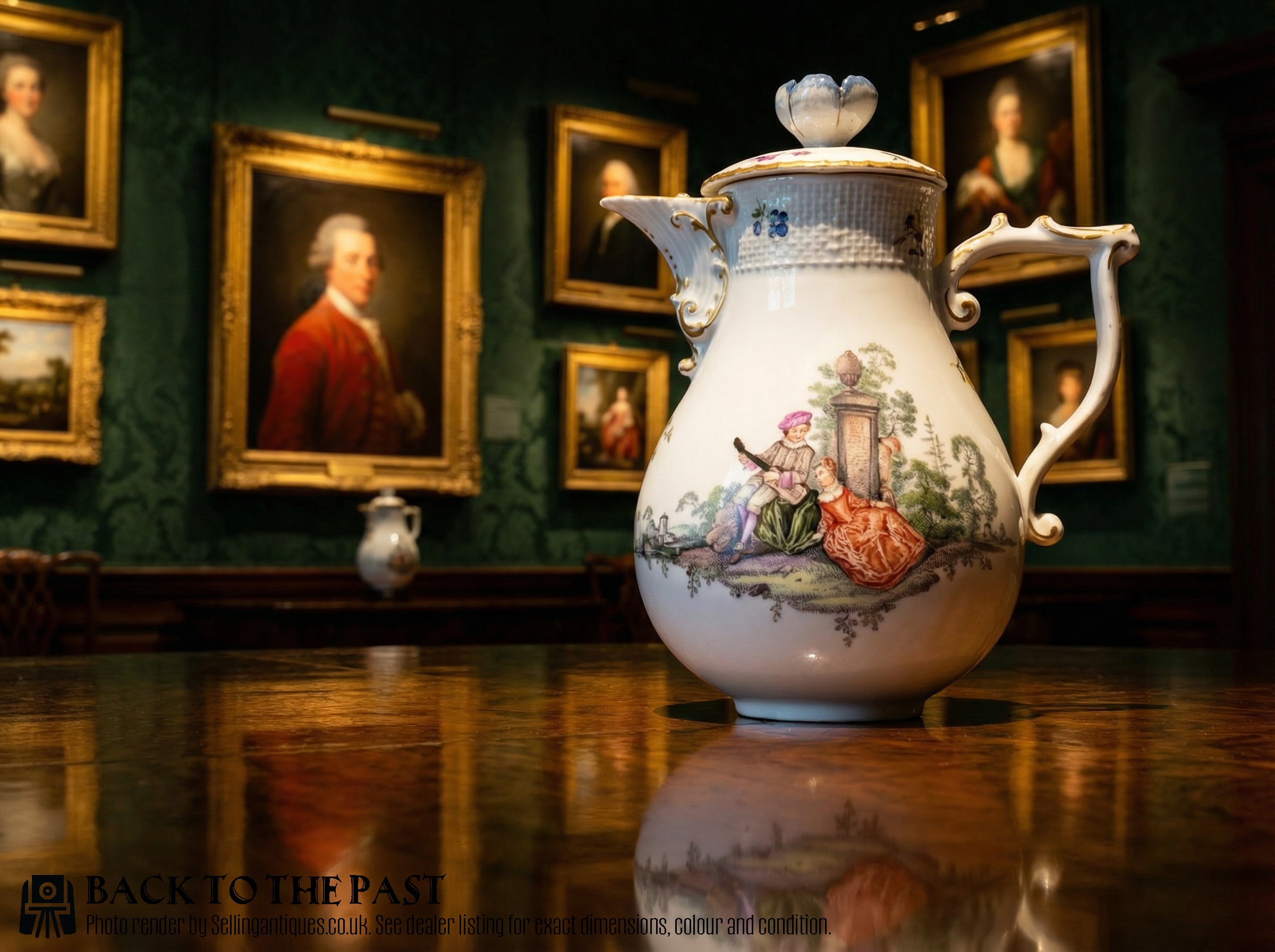
Gilded Porcelain Jug
A gilded porcelain jug combines ceramic form with applied gold leaf, gold gilt, or gilding to create decorative tableware. Buyers searching for a gilded porcelain jug encounter functional vessels designed to serve milk, cream, or water during formal dining.
The pieces on this page span several distinct periods, including items from 1750, the Regency era, the nineteenth century, and 1960. Forms range from cream jugs and milk jugs to larger pitchers, creamers, and carafes.
Origins represented in these items include English factories such as Derby, Worcester, Rockingham, and Royal Worcester, alongside continental European pieces from Meissen and Old Paris. Buyers are most likely to meet nineteenth-century English examples alongside earlier continental porcelain.
How they were made
Makers utilised hard-paste porcelain and standard porcelain bodies as the foundation for these vessels, shaping them into waisted profiles, rope edge forms, and lidded containers. Artisans then applied enamel painting, often featuring floral panels, landscape views, or fly patterns.
Gold leaf and gold gilt were meticulously brushed or tooled onto the ceramic surface, frequently highlighting rims, handles, and painted scenes. Firing fixed the enamels and the metallic gilding into the glaze for lasting brilliance.
Gilded Porcelain Jug Retail Price Guide 2026
Typical asking prices for gilded porcelain jug among the pieces listed under this phrase on Sellingantiques today, from the lower quarter to the upper quarter. They describe what is for sale here now, not the wider market.
Materials recorded across the archive include hard-paste porcelain, gold leaf, gold gilt, gilding, and enamel.
What varies in quality
Quality rests in the precision of the hand-painted details and the purity of the porcelain body. Superior pieces exhibit finely executed miniature views or botanical panels combined with intact, burnished gilding.
The sophistication of the ceramic moulding also distinguishes the work, with delicate handles and balanced proportions separating standard production from exceptional factory outputs.
Derby Porcelain·Royal Worcester·Rockingham Porcelain·Meissen·Jean-Pierre Feuillet
The Gilded Porcelain Jug Glossary
- Hard-paste porcelain
- A dense, durable ceramic composed of kaolin and petuntse, fired at high temperatures. This material provides a bright white surface that holds intricate enamel decoration and gold leaf securely.
- Gilding
- The application of gold leaf or gold gilt to the ceramic surface. This technique adds decorative contrast and highlights the contours of the jug.
- Enamel
- Vitreous coloured glass fused to the porcelain body during firing. It provides the vibrant hues seen in floral panels and landscape views.
- Waisted
- A vessel profile that curves inward towards the middle before flaring outward again. This shape appears frequently on cream jugs from various periods.
- Rococo
- An artistic style characterised by asymmetrical scrollwork, C-scrolls, and naturalistic motifs. Many nineteenth-century revival pieces adopt these ornate design elements.
Gilded Porcelain Jug: Frequently Asked Questions
What were gilded porcelain jugs used for?
These vessels served primarily as milk jugs, creamers, and carafes during tea and dining services. Their rich decoration meant they also functioned as display pieces on sideboards.
Today, collectors use them to complete historic ceramic services or display them within cabinet collections.
How do I identify a Regency period jug?
Regency pieces often feature crisp white porcelain bodies paired with classical landscape views or precise geometric gilding patterns. Makers of this era favoured elegant, restrained forms inspired by neoclassical tastes.
Comparing handle shapes and enamel palettes against documented factory examples helps confirm the period.
Are these jugs safe to use?
While these pieces were originally created for functional dining use, antique porcelain and delicate gold gilding require careful handling. Most collectors choose to display them rather than subject them to modern dishwasher use or daily wear.
Hand washing in lukewarm water without harsh detergents is recommended if cleaning becomes necessary.
What is the difference between hard-paste porcelain and standard porcelain?
Hard-paste porcelain is fired at higher temperatures, resulting in a vitrified, highly durable body that resists scratching and moisture absorption. It forms a robust base for detailed enamel painting and metallic gilding.
European factories adopted hard-paste recipes to achieve thinner, more translucent vessel walls.