


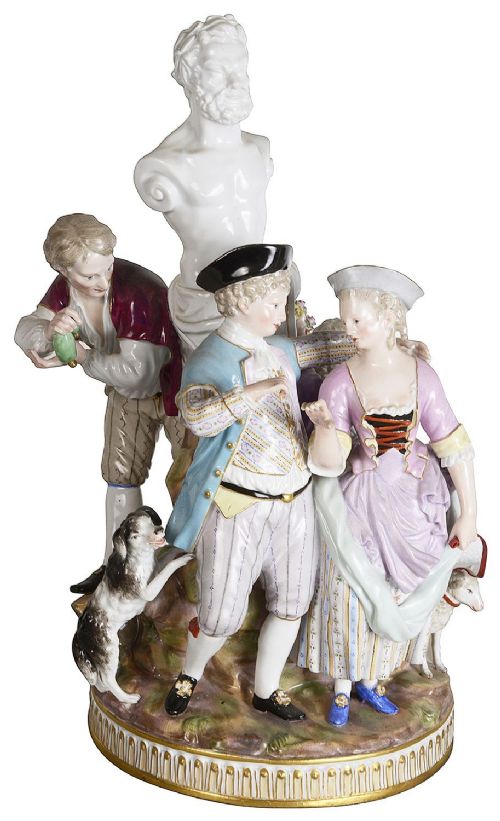


Eighteenth Century Meissen Porcelain
Eighteenth century meissen porcelain brings European hard-paste porcelain figures and vessels into your room with sharp modelling and polychrome enamel colours.
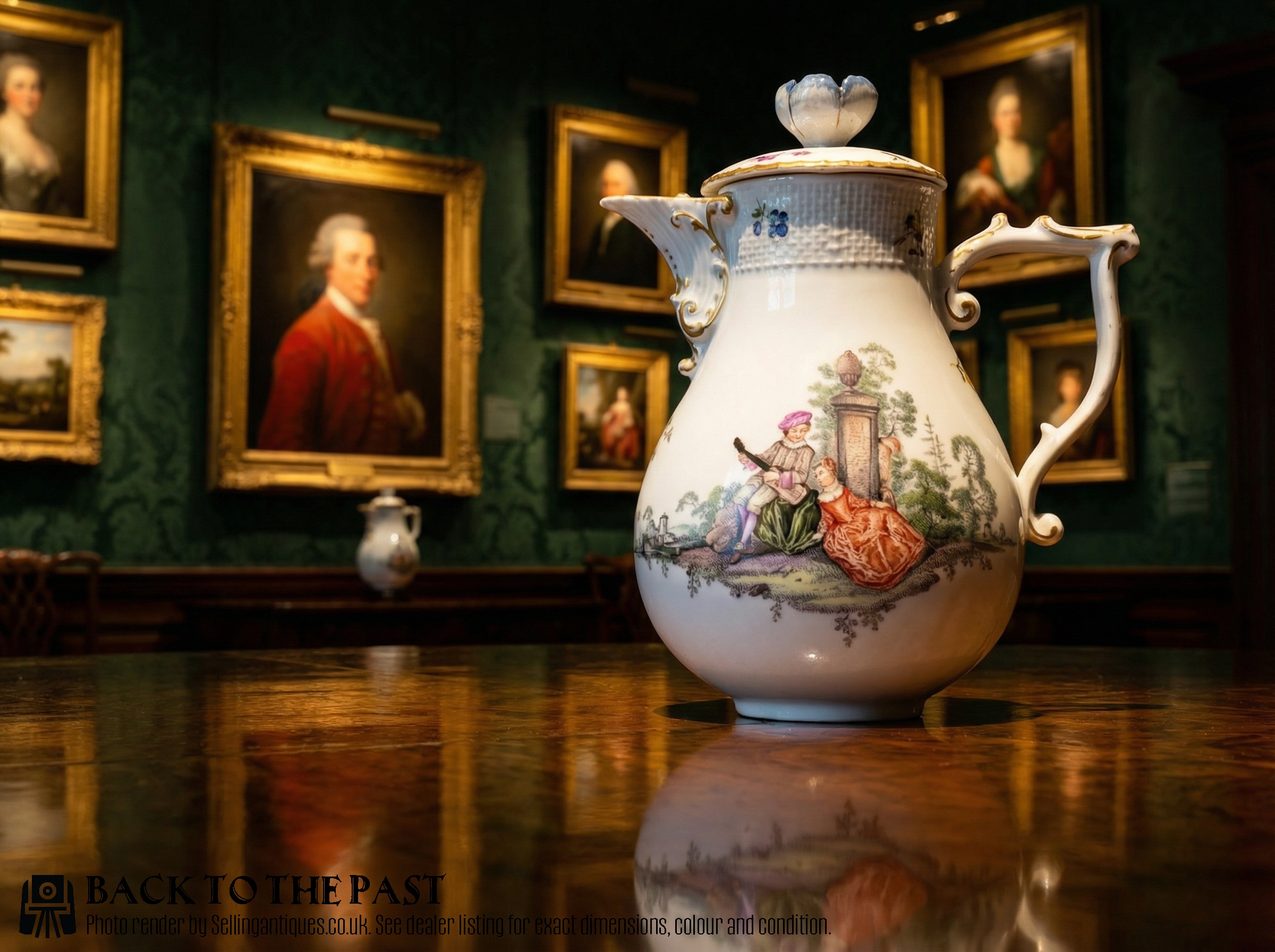
Eighteenth Century Meissen Porcelain
Eighteenth century meissen porcelain comprises figures, groups, and domestic vessels originating from the German factory during the eighteenth century. Collectors examining this group encounter porcelain figurines, sweetmeat dishes, milk jugs, and decorative bowls.
The objects span figures such as street traders, courting couples, and allegorical groups alongside utility pieces like milk jugs and inkwells. Most pieces belong to the eighteenth century, with specific representations from the 1740s, 1750s, 1760s, and the Marcolini period.
Figurines and groups frequently adopt Rococo styling, showing dynamic poses and detailed clothing. Vessels such as bowls and milk jugs exhibit painted enamel surfaces and occasional gilding.
How they were made
Makers utilised hard-paste porcelain as the primary body, shaping objects through specialised moulding techniques before firing at high temperatures. This dense ceramic body accepted detailed surface painting and sculptural additions effectively.
Decoration relied on polychrome enamel colours applied by hand across the figures and vessels, often supplemented by gold leaf or gilding. Certain pieces, such as bowls, utilised distinctive ground colours like puce to frame the painted designs.
Eighteenth Century Meissen Porcelain Retail Price Guide 2026
Typical asking prices for eighteenth century meissen porcelain among the pieces listed under this phrase on Sellingantiques today, from the lower quarter to the upper quarter. They describe what is for sale here now, not the wider market.
Listings feature hard-paste porcelain, enamel, and gold leaf applied across Rococo figures, sweetmeat dishes, and milk jugs from the eighteenth century.
What varies in quality
The refinement of the modelling dictates the standard of a figure, separating lively, sharply defined sculptural work from softer execution. Expression in the faces and crispness in the Rococo details indicate the skill applied to the piece.
The precision of the enamel painting and the application of gilding determine the visual success of decorated surfaces. Finer examples maintain clean registration of colours and delicate brushwork across both figures and vessels.
Johann Joachim Kändler
The Eighteenth Century Meissen Porcelain Glossary
- Hard-paste porcelain
- A true porcelain composed of kaolin and petuntse, fired at high temperatures to produce a dense, vitrified body. This material formed the basis for eighteenth century Meissen production.
- Enamel
- Glass-based colours fused to the porcelain surface through subsequent lower-temperature firings. Enamels provided the rich polychrome palette seen on figures and bowls.
- Rococo
- An ornate artistic style characterised by asymmetry, scrollwork, and naturalistic motifs. Many eighteenth century Meissen figures and groups adopt these fluid compositional elements.
- Marcolini period
- The phase of Meissen production overseen by Count Camillo Marcolini from the late eighteenth century onwards. Pieces from this era often carry specific factory marks associated with the administration.
Eighteenth Century Meissen Porcelain: Frequently Asked Questions
What forms do these pieces take?
The selection includes sculptural groups, individual figures like street traders and lovers, and functional items such as milk jugs and inkwells.
Most objects reflect the sculptural ambition of the German factory during the eighteenth century.
How do you date a piece?
Dating relies on stylistic markers such as Rococo modelling, recorded model numbers, and known production periods like the Marcolini era.
Factory marks and the nature of the hard-paste porcelain body further assist in placing an object within the eighteenth century.
What materials are used?
Objects consist of hard-paste porcelain decorated with hand-painted enamel colours.
Selected items incorporate gold leaf, gilding, and specific ground colours such as puce.
How should figures be displayed?
Figures and vessels require stable placement away from high traffic areas to protect delicate porcelain extremities.
Displaying pieces on flat surfaces allows the detailed modelling and enamel painting to be viewed clearly from all sides.