

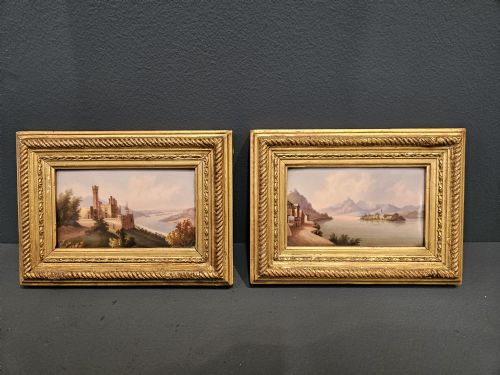


Gilded Porcelain Frame
These gilded porcelain frame pieces bring rich historic paintwork and ornate mountings together for interiors that lean into classic European grandeur.
Gilded Porcelain Frame
A gilded porcelain frame surrounds hand-painted ceramic plaques, mirrors, and wall art originating primarily from the Victorian era up through the early twentieth century. These items showcase intricate porcelain work housed within decorative borders of giltwood, gesso, or ormolu.
The selections on this page concentrate heavily on nineteenth-century European production, featuring notable works by factories such as KPM alongside Sitzendorf, Rudolstadt Volstedt, and Royal Worcester. Forms range from oval wall plaques and framed portraits to vanity mirrors and chandeliers incorporating porcelain elements.
Buyers seeking a gilded porcelain frame will encounter various revival styles, predominantly French Rococo and Victorian aesthetics, which emphasise curves, painted figures, and rich metallic finishes. These decorative objects function as focal points in period rooms or as collector pieces highlighting historic ceramic painting techniques.
How they were made
The construction relies on combining high-fired ceramic bodies with detailed surface painting, enamel work, and specialised pate-sur-pate techniques. Skilled artisans applied multiple layers of pigment before firing the porcelain to achieve lasting colour and depth in the portraiture or scene.
Surrounding surrounds were fabricated using carved gesso, giltwood, or cast ormolu, applying gold leaf to create the characteristic metallic sheen. These frames often feature elaborate moulding that mirrors the curves and ornamentation typical of Rococo Revival design.
Gilded Porcelain Frame Retail Price Guide 2026
Typical asking prices for gilded porcelain frame among the pieces listed under this phrase on Sellingantiques today, from the lower quarter to the upper quarter. They describe what is for sale here now, not the wider market.
Listings feature items from the 1880s, 1890s, and early 1900s, encompassing Victorian and Edwardian periods with a strong emphasis on Rococo Revival styles.
What varies in quality
The fineness of the hand-painted detail on the ceramic surface distinguishes standard production from exceptional studio work, particularly in facial expressions and botanical rendering. Master painters at factories like KPM or Royal Worcester achieved a level of shading and precision that elevates the visual weight of the piece.
The integrity and craftsmanship of the outer mounting contribute significantly to the overall standard, where hand-carved giltwood or finely chased ormolu frames demonstrate superior artistry compared to mass-produced moulded alternatives. Preservation of the original gilding and the stability of the porcelain plaque within its mount also mark the distinction between tiers.
Rudolstadt Volstedt·KPM·Minton·Royal Worcester·Sitzendorf·Berlin
The Gilded Porcelain Frame Glossary
- Giltwood
- Wood that has been treated with a thin layer of gold leaf or powder. This technique provides a luminous metallic finish common on period frames.
- Ormolu
- Finely ground high-carat gold applied to a bronze base using a mercury amalgamation process. It appears frequently in decorative mounts and mirror frames.
- Pate-sur-pate
- A ceramic decoration method where wet porcelain slip is built up in successive layers on a contrasting background. This creates a low-relief cameo effect.
- Gesso
- A paint mixture consisting of a binder mixed with chalk, gypsum, or pigment. Artisans used it on wooden frames to create a smooth surface for gilding.
Gilded Porcelain Frame: Frequently Asked Questions
What is a gilded porcelain frame?
It is a decorative object featuring a ceramic plaque, mirror, or artwork encased within a metallic-finished or gold-leaf border. These items date primarily from the nineteenth and early twentieth centuries.
They combine ceramic painting with ornate carpentry or metal casting to produce ornamental wall hangings and tabletop accessories.
How should I display these pieces?
These items suit placement on prominent walls, in historic interiors, or as centrepieces within a collection of European ceramics. Their ornate framing allows them to stand alone or complement other period decor.
Care should be taken to mount them securely away from direct sunlight and moisture to preserve the delicate gilding and paintwork.
How can I tell the period?
Dating relies on identifying factory marks on the reverse of the porcelain, the style of the hand-painted motifs, and the construction methods of the frame. Victorian and nineteenth-century pieces often exhibit distinct Rococo Revival scrollwork and signature techniques.
Examining the materials, such as the use of gesso beneath gold leaf or specific ormolu casting styles, helps narrow down the decade of production.
Were these frames made for mirrors or art?
They served multiple functions, housing hand-painted portrait plaques, landscape scenes, wall mirrors, and vanity mirrors. Some were produced as paired wall decorations for formal sitting rooms.
The versatility of the design meant that ceramic factories could supply both standalone art panels and functional looking glasses within matching surrounds.