




Gilded Porcelain Figure Pair
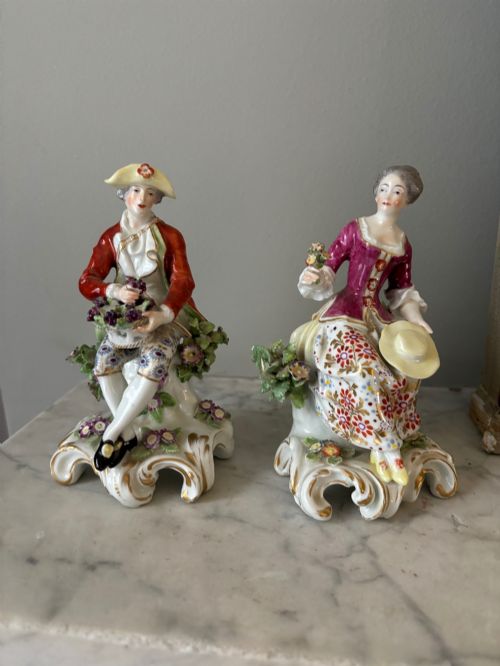
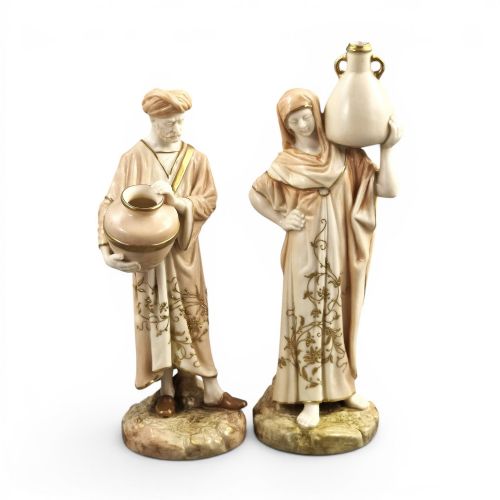
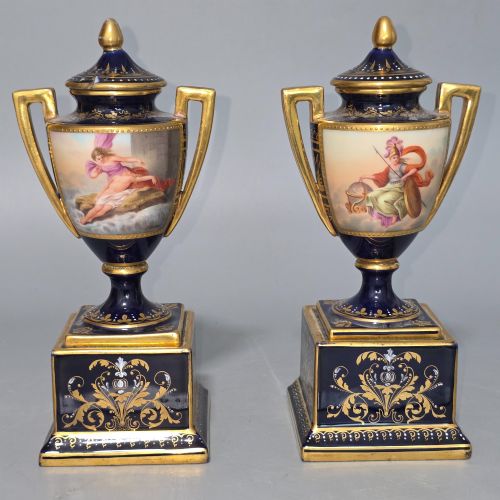
These gilded porcelain figure pair examples bring domestic theatricality to a mantelpiece, combining moulded ceramic bodies with rich surface gilding across eighteenth and nineteenth century interiors.
Gilded Porcelain Figure Pair
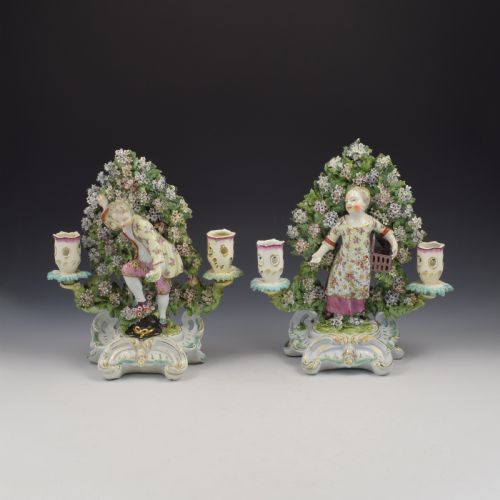
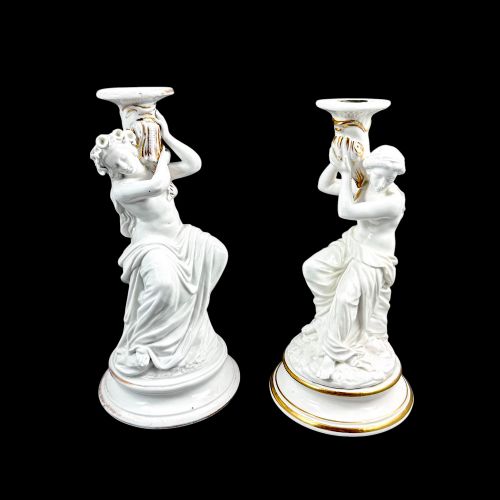
A gilded porcelain figure pair brings dual display pieces into domestic spaces, taking the form of figures, candlesticks, and centre pieces from eighteenth and nineteenth century workshops. These matched groups often depict allegorical subjects, rustic musicians, or romantic pairs designed to balance each other on either side of a fireplace or mirror.
The selections span English factories such as Derby, Bow, and Chelsea alongside continental makers from Meissen, Paris, and Germany. Examples range from eighteenth century bocage figures adorned with foliage to Victorian and Edwardian interpretations created in Rococo Revival and Neoclassical styles.
Materials and Techniques
Manufacture relies on porcelain bodies, including hard-paste porcelain and earthenware variations, shaped through moulding and hand-modelling. Complex pieces incorporate applied elements like floral bocage and delicate appendages formed separately before assembly.
Surface decoration combines painted enamel with gold leaf, gilding, and gilt highlights applied over glaze and fixed by subsequent firing. This metallic enrichment accentuates garments, bases, and architectural details to catch the candlelight.
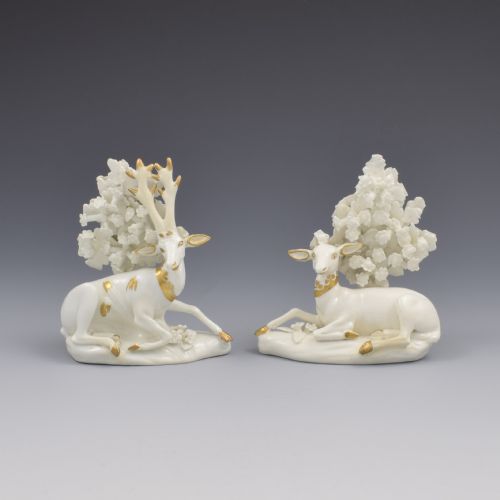
Musicians, children with pet lambs, and strutting stags populate these historical ceramic pairings.
Evaluating Quality
The application of gilding and the preservation of fragile elements like porcelain foliage determine the standing of a pair. Clean, well-fired gilding that has survived without heavy rubbing separates superior workshop output from routine commercial production.
Edme Sampson·James Hadley·F. Koller·Bloor Derby·Letu and Mauger·Vion et Baury·Carl Thieme·Sitzendorf
The Gilded Porcelain Figure Pair Glossary
- Bocage
- A background of applied porcelain leaves and flowers that frames eighteenth century figures. This botanical screen frequently surrounds candlestick figures to soften the composition.
- Hard-paste porcelain
- A dense, durable ceramic material fired at high temperatures using kaolin and petuntse. It provides a bright white body that resists scratching and absorbs glazes evenly.
- Gilding
- The application of gold leaf or powdered gold to the ceramic surface. This technique adds metallic brilliance to garments, bases, and decorative borders.
- Sweetmeat figures
- Small porcelain receptacles designed to hold confectionery or dried fruits at formal dining tables. They often take the form of figures bearing baskets or bowls.
Gilded Porcelain Figure Pair: Frequently Asked Questions
What were gilded porcelain figure pairs used for?
These matched sets served as decorative ornaments on mantelpieces, sideboards, and pier tables within formal rooms. Their dual nature allowed owners to create symmetrical arrangements that reflected contemporary tastes for pastoral and allegorical subjects.
Certain variations doubled as functional items by incorporating candle nozzles or serving as sweetmeat dishes during dining occasions. Their presence signalled both refinement and an appreciation for intricate ceramic artistry.
How do you display them safely at home?
Placement requires stable, vibration-free surfaces away from heavy foot traffic and direct sunlight to protect the fragile porcelain and painted enamel details. Keeping matched pairs at an equal distance from one another preserves the intended visual balance of the composition.
Avoid positioning them near heat sources such as active fireplaces, which can stress the ceramic body and historical adhesives over time. Gentle dusting with a soft, dry brush maintains the surface without risking delicate bocage elements.
How can you distinguish eighteenth century pieces from later revivals?
Eighteenth century examples typically display lighter paste variations, softer enamel palettes, and hand-tooled details that reflect the operational scale of early European potteries. The modelling often possesses a directness and irregularity characteristic of period handcraft.
Nineteenth century revivals, including nineteenth century French and Samson productions, often feature brighter, more uniform machine-ground colours and heavier porcelain bodies. Factory marks, where present, help pinpoint the exact production era when compared against known historical timelines.
Why do many figures feature leafy backgrounds?
The leafy backgrounds, known as bocage, originated in eighteenth century factories to mimic natural arbours and garden settings. This decorative convention framed the figures within pastoral narratives popular among collectors of the period.
Craftsmen applied these porcelain leaves and flowers by hand around the central figures, creating a dense three-dimensional effect. Because these delicate ceramic branches are prone to loss, their presence influences how a pair is assessed today.