
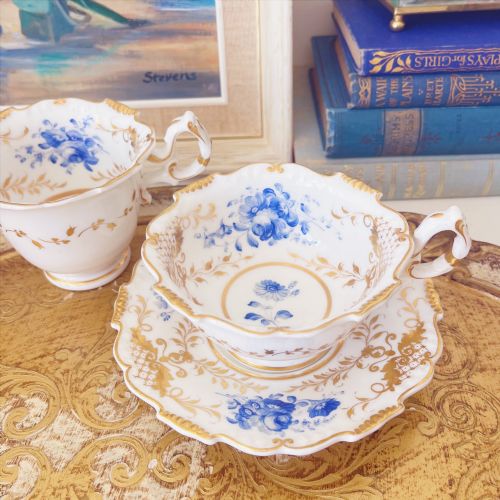
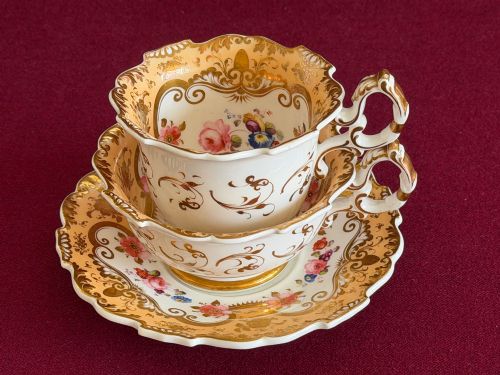
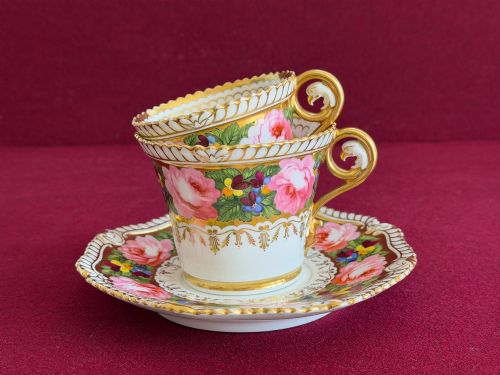
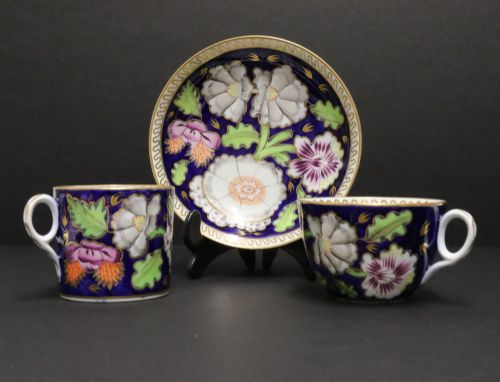


Gilded Porcelain Coffee Set
These gilded porcelain coffee sets bring together the weight of early manufacturing and the shimmer of gold leaf.
Gilded Porcelain Coffee Set
A gilded porcelain coffee set gathers small drinking vessels intended for after-dinner service, often surviving as individual trios, pairs, or matched groupings. Buyers searching for a gilded porcelain coffee set look for the combination of bright white ceramic bodies and applied metallic decoration that defined formal dining rooms across the nineteenth and early twentieth centuries. These pieces draw the eye through their concentrated scale and polished metallic surfaces.
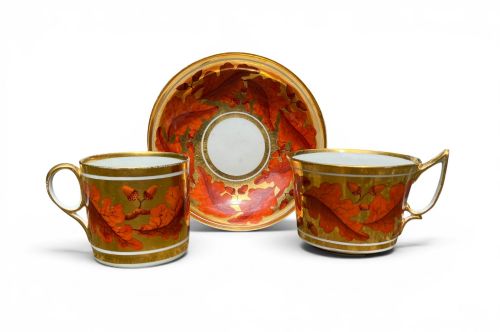
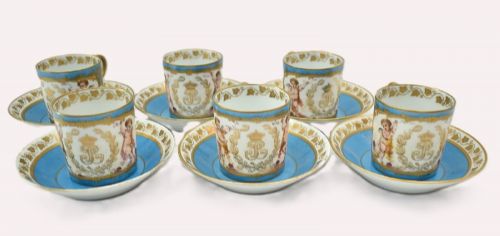
The items encountered on this page stretch from the Regency period through the Edwardian era and into the early twentieth century. Common forms include demitasse cups, coffee cans, cabinet cups, and matching saucers produced by major English and continental European potteries. Regency examples sit alongside later nineteenth-century French and German productions, offering a clear view of shifting tastes in domestic porcelain.
Materials and Techniques
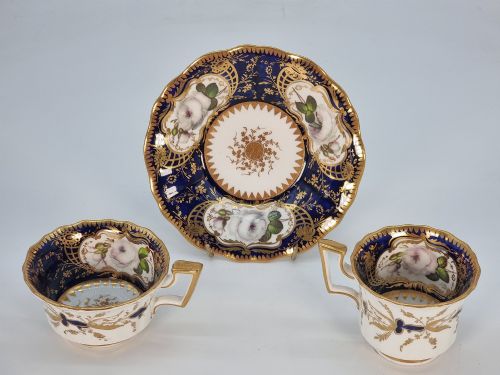
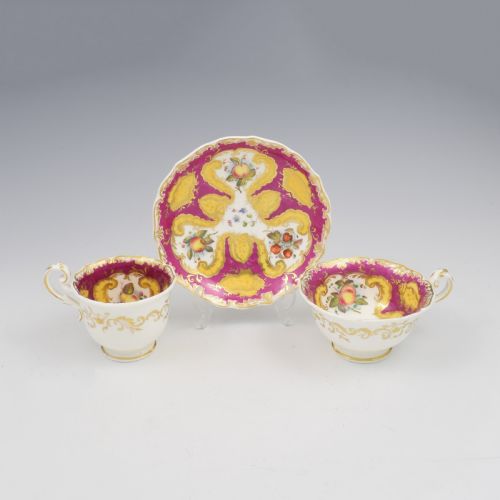
Makers shaped these sets using hard-paste porcelain, bone china, and soft-paste bodies, firing the clay at high temperatures to create dense, durable forms. Artisans then applied enamel pigments by hand, painting landscapes, fruit patterns, and botanical motifs directly onto the glazed surface before a secondary low-temperature firing fixed the colours.
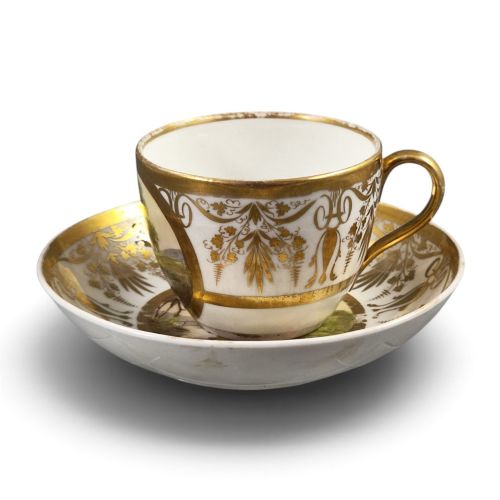
Gilding was applied using gold leaf or gold gilt, brushed onto the rims, handles, and borders to frame the painted scenes. Once fired, this metallic layer was often burnished by hand with agate stones to achieve a bright, reflective shine that contrasted against the matte or gloss porcelain ground.
Materials recorded across these items include hard-paste porcelain, bone china, enamel, and gold leaf.
Distinctions in Quality
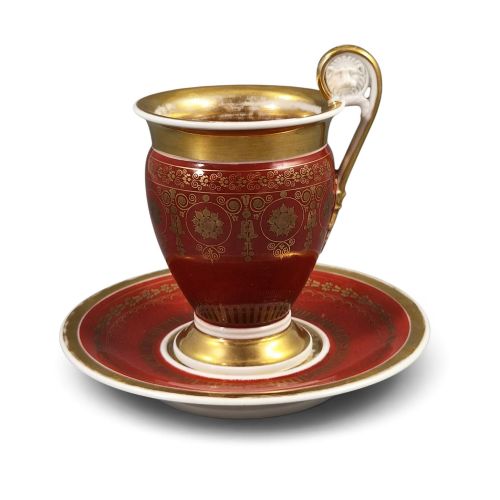
Quality in these sets rests upon the crispness of the porcelain moulding and the dexterity of the hand-painted decoration. Finer pieces display carefully articulated handles, such as lion mask motifs or elaborate scrollwork, paired with meticulously detailed miniature paintings rather than mass-produced transfer prints.
The application and preservation of the gilding also separate standard items from superior works. Thick, deeply burnished gold leaf that retains its brilliance without extensive rubbing indicates a higher grade of original manufacture and careful subsequent handling.
H & R Daniel·Chamberlain Worcester·Newhall·Coalport John Rose·KPM Berlin·Sevres·Minton·Spode·Davenport·Royal Worcester·Ahrenfeldt & Asalvary·Meissen·Hutschenreuther
The Gilded Porcelain Coffee Set Glossary
- Demitasse
- A small cup used for serving strong black coffee after a meal. These vessels generally hold significantly less liquid than a standard tea or breakfast cup.
- Cabinet cup and saucer
- A decorative ceramic set made more for display in a cabinet than for daily use. These pieces often feature elaborate painted landscapes or portraits.
- Trio
- A matched set consisting of a teacup, a coffee cup, and a matching saucer. They demonstrate the versatility of nineteenth-century tableware services.
- Hard-paste porcelain
- A durable ceramic material composed of kaolin and petuntse, fired at high temperatures. It produces a dense, vitreous body that resists scratching.
- Gilding
- The application of gold leaf or gold dust to the surface of porcelain. It provides a reflective metallic trim along rims and handles.
Gilded Porcelain Coffee Set: Frequently Asked Questions
What is the difference between a coffee can and a teacup?
Coffee cans generally feature straight, cylindrical sides designed to retain heat for strong brews. Teacups typically have a flared, wider bowl shape suited for lighter infusions.
Both forms appear frequently in historical groupings alongside matching saucers.
How should I clean antique gilded porcelain?
Wash these delicate pieces gently by hand using warm water and a mild detergent. Avoid abrasive sponges or harsh scrubbing that can wear away the fragile gold leaf.
Dry them immediately with a soft cloth to protect the painted enamel surfaces.
Can I use these cups for daily coffee service?
While these items were originally made for dining use, their age and delicate hand-painted gilding make them better suited for careful display or occasional gentle handling. Modern dishwashers and microwaves must be avoided entirely.
Treating them as cabinet pieces preserves their historical finish.
How do I identify Regency period porcelain?
Regency items, produced in the early nineteenth century, often display classical neoclassical motifs, rich cobalt blue grounds, and heavy hand-applied gilding. Look for refined potting and delicate scroll handles typical of that era.
Maker marks, where present on the base, help confirm the specific decade of manufacture.