
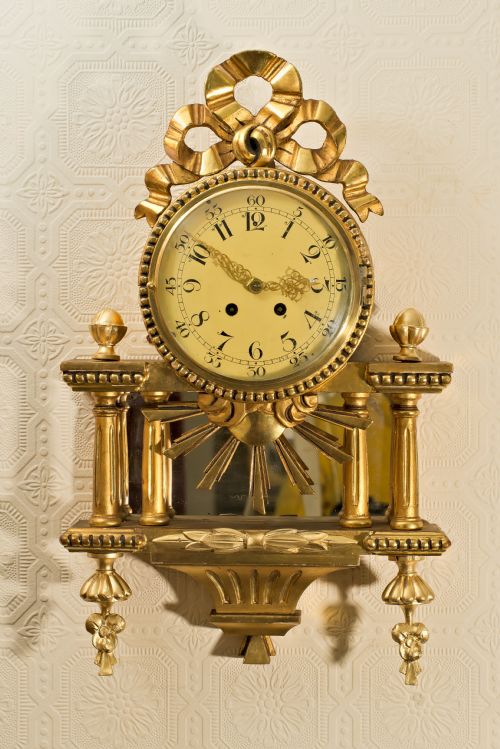


Gilded Pendulum Wall Clock
These gilded pendulum wall clocks bring together brass, glass, and rich metallic finishes across periods from the eighteenth century to the twentieth.
Gilded Pendulum Wall Clock
A gilded pendulum wall clock functions as both a reliable timekeeper and an ornate decorative focus for an interior. When searching for a gilded pendulum wall clock, a buyer encounters significant variety in regional design, from Swedish Gustavian and French Rococo to English Georgian models.
The pieces appearing on this page span several centuries, with nineteenth-century examples and eighteenth-century origins forming the core of the selection. Wall clocks and cartel clocks dominate the forms, offering distinct silhouettes defined by elaborate giltwood or bronze cases.
French styles such as Louis XVI Revival and French Provincial represent a substantial portion of the available pieces. Alongside these, Comtoise wall clocks provide a different domestic aesthetic rooted in earlier European manufacturing traditions.
Materials and construction
Maker workshops utilised bronze, brass, and giltwood to build robust cases capable of supporting internal mechanical movements. Ormolu application and water gilding on carved wood surfaces provided the brilliant metallic sheen characteristic of these clocks.
Enamel dials frequently display Roman or Arabic numerals, protected behind glass panels or fitted within eglomise glass frames. Mirror glass components also appear in select Swedish and continental pieces to enhance internal light reflection.
Materials documented across the inventory include gilt bronze, ormolu, mirror glass, and enamel.
Factors of quality
The refinement of the surface gilding and the depth of wood or bronze carving determine the visual strength of the piece. Crisp chasing on ormolu mounts and finely executed dial enamel distinguish superior workshop output from standard production.
Proportion and architectural balance set exceptional examples apart. The harmony between the cartel case and the visible pendulum swing reflects the original designer's skill and ambition.
WETTERSTRANDS·WILLIAM WEBSTER
The Gilded Pendulum Wall Clock Glossary
- Cartel clock
- A wall-mounted clock featuring an ornate frame made of giltwood, bronze, or ormolu. These decorative cases emerged prominently during the seventeenth and eighteenth centuries in France.
- Ormolu
- Finely ground high-carat gold mercury-gilded onto a bronze object. This technique imparts a rich yellow metallic finish that resists tarnishing over decades.
- Eglomise
- A process of applying gold or silver leaf to glass along with cold painting. It produces a reflective, decorative border often found on eighteenth and nineteenth-century timepieces.
- Comtoise wall clock
- A traditional weight-driven clock originating from the Jura region of France. They typically feature large painted dials and pressed brass surround panels.
- Gustavian
- The Swedish interpretation of French neoclassical design, characterised by lighter proportions and restrained carved decoration. Painted and gilded wood surfaces are common in this aesthetic.
Gilded Pendulum Wall Clock: Frequently Asked Questions
What maintenance do these antique clock movements require?
Mechanical movements benefit from professional cleaning and lubrication by a qualified horologist every few years to ensure reliable operation.
Keeping the pendulum properly secured during any relocation protects the delicate suspension spring from accidental damage.
How do I distinguish Louis XVI style from Rococo?
Louis XVI style pieces exhibit neoclassical symmetry, straight architectural lines, and restrained classical motifs such as urns or swags. French Rococo designs embrace asymmetry, organic C-scrolls, and exuberant naturalistic plant forms.
Examining the overall silhouette and mount details immediately clarifies which decorative movement influenced the maker.
Where should I place a wall clock in my home?
Position the piece at eye level on an interior wall away from direct sunlight and fluctuating drafts. This preserves the delicate enamel dials and sensitive gilded surfaces over time.
Ensure the chosen location has sufficient clearance for the swinging pendulum visible through the glass or case opening.