

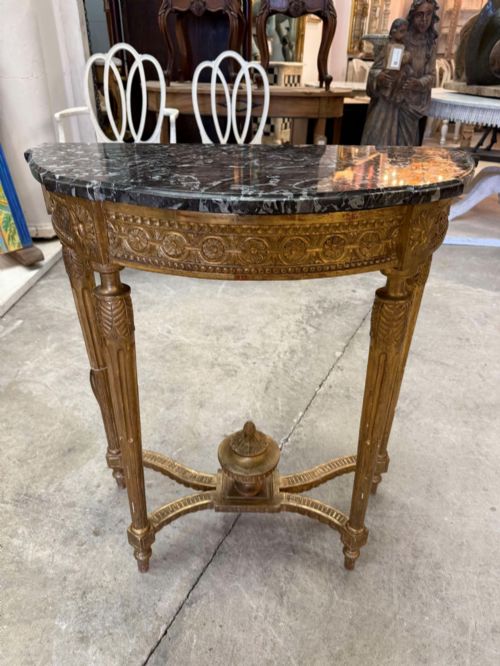
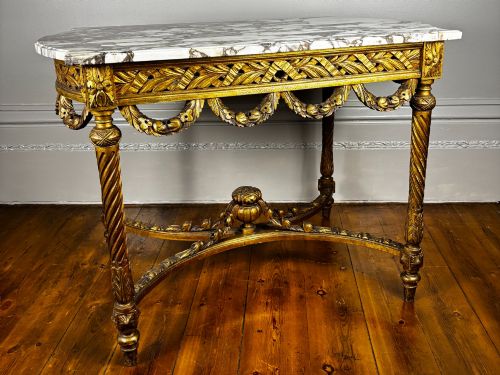
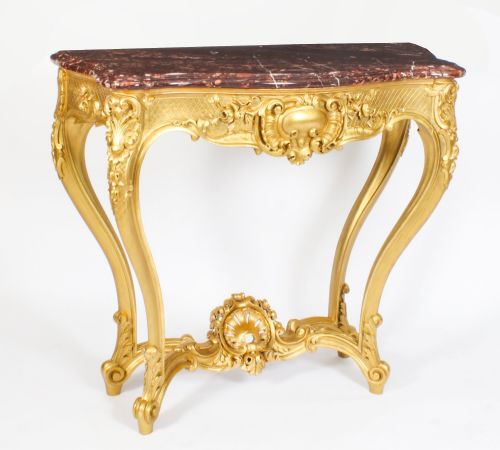
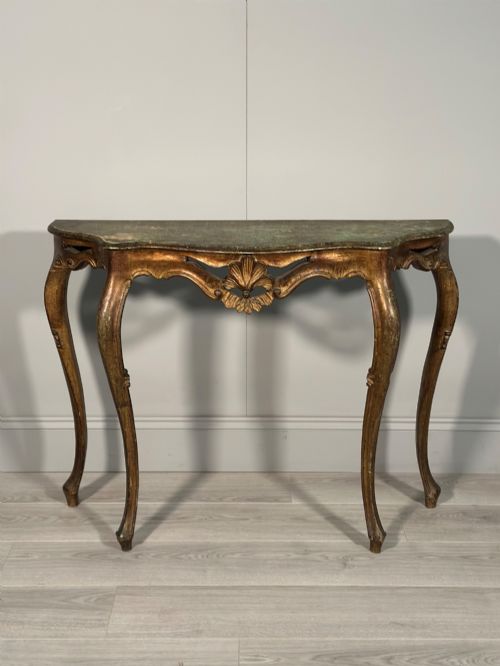

Gilded Marble Console
A gilded marble console brings a heavy slab of figured stone and reflective carved timber together for an imposing interior statement.
Gilded Marble Console
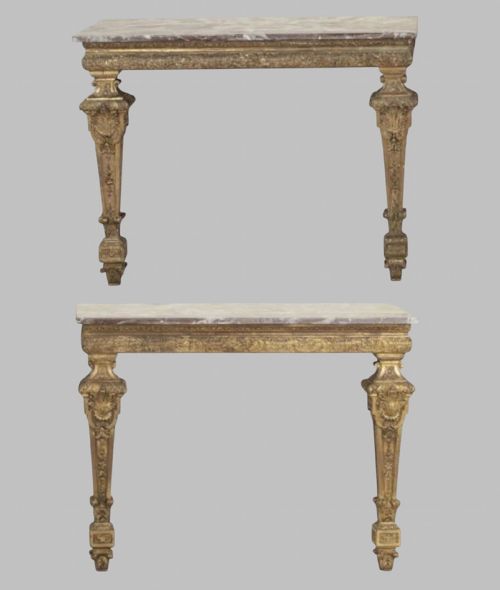
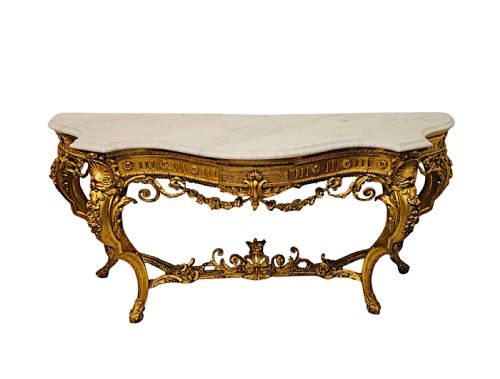
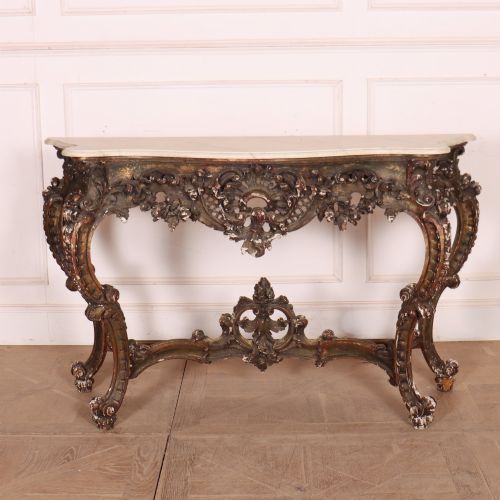
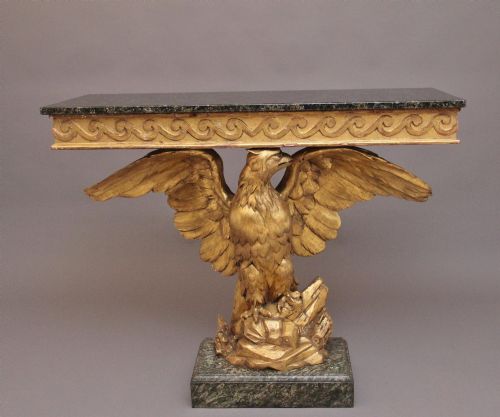
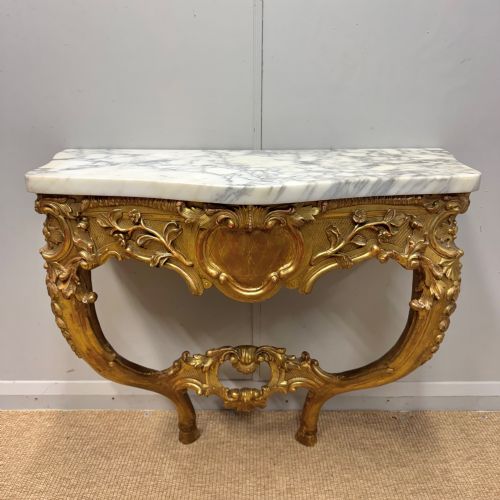
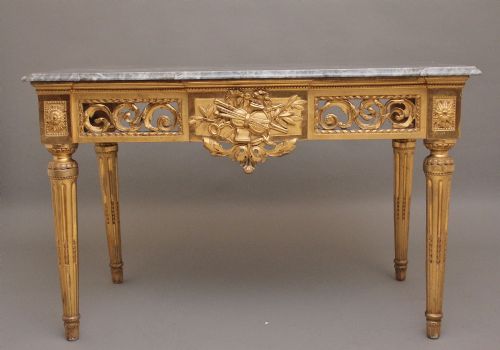
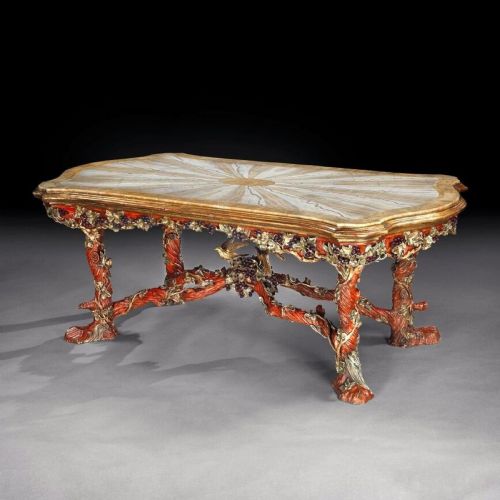
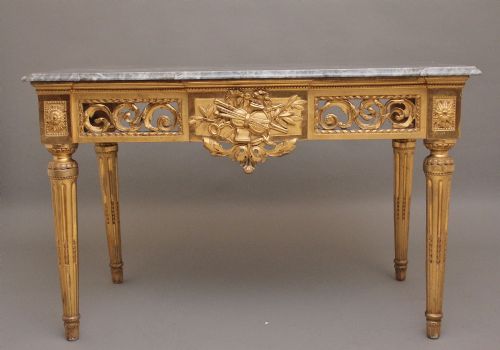
A gilded marble console combines a heavy stone surface with a decorative wooden or metal frame designed to sit flush against a wall. When you search for a gilded marble console, you encounter pieces originating from the eighteenth century onwards, with nineteenth-century French and Italian examples appearing frequently alongside earlier designs.
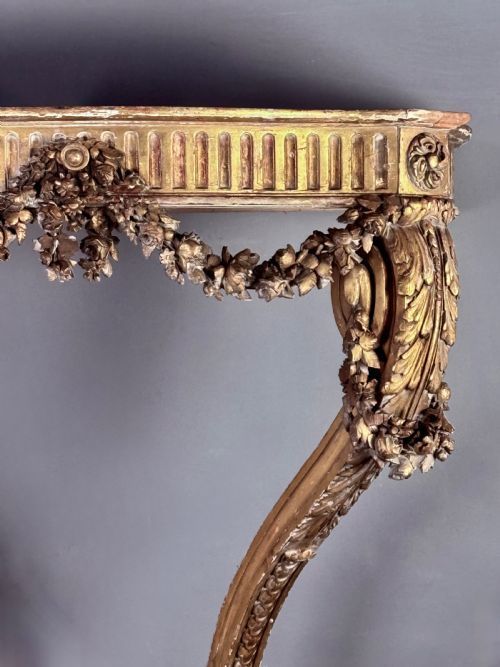
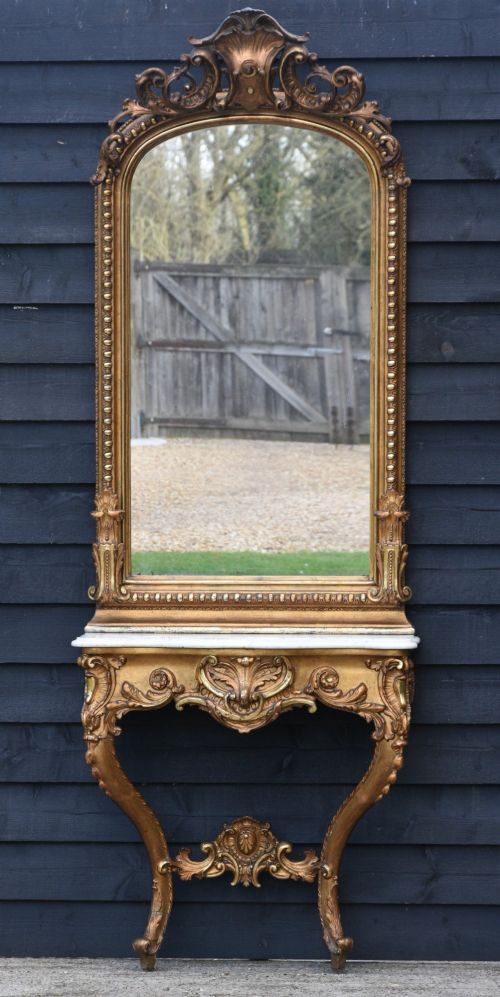
The form encompasses console tables, side tables, and combinations featuring matched pier mirrors or trumeau frames. Pieces span various regional interpretations, from the curving exuberance of the Rococo manner to the disciplined symmetry of Neoclassical and Louis XVI styles.
Materials and construction methods
Makers shaped the structural framework from timber such as oak, pine, or carved giltwood, frequently applying layers of gesso to build up intricate relief ornaments before finishing the surface with gold leaf, silver gilt, or paint. The architectural supports rely on carved wood, wrought iron, or gilded metal to bear the substantial weight placed upon them.
The upper surface utilises stone slabs, incorporating varieties such as white Carrara marble, figured breccia, onyx, and breche d'alep. These tops are shaped to straight, serpentine, or demi-lune outlines to match the contours of the supporting base beneath.
Gilded Marble Console Retail Price Guide 2026
Typical asking prices for gilded marble console among the pieces listed under this phrase on Sellingantiques today, from the lower quarter to the upper quarter. They describe what is for sale here now, not the wider market.
Listings feature marble and giltwood alongside gesso, bronze, and wrought iron across centuries of European design.
Assessing craftsmanship and design
Quality rests upon the depth and crispness of the wood carving within the gilt frame, where hand-tooled motifs display sharper definition than mass-produced gesso mouldings. The integration between the stone slab and its wooden chassis indicates the level of bespoke carpentry involved in fitting heavy marble to a shaped rail.
The choice of materials dictates the standing of a piece, with select figured marble varieties and genuine gold leaf application marking out finer workshops from standard painted or gilt-metal alternatives.
Felix Alfred Ternisien·Amleto Bertoni·Dienst of Paris
The Gilded Marble Console Glossary
- Console table
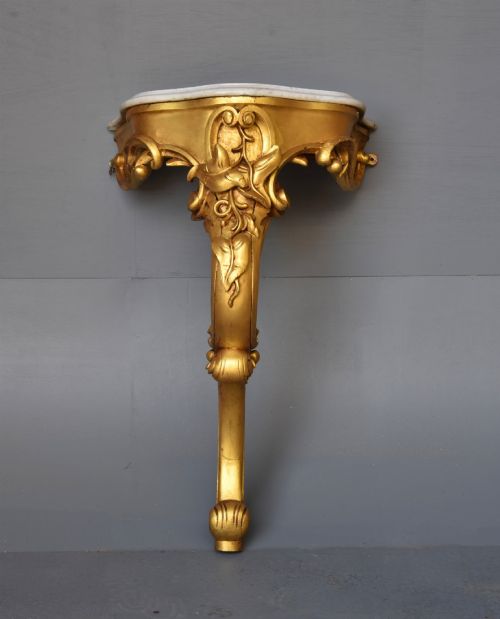
- A table designed to stand against a wall, frequently supported by wall-mounted brackets or ornate front legs rather than four standard vertical posts.
- Giltwood
- Timber that has been coated with a thin layer of gold leaf or metallic powder applied over a prepared gesso ground.
- Breccia
- A composite marble featuring angular rock fragments embedded within a fine-grained matrix, creating highly patterned multicolored surfaces.
- Demi-lune
- A half-moon shape with a flat back edge designed to sit directly against a wall.
- Trumeau
- A decorative wall mirror or panel fitted above a console table, often framed in matching carved and gilded wood.
Gilded Marble Console: Frequently Asked Questions
How do I secure a heavy marble top?
Most antique console tables rely on gravity alone, resting their substantial weight directly onto the rebated wooden frame below without mechanical fixings.
For added stability against movement, heavy stone slabs can be secured with discreet interior brackets or traditional adhesives applied by a restorer.
Were these tables meant for dining?
These decorative tables served primarily as architectural side furniture in hallways, salons, and formal drawing rooms rather than for active daily dining.
Their narrow footprints and delicate wall fixings restricted them to displaying ornamental objects, candelabra, and mirrors.
How do I clean the marble top?
Maintenance requires mild soapy water and a soft cloth, avoiding acidic cleaners or abrasive scourers that etch the polished stone surface.
Giltwood frames must be kept away from moisture and cleaned gently with a dry brush to preserve the delicate metallic leaf.
How do I distinguish Rococo from Neoclassical styles?
Rococo pieces feature asymmetric scrolls, C-scrolls, and flowing organic motifs inspired by natural asymmetry, creating a sense of dynamic movement.
Neoclassical designs return to strict symmetry, straight fluted legs, and classical architectural motifs derived from antiquity.