
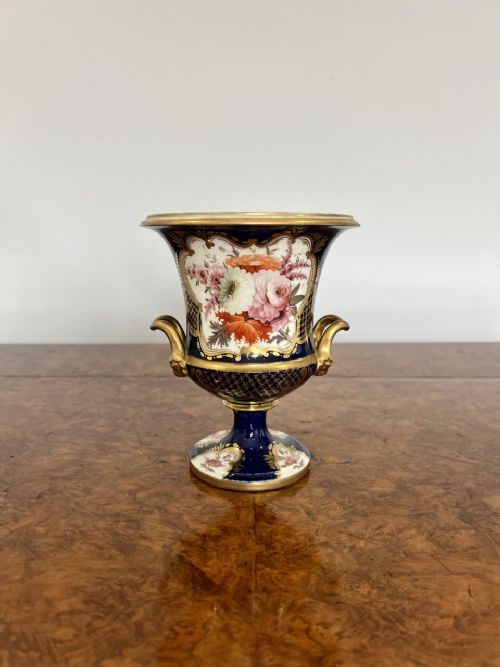
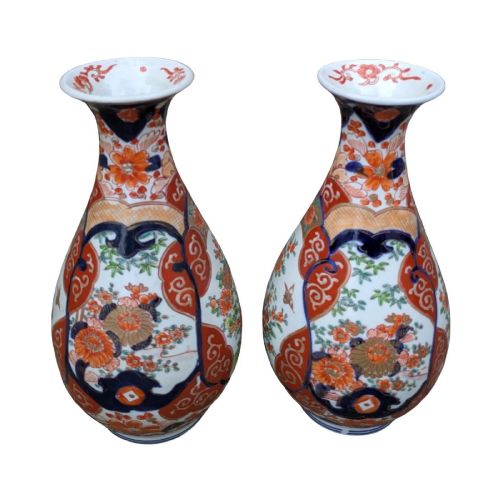


Gilded Mantle Vase
These gilded mantle vase examples bring nineteenth-century porcelain, glass, and ormolu into domestic display.
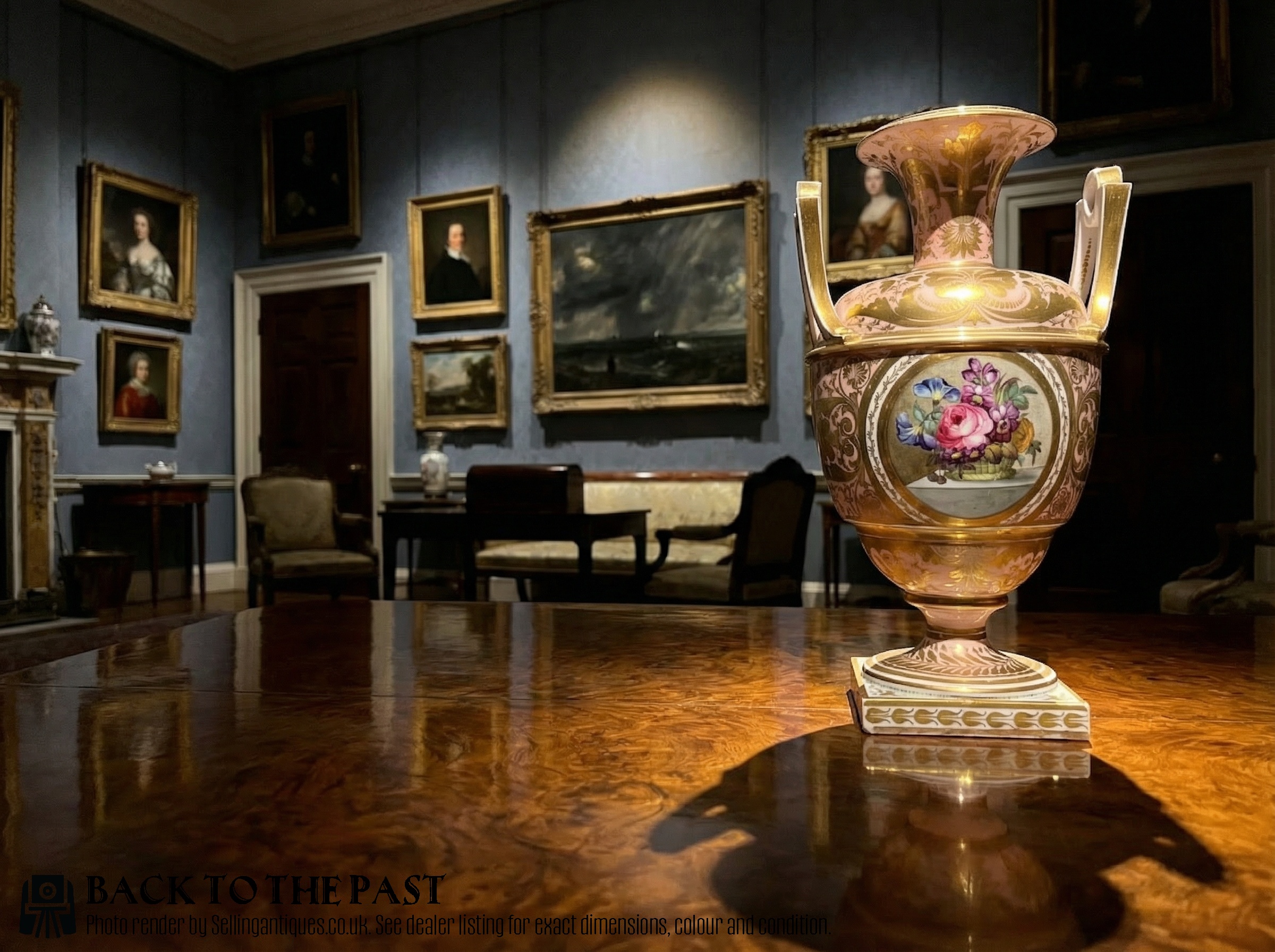
Gilded Mantle Vase
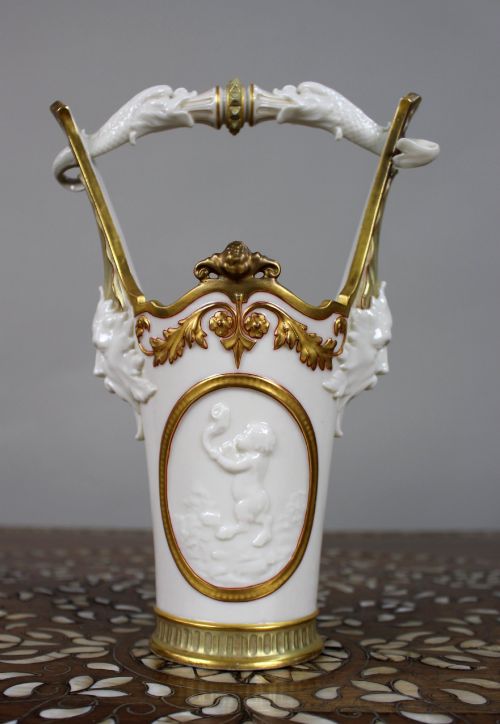
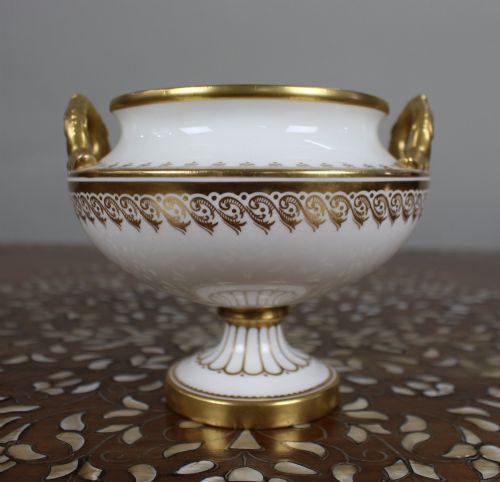
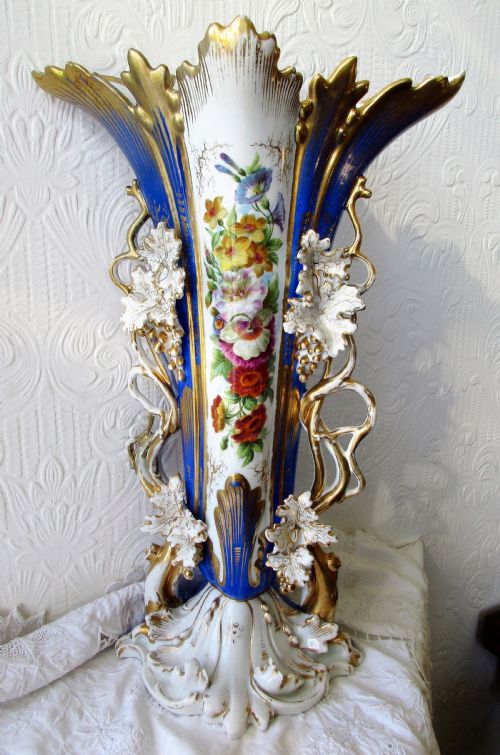
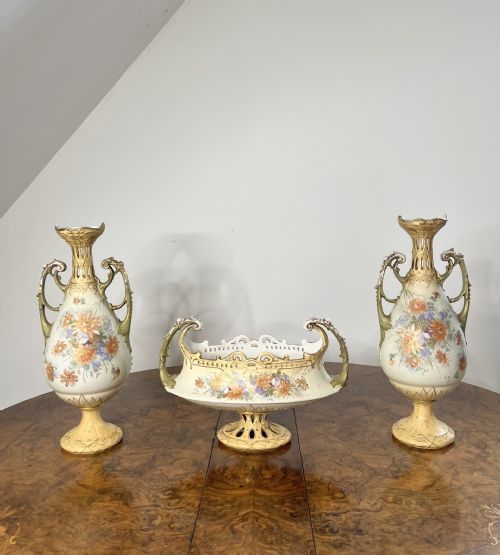
A gilded mantle vase is a decorative vessel designed for nineteenth-century mantelpieces, drawing on periods from Georgian and Regency to Victorian and Edwardian tastes. Buyers searching for a gilded mantle vase encounter single decorative urns, lidded jars, and larger multi-piece garniture sets arranged for symmetry.
The selections span English, continental European, and Japanese workshops, featuring forms such as twin-handled urns, slender glass lustres, and portrait vases. These items range from simple white and gold porcelain to hand-painted botanical and figurative compositions on coloured grounds.
Materials and construction methods
Potters and glassmakers shaped these objects from hard-paste porcelain, bone china, opaque glass, and ruby glass, applying hand-painted enamels and intricate gilding by hand. Ormolu mounts cast in bronze provide structural frames and decorative collars for porcelain bodies.
Artisans employed techniques including pate-sur-pate layering, underglaze cobalt painting, and gold leaf application. Firing took place in multi-chamber kilns to set colours, after which metal mounts were secured with pins or screws.
Distinctions in craftsmanship
Quality rests in the crispness of the moulded detail, the precision of hand-painted motifs, and the richness of the gilding. Superior examples display finely rendered portraits, botanical studies, or intricate Japanese Imari patterns executed with control and depth.
The integration of ormolu mounts and the weight of the ceramic body separate standard production from exceptional studio output. Pieces signed by known artists or originating from esteemed factories demonstrate advanced technical execution.
Royal Worcester·Royal Vienna·Spode·Royal Crown Derby·Dresden porcelain·Minton·Sevres
The Gilded Mantle Vase Glossary
- Garniture
- A set of matching vases or urns designed to be displayed together on a mantelpiece or sideboard. These typically comprise three to five matched pieces.
- Ormolu
- Gilded bronze mounts applied to ceramic vessels for decorative and structural enhancement. This French technique requires mercury or electroplating to bond gold to brass.
- Lustre
- A glass vase hung with cut crystal prisms that reflect ambient light. These vessels often feature enamelled decoration over coloured glass.
- Pate-sur-pate
- A ceramic technique where wet white porcelain slip is built up in successive layers on a coloured ground to create low-relief cameos. This method demands immense skill from the decorator.
- Imari
- Japanese export porcelain decorated in underglaze blue, iron red, and gold. European factories frequently copied these distinct colour palettes during the nineteenth century.
Gilded Mantle Vase: Frequently Asked Questions
What is a garniture set?
A garniture set consists of three or more matching vases designed for symmetrical arrangement on a mantelpiece.
These coordinated sets often include a central lidded urn flanked by smaller matching side vases.
How do I identify porcelain periods?
Period identification relies on factory backstamps, paste consistency, and stylistic markers such as Rococo Revival curves or Victorian neo-classical symmetry.
Hand-painted signatures and registration marks also help narrow down the decade of production.
Where were these displayed?
These decorative vessels were placed on drawing-room mantelpieces, sideboards, and centre tables to catch the light and display household refinement.
Larger garnitures anchored the visual centre of a fireplace display.
How do I clean gilded ceramics?
Dusting with a soft, dry brush preserves delicate gold leaf and hand-painted enamel details.
Water and chemical cleaners can damage nineteenth-century gilding and should be avoided.