




Gilded Mantle Clock
A gilded mantle clock brings nineteenth-century French warmth and ornate metalwork to a room.
Gilded Mantle Clock
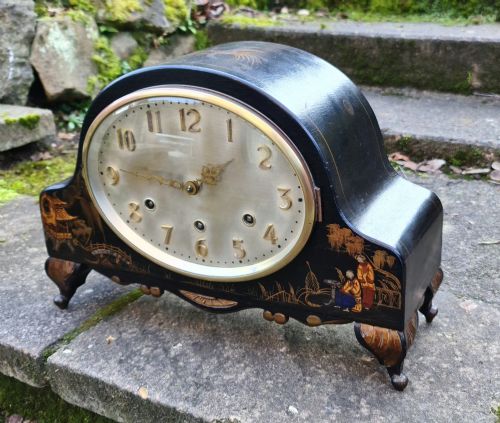
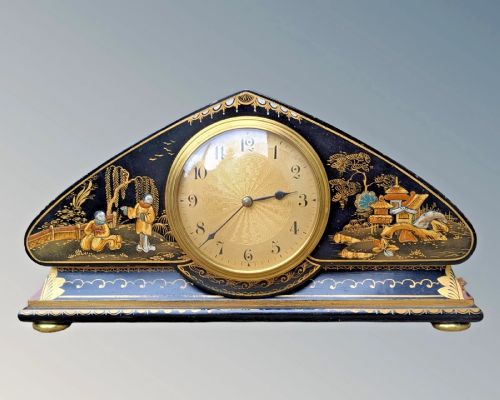
A gilded mantle clock is a timepiece housed in metal, marble, or wood, designed to sit upon a fireplace shelf. The selections on this page span the nineteenth century, including Victorian periods and decades such as the eighteen-eighties and eighteen-nineties.
Most examples originate from French workshops and take the form of mantel clocks, carriage clocks, and clock garnitures with matching side pieces. Styles lean heavily towards French Rococo Revival, Louis XVI Revival, and French Second Empire designs.
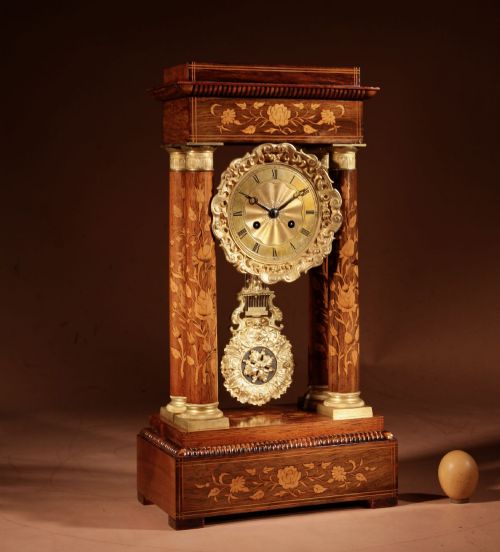
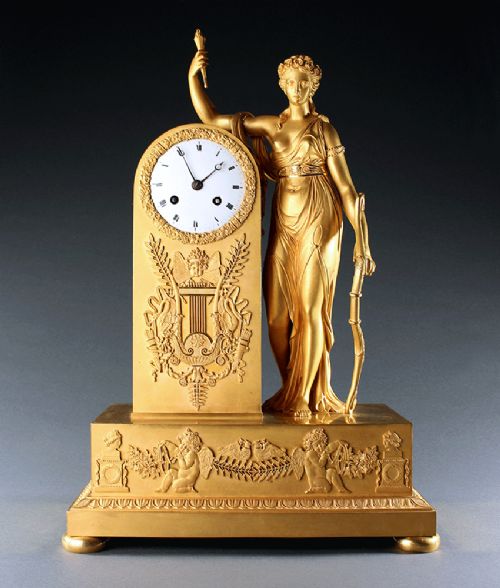
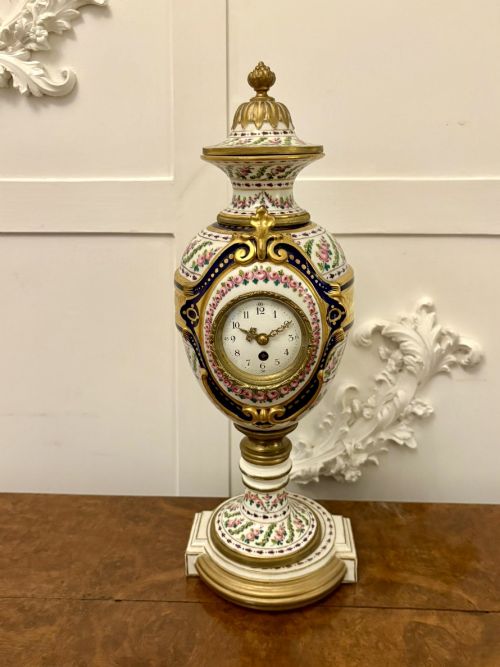
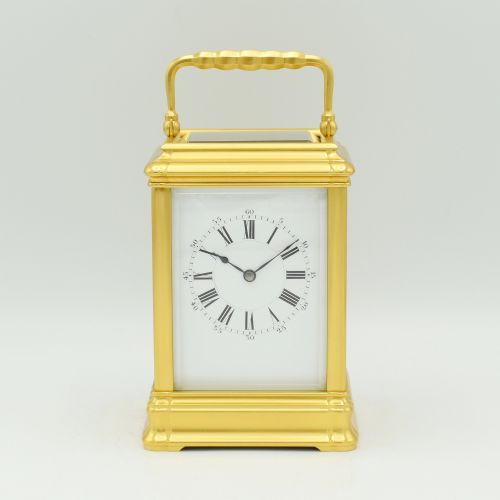
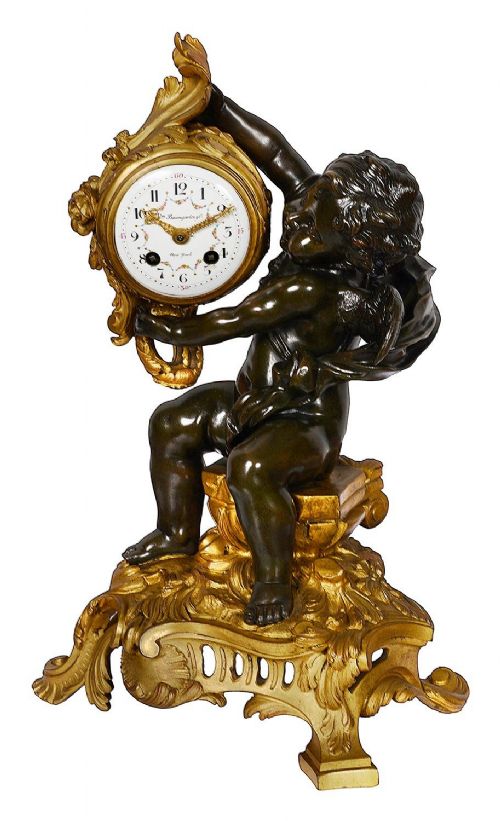
Buyers encounter architectural portico clocks, glass-sided four-glass models, and ornate cast-metal cases embellished with figures, cherubs, and foliage.
How they were made
Makers shaped cases from brass, gilt bronze, ormolu, and gilt metal, frequently combining them with white marble, hand-painted porcelain panels, and glass inserts. Gilding was applied to base metals to give a rich, reflective surface finish.
Clock movements relied on complex brass gear trains, often providing eight-day striking capabilities or alarm functions housed within glass-panelled carriage cases or substantial cast pedestals.
Gilded Mantle Clock Retail Price Guide 2026
Typical asking prices for gilded mantle clock among the pieces listed under this phrase on Sellingantiques today, from the lower quarter to the upper quarter. They describe what is for sale here now, not the wider market.
What varies in quality
Quality rests in the crispness of the cast metal ornamentation and the depth of the gilding applied to the bronze or brass framework. Finer pieces display sharply defined scrollwork, cherubs, and floral motifs rather than soft or smoothed-over casting edges.
The integration of materials also defines the tier of a piece, such as heavy marble bases paired with hand-painted porcelain dials or enamel panels, alongside signed mechanical movements by known Parisian makers.
Henri Jacot·C. Detouche Paris·Margaine Of France·Philippes Paris·Tiffany·Drocourt
The Gilded Mantle Clock Glossary
- Ormolu
- Gilded bronze produced by applying a mercury and gold amalgam to a bronze base and heating it. This technique creates a durable, golden surface seen on nineteenth-century French clocks.
- Garniture
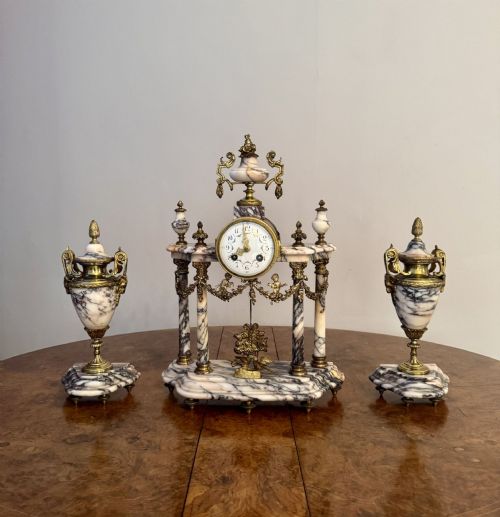
- A set consisting of a central clock flanked by matching decorative ornaments such as vases, urns, or candelabra. These sets were designed to sit symmetrically on a mantelpiece.
- Portico clock
- A clock featuring an architectural case supported by four or more columns, resembling a classical temple facade. They frequently incorporate wood marquetry and pendulum windows.
- Carriage clock
- A portable spring-driven timepiece with a glass-panelled brass case and a folding handle on top. They were originally built for travel by horse-drawn carriage or train.
- Petit sonnerie
- A striking mechanism that sounds the hours and the preceding quarters automatically at each quarter-hour. This complication is found in higher-grade nineteenth-century mechanical movements.
Gilded Mantle Clock: Frequently Asked Questions
What is a gilded mantle clock?
A gilded mantle clock is a decorative timepiece housed in a metal, marble, or wooden case featuring a gold-coloured surface finish. These objects were designed during the nineteenth century to sit upon fireplace mantels.
They combine mechanical clockwork movements with ornamental styles such as Rococo Revival, Louis XVI Revival, and French Second Empire designs.
How do I wind an antique clock?
Antique mechanical clocks use a specialised winding key inserted into holes on the dial face to tension the internal springs. Most nineteenth-century movements require winding every eight days to maintain accurate time.
Care must be taken not to overwind the mainspring, as excessive force can damage the internal gearing.
What is a clock garniture?
A clock garniture is a matching set comprising a central mantel clock accompanied by two side pieces, such as urns or vases. These sets were manufactured to create a balanced display across a fireplace shelf.
The side pieces often share the same marble, porcelain, or gilt metal materials as the main clock case.
Where were most of these clocks made?
The majority of these timepieces originated in France during the nineteenth century, particularly in Paris workshops. French clockmakers produced everything from small brass carriage clocks to large marble garniture sets.
Retailers and makers in Paris exported these decorative items across Europe and Britain during the Victorian era.