
Gilded Hand Painted Vase
A gilded hand painted vase brings together metallic lustre and brushwork across porcelain, earthenware and glass from the Georgian era through to the Edwardian period.
Gilded Hand Painted Vase
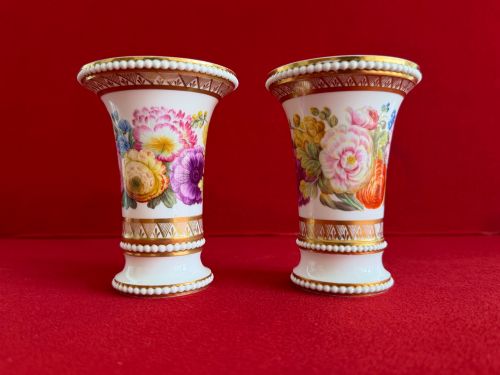
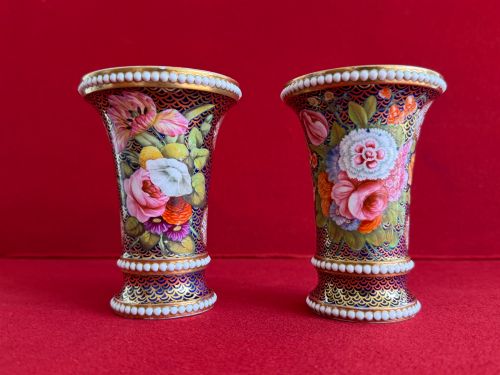
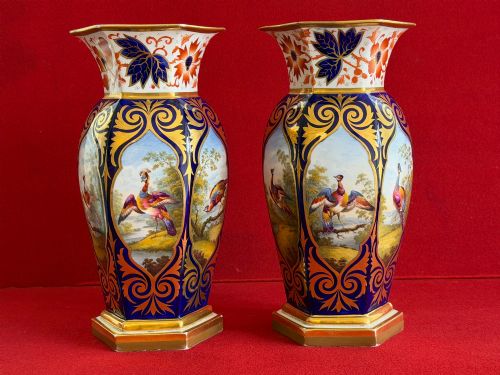
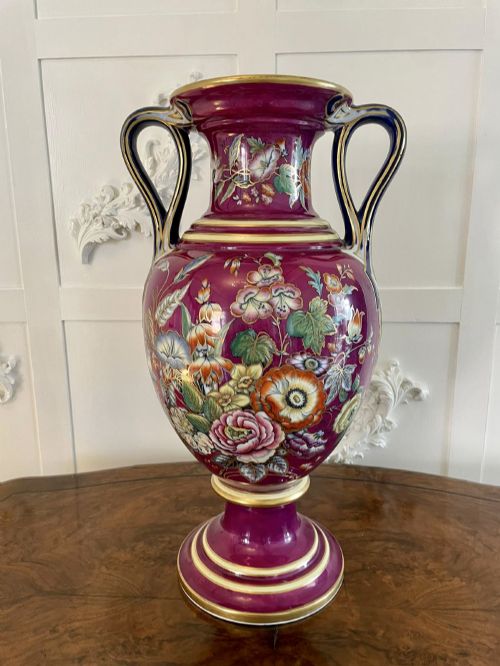
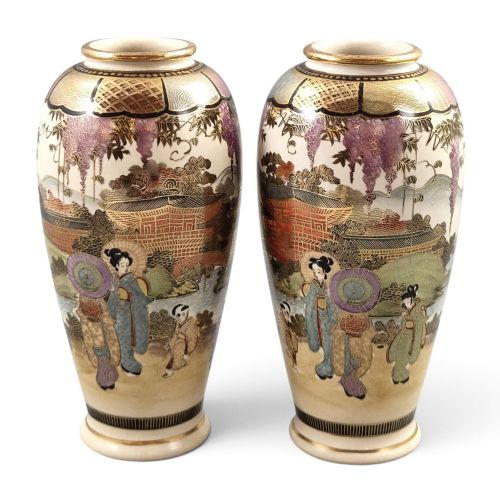
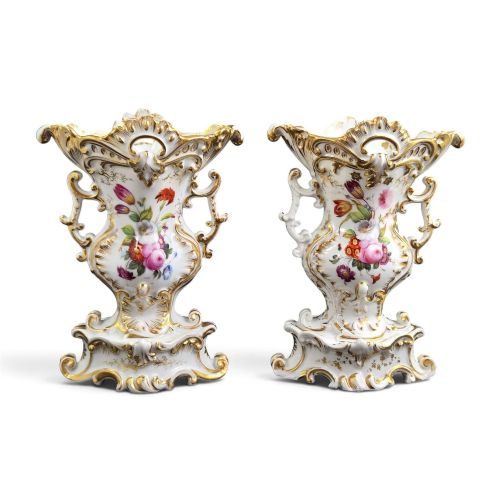
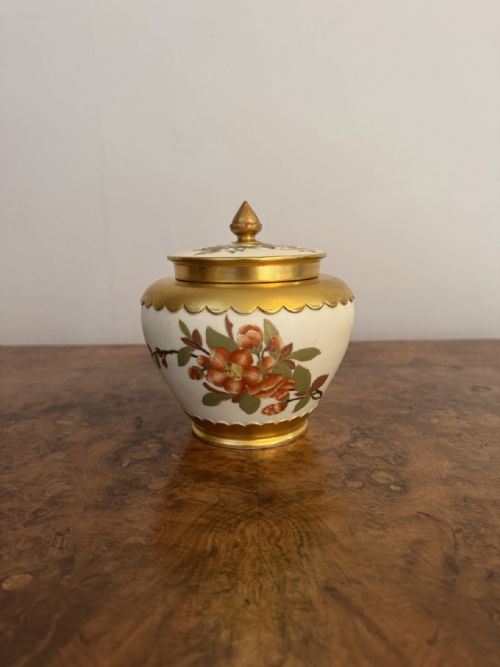
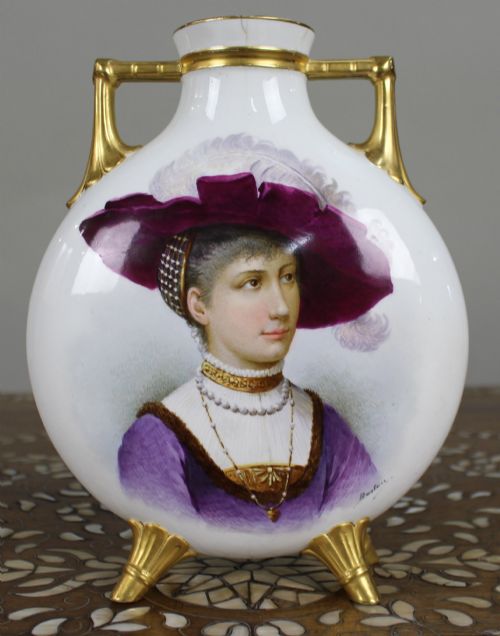
When searching for a gilded hand painted vase, you encounter a diverse range of decorative ceramic and glass forms spanning the Georgian, Regency, Victorian, and Edwardian periods. These pieces include bulbous urns, potpourri jars, jardinieres, moon flasks, and table lamps originating from English, French, Austrian, German, and Japanese workshops.
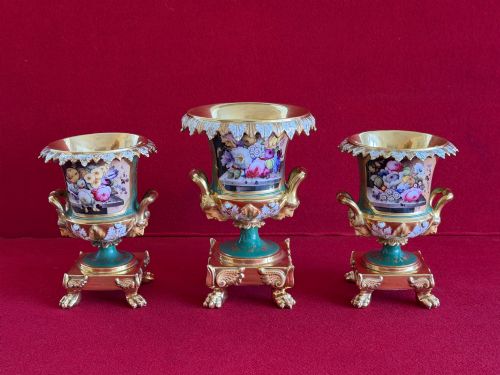
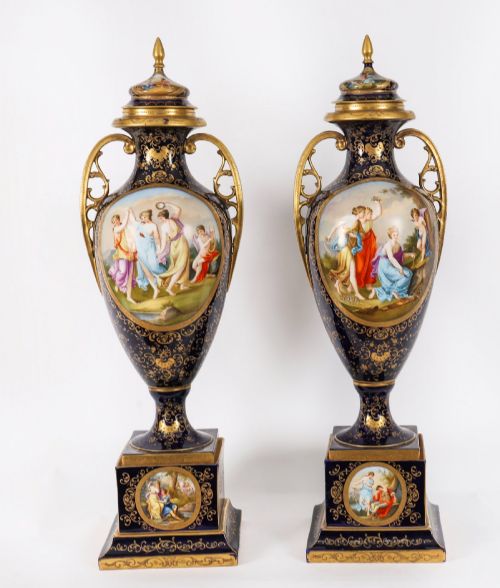
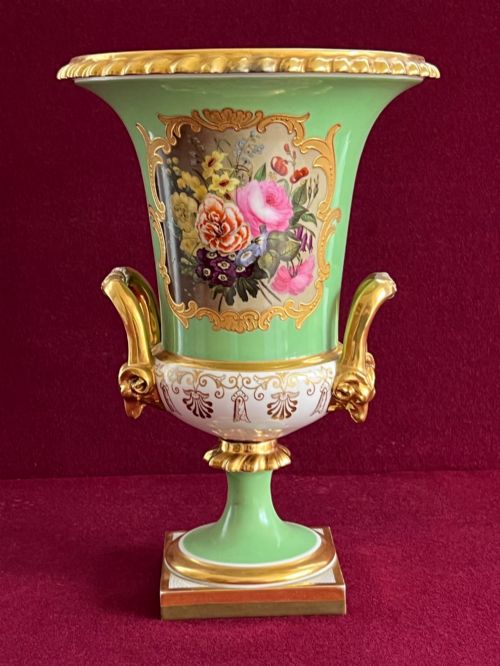
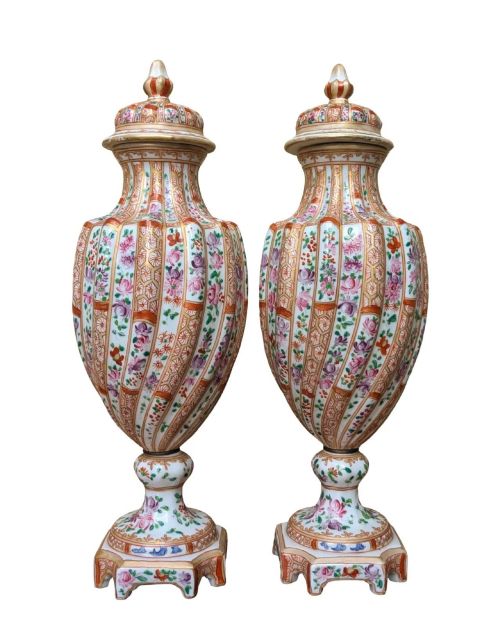
The most common examples on this page are porcelain vessels from the nineteenth century, featuring detailed floral, ornithological, or figural brushwork enhanced with gold leaf or gilt detailing. You will find matched pairs and garniture sets alongside individual cabinet pieces, reflecting both Western revival styles and Meiji period Japanese artistry.
How they were made
Potters shaped porcelain, earthenware, or glass into traditional vessel forms before applying coloured enamels and pigments by hand. Artisans then introduced gold leaf or liquid gilding to highlights, borders, and handles, often firing the pieces multiple times to fuse the metallic elements to the glaze.
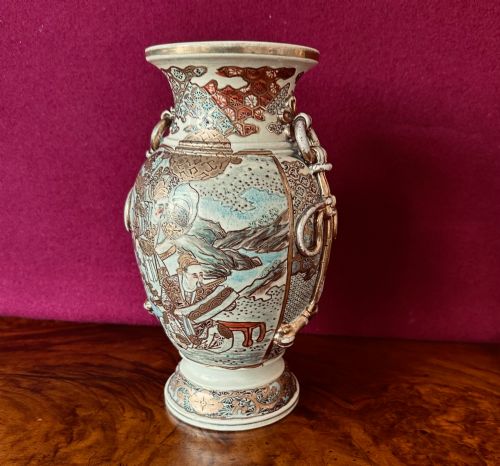
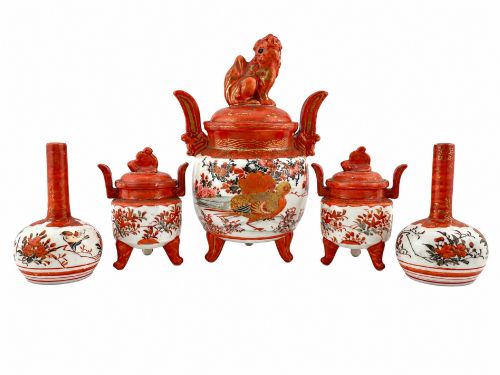
Japanese makers utilised distinct Satsuma and Kutani techniques on earthenware and porcelain, while European factories employed specialised painters and gilders to execute intricate Rococo, Empire, and floral designs.
Listings feature porcelain, earthenware, and glass across Georgian, Regency, Victorian, Edwardian, and Meiji periods.
What varies in quality
The standard of a piece depends heavily on the precision and fineness of the hand painted brushwork, particularly in complex figural or ornithological scenes. Superior examples display crisp detail and expressive control rather than mechanical transfer printing or hasty application.
The richness and preservation of the gilding also dictate distinction, with thick gold leaf and meticulous burnishing standing apart from flat, worn gilt. Furthermore, the crispness of the porcelain moulding and the reputation of the specific factory or artist elevate certain items above standard production ware.
Flight Barr and Barr·Jacob Petit·Royal Worcester·Sitzendorf·Barr Flight and Barr·Vienna Porcelain·Crown Derby·Samson Paris·Helena Wolfsohn Dresden·Royal Doulton
The Gilded Hand Painted Vase Glossary
- Gilding
- The application of gold leaf or powdered gold to the surface of a vase. This technique accents rims, handles, and painted motifs to create a lustrous contrast against the ceramic or glass body.
- Porcelaneous
- A ceramic body that shares many properties with true porcelain, being dense and semi-vitrified. Staffordshire makers utilised this durable material for large decorative vessels.
- Garniture
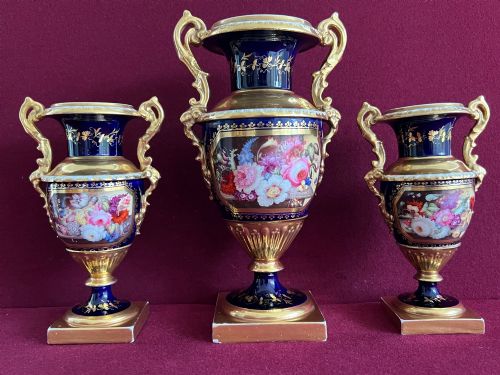
- A set of matching vases designed to be displayed together on a mantelpiece or sideboard. These arrangements typically consist of three or more graduated pieces.
- Moon flask
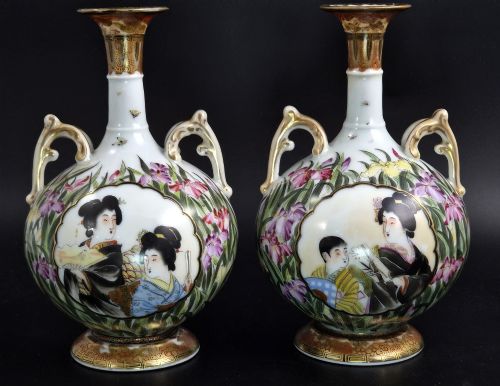
- A flat-sided circular vase with a narrow neck and small loop handles, often resting on a fixed base. This distinct form frequently serves as a canvas for elaborate hand painted scenes.
- Bluël Céleste
- A vibrant turquoise or sky-blue glaze popularised by the Sèvres porcelain factory in France. Makers in subsequent periods frequently adopted this characteristic ground colour.
Gilded Hand Painted Vase: Frequently Asked Questions
What is a gilded hand painted vase?
A gilded hand painted vase is a decorative vessel made from materials such as porcelain, earthenware, or glass, featuring hand-applied artwork and gold leaf accents. These pieces were produced across various historical periods, including the Georgian, Victorian, and Edwardian eras.
They encompass diverse regional styles, ranging from English factory wares and French revival pieces to Japanese Satsuma and Kutani productions.
How were these vases used?
These vessels served primarily as decorative interior ornaments for mantelpieces, tables, and cabinets in grand homes. Many were designed as pairs or larger garniture sets to create symmetrical displays.
Certain lidded versions, such as potpourri jars, also functioned to fragrance rooms with dried floral mixtures and aromatic spices.
How do I care for my vase?
Maintenance requires gentle handling and dusting with a soft, dry cloth to protect the delicate hand painted pigments and fragile gold leaf. Avoid using water, abrasive cleaners, or chemical solvents, which can strip away the historic gilding and enamel work.
Keep the vessel away from direct sunlight to prevent the colours from fading over time.
How can I tell periods apart?
Identifying the period involves examining the factory marks, glaze characteristics, and stylistic traits associated with specific eras. Georgian and Regency pieces often show neoclassical or early floral motifs, while Victorian items lean towards exuberant Rococo Revival or blush ivory finishes.
Later nineteenth and early twentieth-century pieces may incorporate Japanese influences or distinct Art Nouveau curves.