

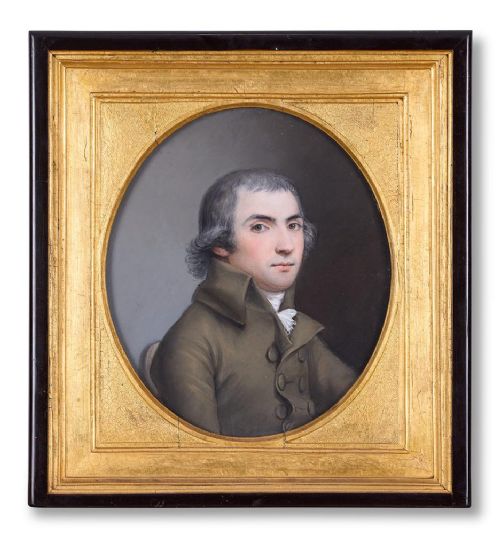
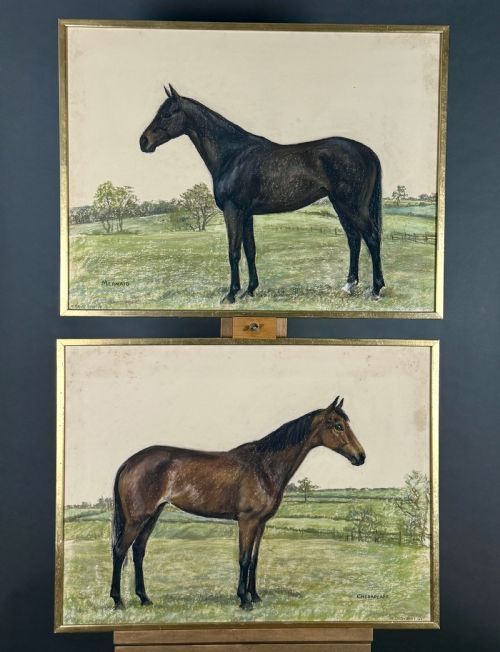

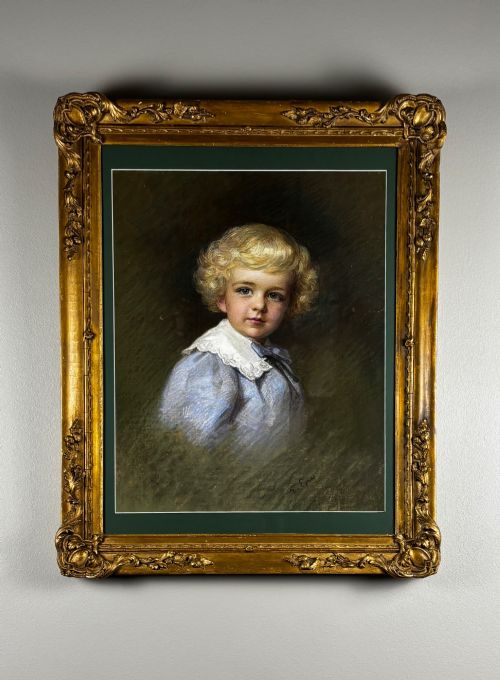
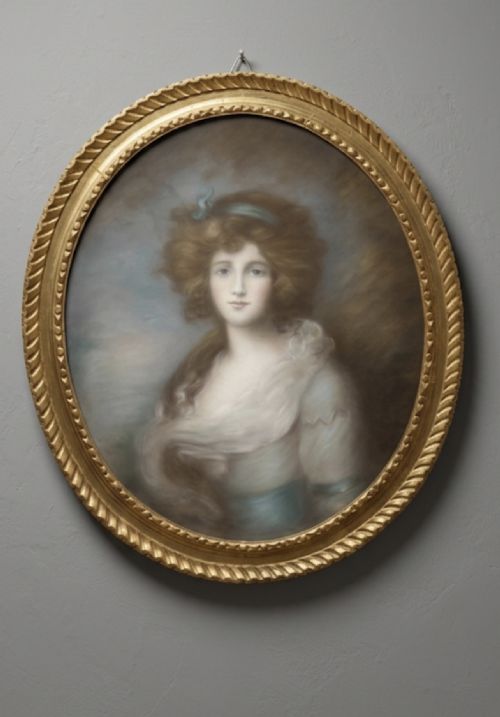


Gilded Frame Pastel Portrait
A gilded frame pastel portrait brings soft colour and intimate presence to a room, capturing faces from past centuries behind glass.
How they were made
Artists executed these works using powdered pigments compressed into sticks of pastel, applying them directly onto prepared paper or canvas surfaces. Because pastel lacks the liquid binder of oil paint, the resulting image relies entirely on the dense application of dry particles to build tone and texture.
To protect the friable chalk surface from smudging and atmospheric damage, each pastel portrait was sealed beneath a sheet of glass. This protective barrier was then secured within wooden surrounds finished in giltwood, gold leaf, or gilded wood, often carved with traditional decorative motifs appropriate to the period.
What varies in quality
The distinction between standard works and exceptional examples lies in the draughtsmanship and the subtlety of tonal transition across the sitter's face. Superior portraits demonstrate a confident handling of light and shadow that gives the skin a convincing warmth and depth, whereas lesser pieces can feel stiff or flat in execution.
The integration between the artwork and its housing also dictates the overall standard. High-quality pieces retain their original gilded frames, where the weight and detail of the gold leaf complement the scale and period of the drawing within.
Gilded Frame Pastel Portrait Retail Price Guide 2026
Typical asking prices for gilded frame pastel portrait among the pieces listed under this phrase on Sellingantiques today, from the lower quarter to the upper quarter. They describe what is for sale here now, not the wider market.
Materials recorded across the inventory include glass, pastel, paper, giltwood, and canvas.
Emily Eyres·John Raphael Smith·Nathaniel Bermingham·Gaston Bouy
The Gilded Frame Pastel Portrait Glossary
- Pastel
- A dry painting medium consisting of powdered pigment and a binder, known for its velvety matte texture and luminous colour. It requires placement behind glass to prevent the pigment from dusting away.
- Giltwood
- Timber that has been coated with a thin layer of gold leaf or powder, commonly used for decorative picture frames. This finish catches candlelight and natural illumination effectively.
- Chinoiserie
- A decorative style reflecting European interpretations of Chinese and East Asian artistic traditions. It appears in specific background details or framing elements of certain portraits.
- Rococo
- An ornate artistic style characterised by asymmetry, scrollwork, and organic curves, prevalent during the eighteenth century. Frames and compositions from this period often display these flowing motifs.
- Oval
- A curved, egg-shaped framing format popular for portrait miniatures and bust-length drawings during the Georgian and Victorian eras. This silhouette softens the geometry of wall displays.
Gilded Frame Pastel Portrait: Frequently Asked Questions
How should I hang a pastel portrait?
Hang these works away from direct sunlight to prevent the dry pigments from fading over time. Position them at eye level in rooms with stable humidity to protect both the paper and the wooden frame.
Ensure the wall fixings are secure, as the combined weight of glass, wooden framing, and backing boards can be substantial. Avoid placement near active heat sources which can dry out old timber and paper.
Are these portraits drawn on paper or canvas?
The evidence shows examples executed on both paper and canvas surfaces. Artists selected their ground depending on the desired texture and the scale of the intended composition.
Pastel on paper is traditional, while canvas supports offer a different tooth and greater durability for larger oval formats.
How do I identify a Georgian pastel portrait?
Georgian examples typically display the clothing styles, hairstyles, and framing conventions characteristic of the eighteenth century. The sitters often wear powdered wigs, lace cravats, or formal satin attire specific to that era.
The gilding techniques and timber construction of the frames also provide strong clues to their period of origin, matching the cabinet-making standards of the eighteenth century.
Why are some portraits cut-out profiles?
Cut-out profiles represent a specific silhouette technique where the subject's likeness is shaped from paper rather than built up through detailed chalk shading. These pieces offer a stark, graphic alternative to fully rendered facial portraits.
They gained popularity for their clean outlines and were often mounted against contrasting backgrounds within decorative frames.