

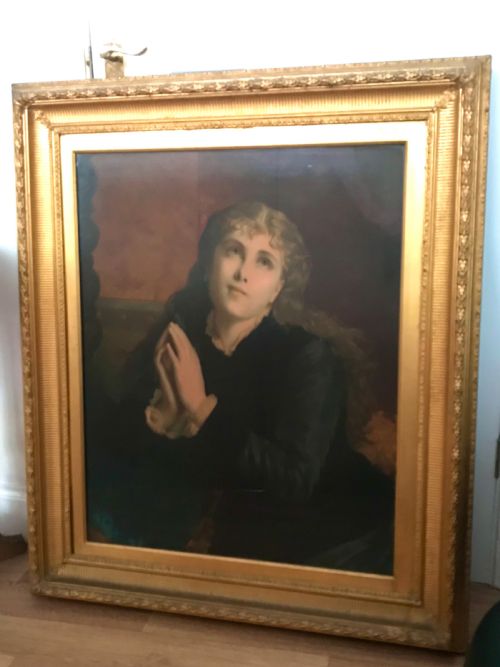


Gilded Frame Glass Picture
A gilded frame glass picture brings a rich reflective sheen and historical depth to any room through reverse glass painting, mezzotint, or crystoleum technique.
Gilded Frame Glass Picture
A gilded frame glass picture encompasses decorative wall art executed directly upon or protected beneath glass, housed within ornate wooden and gilt frames. These pieces span from the eighteenth century through the Victorian era, utilising diverse decorative forms including reverse glass prints, armorial crests, and religious portraits.
The most prevalent examples on this page are eighteenth-century and nineteenth-century reverse glass prints, alongside Victorian crystoleoms and framed silhouettes. Buyers encounter subjects ranging from classical scenes and equestrian art to detailed religious iconography and hand-coloured mezzotints.
Period aesthetics represented across the inventory include Georgian, Regency, and Victorian Rococo Revival styles, often set within heavy giltwood, gesso, or ormolu frames. Each object demonstrates how historical imagery was preserved behind a protective glazed surface.
How they were made
Makers constructed these works using glass plates as the primary canvas or protective layer, applying pigment, paint, and gold leaf directly to the reverse side in reverse order for glass paintings. Crystoleoms involved rendering prints transparent and applying oil colours behind the glass.
Frames surrounding these glass panels were fashioned from wood, then built up with gesso and finished with applied gold leaf or giltwood. Ornate nineteenth-century examples incorporated cast ormolu mounts and carved wooden detailing to complement the glazed artwork within.
Listings feature reverse glass prints, crystoleoms, and oil paintings framed in nineteenth-century giltwood, gesso, and ormolu.
What varies in quality
The sophistication of the hand-painting beneath the glass and the crispness of the transfer print dictate the visual standard of each piece. Finer examples display meticulous brushwork, vibrant pigments, and intact reverse glass details without flaking.
Frame construction also determines the overall calibre, distinguishing heavily carved giltwood and detailed ormolu mountings from simpler wooden mouldings. The harmony between the original period frame and the glazed artwork remains central to the piece's integrity.
Fletcher·Sebastiaan Vrancx·Robert Sayer·Abraham Cooper·John Miers·Schweninger
The Gilded Frame Glass Picture Glossary
- Reverse glass painting
- A technique where the artist paints the image backwards on the rear surface of the glass so it appears correctly when viewed from the front. This method protects the pigment from dust and environmental wear.
- Crystoleum
- A Victorian method of applying a coloured photograph or print to the inside of a convex glass, thinning the paper, and painting further details behind it. The convex glass creates a distinct sense of depth.
- Giltwood
- Timber, usually softwood or oak, covered with a thin layer of gold leaf over a prepared gesso base. It provides the characteristic bright, reflective border typical of antique wall art.
- Mezzotint
- A printmaking process of the intaglio family where the plate is roughened to produce dark tones and smoothed where light areas are required. These prints were frequently hand-coloured and mounted beneath glass.
- Gesso
- A paint mixture consisting of a neutral binder mixed with chalk, gypsum, or pigment used to prepare wood surfaces for gilding. It allows craftsmen to carve intricate relief patterns before applying gold leaf.
Gilded Frame Glass Picture: Frequently Asked Questions
How do I clean a glass picture?
Dust the gilded frame gently with a soft, dry brush to avoid disturbing the gesso or gold leaf. Clean the glass surface using a mild glass cleaner applied to a cloth rather than sprayed directly onto the piece.
Keep moisture away from the edges of the glass where the pigment or print sits directly behind the panel. Excessive liquid can seep beneath the glass and damage the historical paint layers.
What is a crystoleum?
A crystoleum is a nineteenth-century method where a paper print is adhered face down to convex glass, rubbed thin, and hand-painted from behind. This multi-layered process creates a luminous, three-dimensional painted effect.
Victorian makers produced these as popular decorative items often housed in heavy gilt frames. They frequently depict portraits, domestic scenes, or romantic continental landscapes.
How do I date a gilt frame?
Examine the construction of the wooden corners, the composition of the gesso, and the tooling of the gold leaf. Eighteenth-century frames often feature hand-carved wooden details, while Victorian versions make heavier use of moulded gesso.
Check the reverse of the frame for old fixings, maker stamps, or paper labels. The style of the glass and the method of securing the picture inside also offer clear chronological clues.
Where should I hang these pieces?
Hang these works on interior walls away from direct sunlight to protect the fragile pigments and gold leaf from fading. Avoid placement in damp areas such as unheated kitchens or bathrooms where moisture can degrade the paper and backing.
Ensure the wall fixings are robust enough to support the weight of heavy wooden frames and glass panels. Position them at eye level to properly appreciate the fine detail of the reverse painting or print.