




Gilded Frame Dog Artwork
Gilded frame dog artwork brings together faithful canine subjects and rich gold leaf settings from the nineteenth and early twentieth centuries.
Gilded Frame Dog Artwork
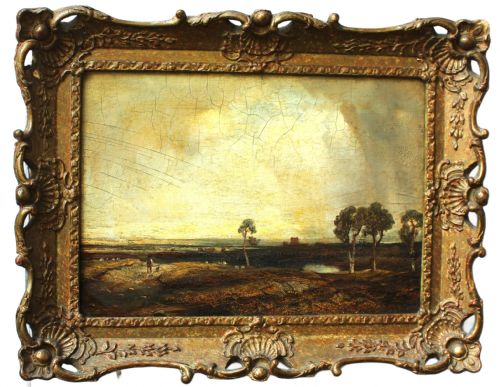
When you search for gilded frame dog artwork, you encounter historical paintings, watercolours and etchings that place canine subjects centre stage within ornate wooden surrounds. These pieces range from intimate terrier portraits to grand sporting scenes and pastoral landscapes featuring hounds and spaniels.
The works appearing here predominantly date from the nineteenth century, encompassing Victorian and Edwardian periods alongside earlier Georgian examples. Canvases and boards rendered in oil paint dominate the selection, accompanied by selected works on paper and original etchings housed in period frames.
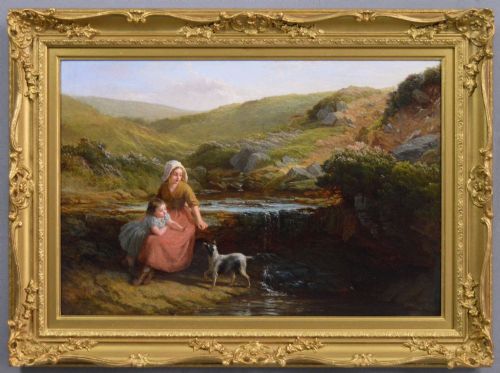
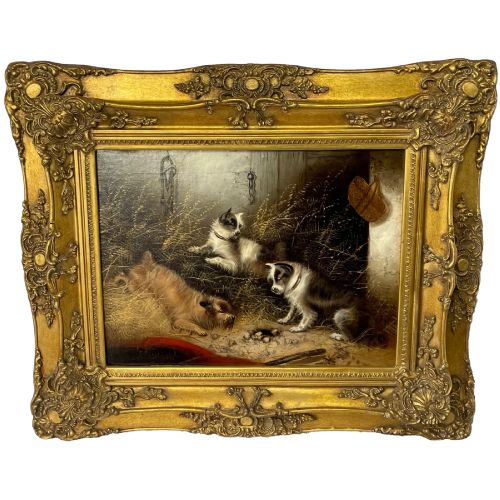
Subjects vary from individual pedigree portraits like the cocker spaniel and west highland terrier to narrative genre pieces depicting terriers guarding a trapped rat or hunting dogs accompanying figures in the countryside.
Materials and Technique
Artists relied primarily on oil paint applied to canvas or wood panel, building up rich layers of pigment to capture the texture of a dog's coat and the play of light across the landscape. Watercolours and etchings provide alternative mediums across the selection.
Frames are constructed from wood and finished with gold leaf or giltwood, providing a bright reflective border that complements the warm tones of the painted scenes within.
Listings feature works in oil paint, watercolour and etching, housed in wood and giltwood frames across nineteenth-century and early twentieth-century periods.
Judging Quality and Execution
Superior works demonstrate a masterly handling of anatomy and expression in the animal subjects, bringing the character of breeds like spaniels, hounds and bull dogs vividly to life. The integration of the dog into its wider rural or domestic setting reveals the skill of the painter.
The craftsmanship of the surrounding woodwork influences the overall impact, with well-preserved giltwood and gold leaf frames enhancing the visual presence of the artwork without overshadowing the painted canvas.
Valentine T. Garland·David Bates·C R Breytle·Herbert Dicksee·George E Sharpe·Sir Edwin Landseer·Louisa Cooke·Edwin Frederic Holt·Robert Cleminson·John Constable·Eliza Maddock·Richard Waitt·Charles Bilger Spalding·Frank Dadd·Thomas Blinks·Samuel Fulton·Charles Hunt Jnr
The Gilded Frame Dog Artwork Glossary
- Giltwood
- Wood carved and subsequently coated with gold leaf or gold paint to create a luminous decorative surface. This finish defines the characteristic borders surrounding many nineteenth-century canine paintings.
- Oil on Canvas
- Pigment mixed with drying oils applied to a stretched fabric support. This traditional medium allowed artists to achieve deep colour saturation and rich textures in portraiture.
- Etching
- A printmaking process where lines are bitten into a metal plate with acid before being inked and pressed onto paper. Herbert Dicksee utilised this technique for canine subjects.
- Genre Painting
- Artwork depicting scenes from everyday life, often featuring human figures alongside domestic animals, farmyard creatures and faithful dogs in cottage or rural settings.
- Watercolour
- Paint made with water-soluble pigments that is applied to paper. This medium produces translucent washes favoured by artists creating detailed animal studies and sporting sketches.
Gilded Frame Dog Artwork: Frequently Asked Questions
What periods do these dog artworks come from?
The pieces span the eighteenth, nineteenth and early twentieth centuries, with a strong representation of Victorian and Edwardian examples.
Artists from the 1800s onwards captured both working dogs in the field and beloved pets in domestic interiors.
Are the frames original to the paintings?
Many works retain their period wooden frames finished in giltwood or gold leaf, which complement the age of the canvas.
These gilded surrounds are an integral part of the overall aesthetic of nineteenth-century fine art.
What types of dogs appear in the artwork?
The selections feature a wide variety of breeds, including cocker spaniels, terriers, greyhounds, lurchers, bulldogs and hounds.
Artists portrayed these animals both as individual character studies and as companions in larger sporting and pastoral scenes.
How should I care for a gilded frame?
Keep the artwork away from direct sunlight and areas of high humidity to protect both the canvas and the delicate gold leaf finish.
Dust the wooden frame gently with a dry, soft cloth rather than using liquid cleaning products.