
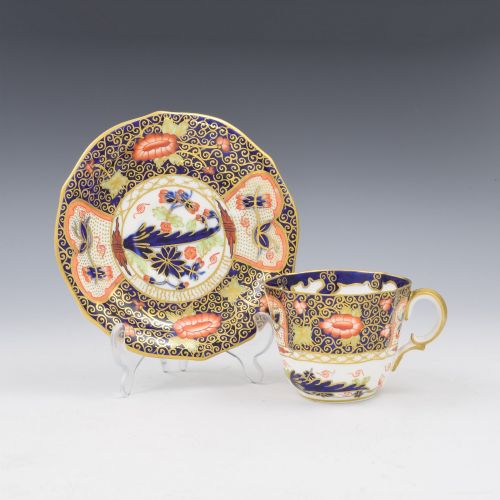
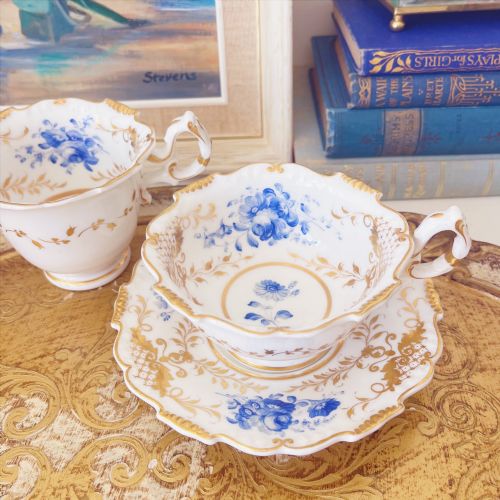
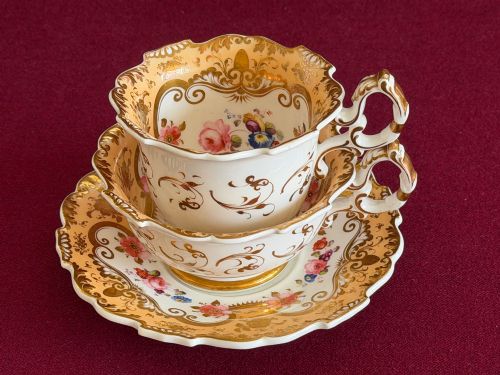
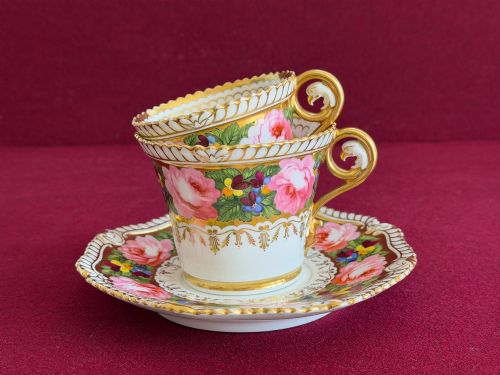
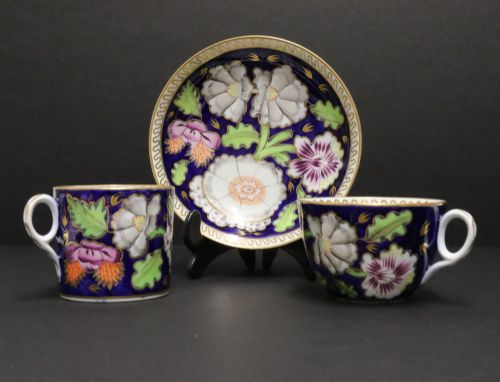
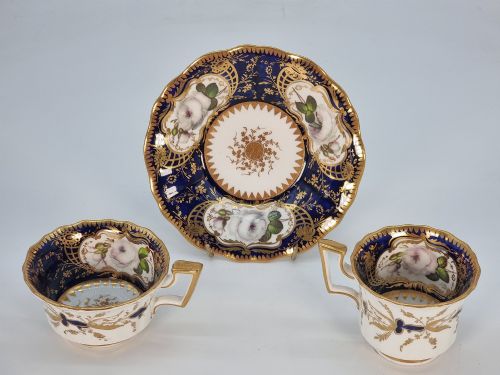
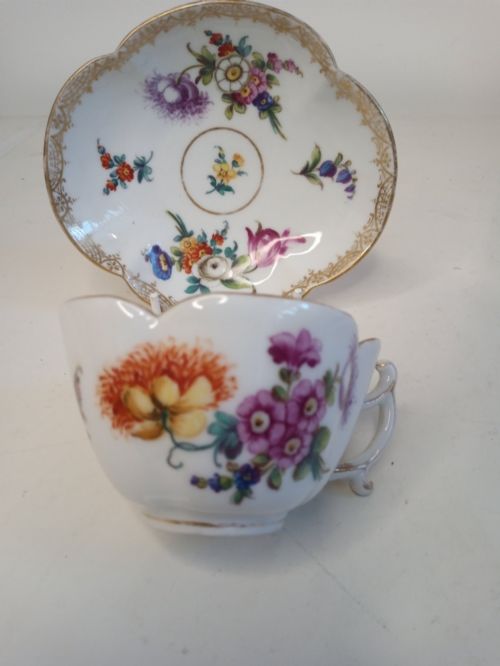
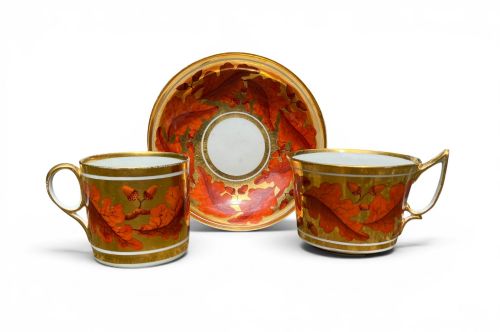
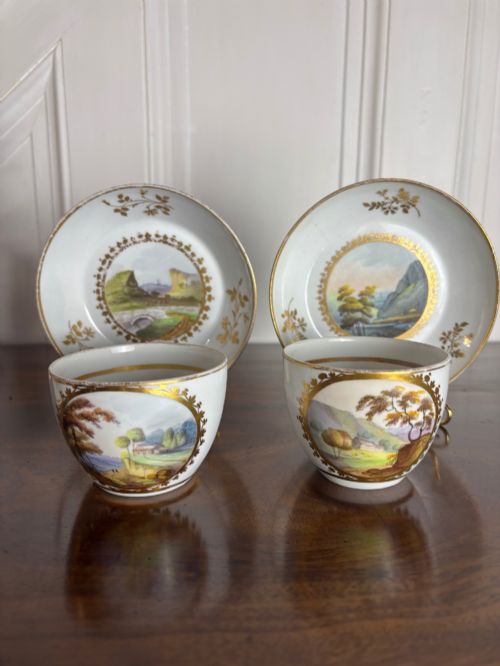


Gilded China Cup Saucer
These gilded china cup saucer pieces bring hand-painted artistry and fine porcelain to the table from centuries past.
Gilded China Cup Saucer
The selections span the Georgian, Regency, and Victorian eras, extending into Edwardian and later twentieth-century productions. Teacups and saucers dominate the offerings, alongside occasional coffee cans and cabinet pieces.
How they were made
Makers utilised porcelain and bone china as the foundational body for these vessels, frequently shaping them through soft-paste porcelain techniques in earlier periods. Artisans applied hand-painted details, enamels, and patterns directly onto the ceramic body.
Gold leaf, gilding, and gold gilt provide the signature metallic enrichment seen across the rims and handles. These decorative elements were fused to the china through kiln firing to secure the metallic finish.
Listings feature porcelain forms from the eighteenth century through to the nineteen sixties, incorporating bone china and soft-paste bodies.
What varies in quality
The dexterity of the hand-painted decoration separates standard production from finer cabinet pieces. Works featuring named decorators or armorial details demonstrate superior artistic investment.
The weight and translucency of the porcelain body, alongside the crispness of the gilt application, dictate the tier of the item. Early factory pieces with intricate patterns command greater attention than massed later sets.
Royal Crown Derby·H and R Daniel·Chamberlain Worcester·Newhall·Coalport John Rose·Minton·Flight Barr and Barr·Derby·Hicks Meigh and Johnson·Duesbury and Kean·Spode·Barr Flight and Barr·Royal Worcester·Doric China·Mason·Davenport
The Gilded China Cup Saucer Glossary
- Cabinet trio
- A matching set comprising a teacup, coffee cup, and saucer designed for display rather than daily service.
- Coffee can
- A straight-sided cylindrical cup intended specifically for drinking coffee in the eighteenth and nineteenth centuries.
- Soft-paste porcelain
- A ceramic composition fired at lower temperatures than hard paste, noted for its warm tone and glassy texture.
- Gilding
- The application of gold leaf or powdered gold onto the surface of the ceramic for decorative enrichment.
- Tea service
- A coordinated collection of vessels including cups, saucers, and sometimes teapots or bowls for serving guests.
Gilded China Cup Saucer: Frequently Asked Questions
What is a trio set?
A trio set typically consists of a matching teacup, saucer, and tea plate intended for a single place setting.
These combined pieces allowed Victorians and Georgians to enjoy afternoon tea with a unified aesthetic at the table.
How do I identify Regency cups?
Regency items often display neoclassical motifs, refined hand-painted landscapes, and delicate handle shapes dating roughly between eighteen hundred and eighteen thirty.
Porter marks and pattern numbers painted on the underside provide further clues to the specific factory of origin.
Are these cups safe for daily use?
Most antique porcelain requires careful hand washing to preserve the delicate hand-painted enamels and gold gilding.
Due to the age of the materials and historical wear on the gold leaf, many collectors reserve these items for display or gentle special occasions.
What does bat wing pattern mean?
Bat wing refers to a specific decorative motif found on nineteenth and early twentieth century porcelain tea sets.
The design panels radiate outwards from the centre of the porcelain surface in a distinct stylized arrangement.