
Gilded Canvas Landscape Painting
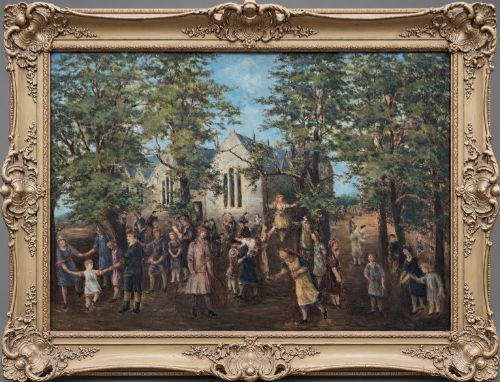
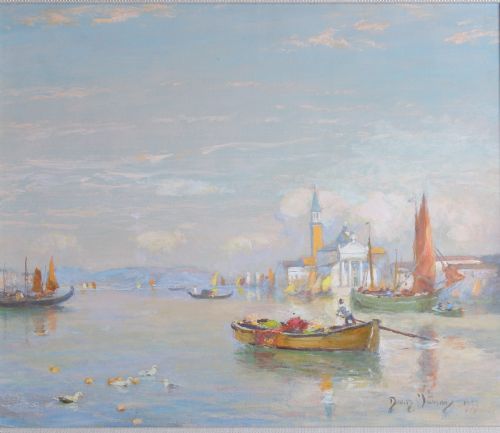
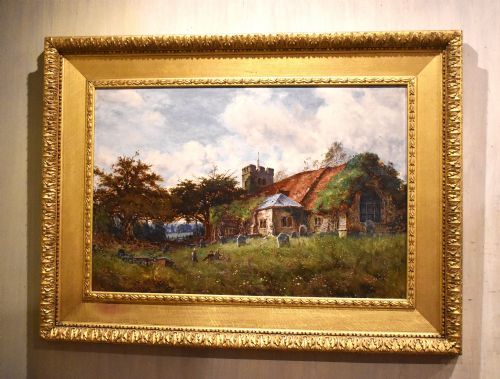
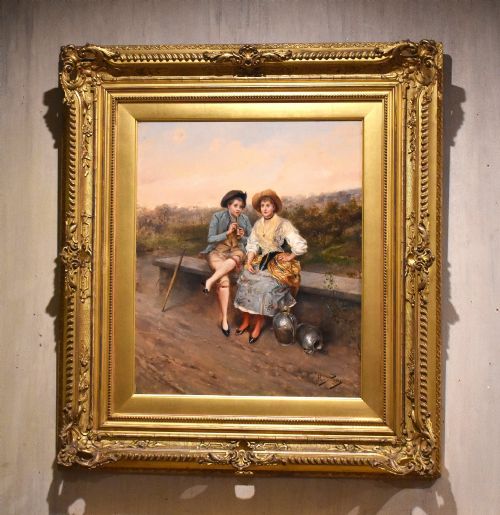
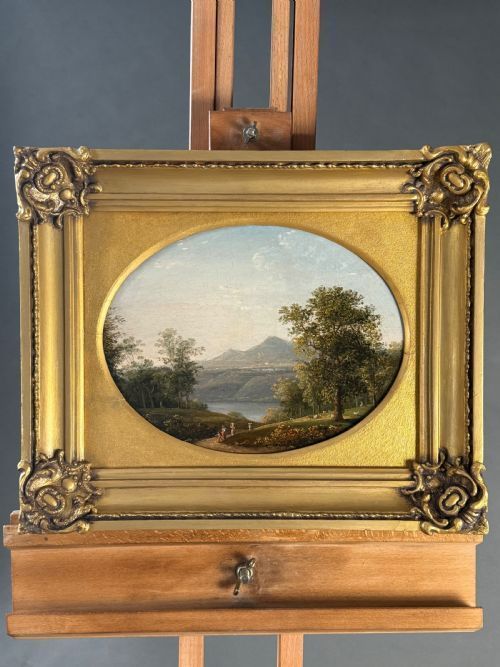
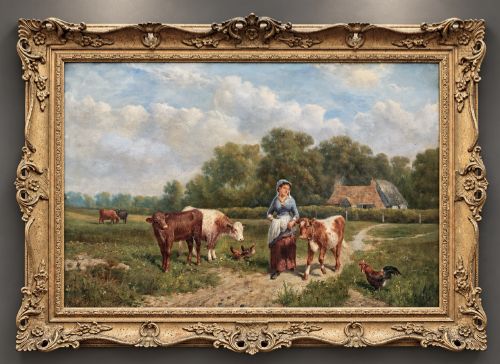
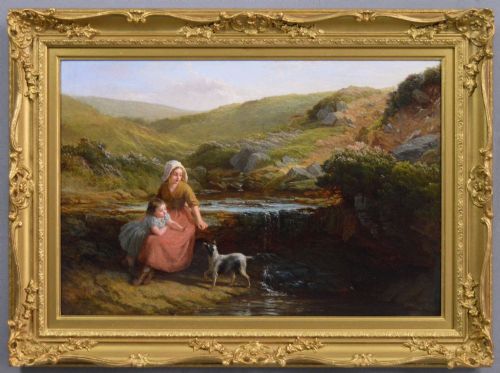
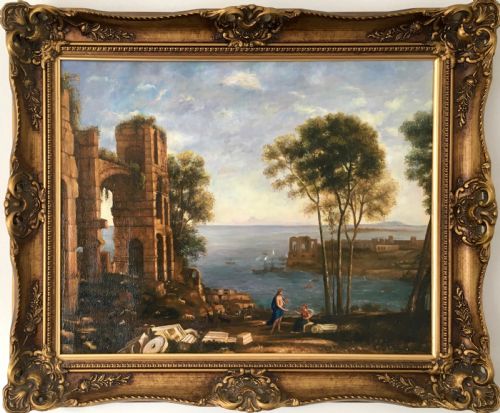
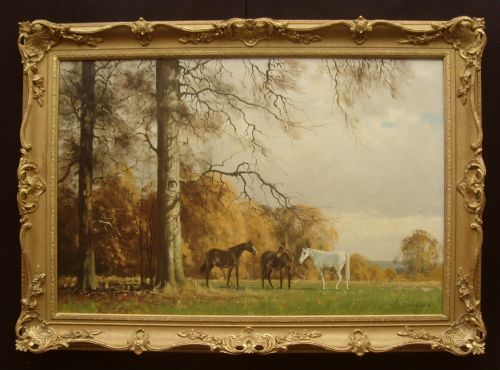
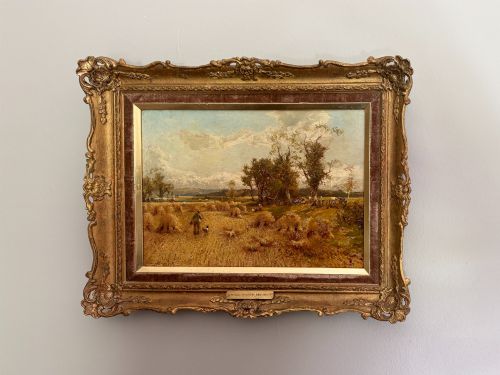
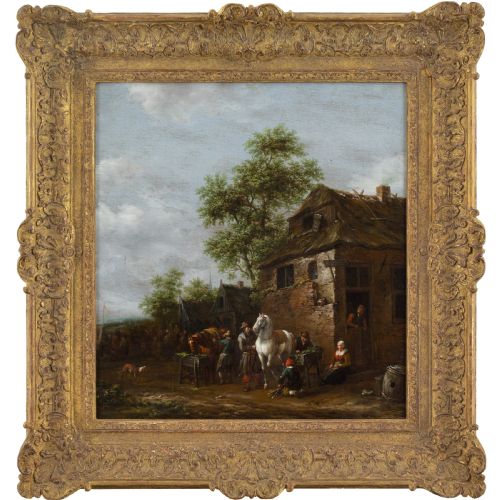
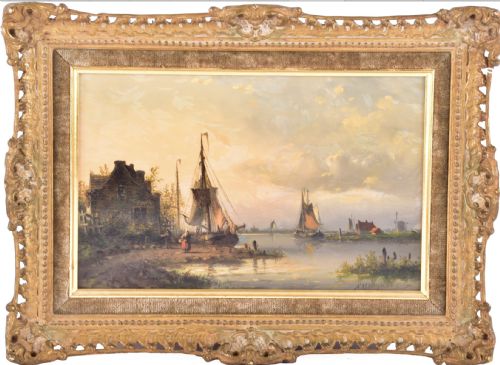
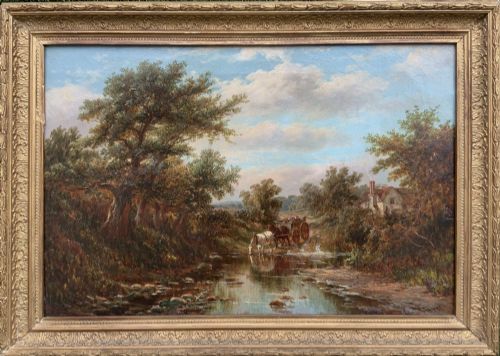
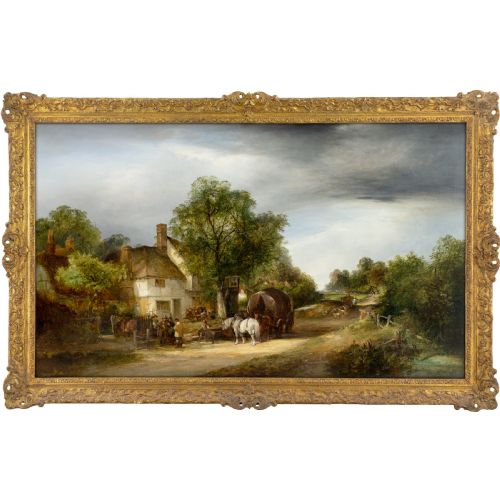
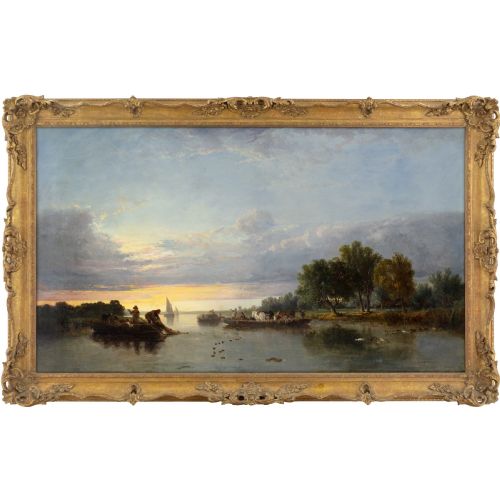
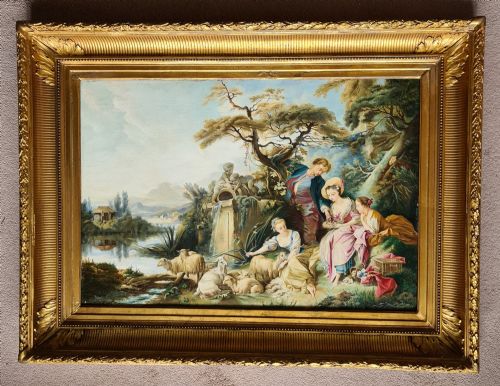
When you search for a gilded canvas landscape painting, you are looking at oil works on stretched fabric set within gold leaf frames.
Gilded Canvas Landscape Painting
A gilded canvas landscape painting comprises oil pigments applied to stretched fabric support, depicting rural scenes, waterways or townscapes. These works originate from periods spanning the eighteenth century through to the mid twentieth century, with nineteenth century and Victorian examples appearing most frequently.
The visual scope includes British, French, Italian and Dutch regional schools, capturing subjects from Highland cattle to Venetian lagoons. Many retain their original frames, linking the canvas directly to period decorative arts.
Materials and technique
Artists painted primarily in oil on woven canvas stretched over wooden frames, utilising layered pigments to build depth and light in outdoor scenes. Frames were constructed from wood, then coated with gesso layers before the application of gold leaf or giltwood finishes.
Makers applied hand carved or moulded ornamentation to the frame mouldings, complementing the tonal balance of the painted landscape within.
Several Victorian canvases capture cows, sheep and steam locomotives sharing the exact same pastoral horizon.
Variations in quality
Quality rests upon the confidence of the brushwork and the structural integrity of the canvas and stretcher frame. Superior examples demonstrate skilled handling of natural light and atmosphere by the artist, alongside original framing that preserves the piece's historical context.
Lesser works may exhibit heavy restoration, re-lining or replacement frames that diminish the unified character of the object.
Richard Sebastian Bond·Clifford Hanney·Alfred Fontville de Breanski Jr·Augusto Alberici·Gabriel Mathieu·David Bates·Robert John Hammond·Alfred Pollentine·Jacob Philipp Hackert·Francis Moltino·John Hodgson Lobley·Robert Watson·Charles Hunt·John Wilson Carmichael·Adriana Verelst·William Watson Jnr·Edward Priestley·Douglas Cameron·Henry Yeen King·William Henry Williamson·John Holland·Henry Schouten
The Gilded Canvas Landscape Painting Glossary
- Gesso
- A plaster mixture applied to wooden frame mouldings as a smooth base for gold leaf. This ground layer is often textured before gilding.
- Giltwood
- Timber that has been decorated with gold leaf or gold paint. It provides a luminous border to the painted canvas.
- Stretcher
- The internal wooden frame that holds the canvas taut. Period frames use wedge corners for adjustment.
- Barbizon School
- A nineteenth century French art movement focused on plein air landscape painting. Artists emphasised realistic scenes of rural life and forest environments.
Gilded Canvas Landscape Painting: Frequently Asked Questions
How do I care for an oil painting on canvas?
Keep the canvas away from direct sunlight and steady humidity levels to prevent the fabric from sagging or the paint from cracking. Dust the surface gently with a soft, dry brush without using liquid cleaners.
Inspect the back of the stretcher periodically to ensure the wooden wedges remain secure and the canvas tension stays even.
Are these frames original to the paintings?
Many landscape paintings retain their period gilt frames, which were often chosen by the artist or contemporary dealers to complement the palette. Match the wood type, wear patterns and corner construction to verify period consistency.
Replacement frames occur frequently due to centuries of damage or changing interior tastes.
What subjects are most common in these landscapes?
Traditional rural views dominate, featuring rivers, pastoral farmland, livestock and coastal harbours. European cityscapes, particularly Venetian canals and Paris streets, also appear across nineteenth century works.
Artists frequently recorded specific topographical locations across Britain and continental Europe during the grand tour era.
How can I tell the age of the canvas?
Examine the weave of the fabric and the composition of the wooden stretcher frame behind the painting. Older supports often show hand hewn timber marks, square cut nails or historical stamps from artist supply merchants.
Craquelure in the oil paint layer further indicates age as the medium naturally hardens and shrinks over decades.