

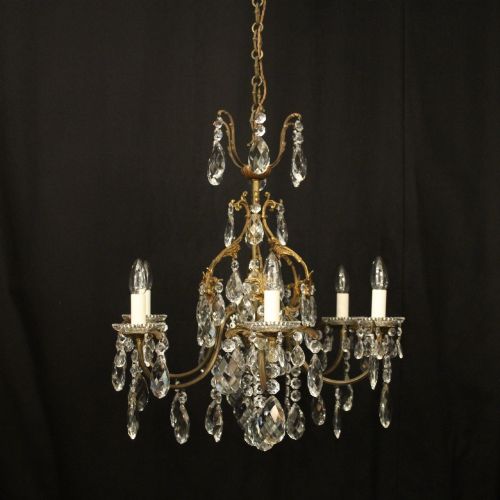
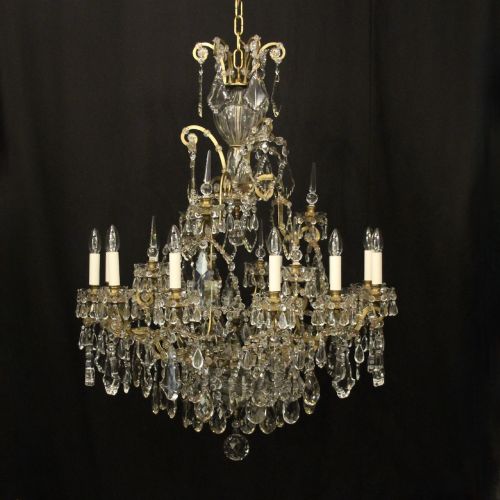
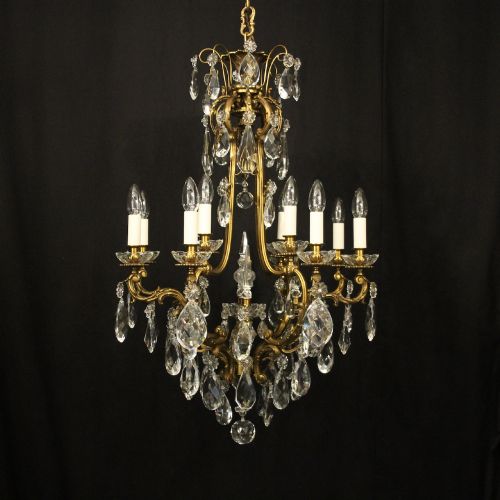

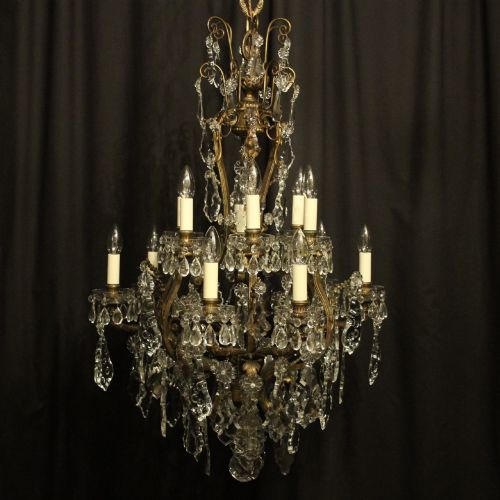
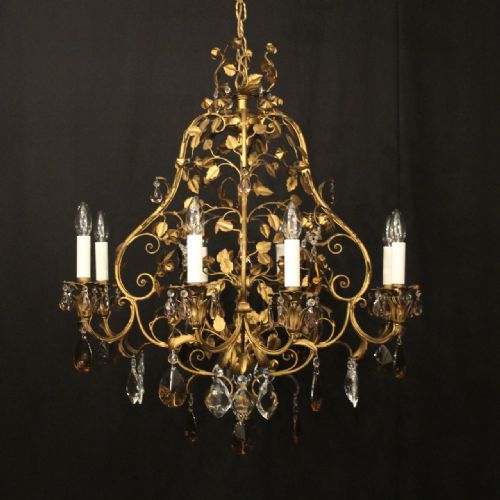


Gilded Cage Chandelier
These gilded cage chandeliers bring theatrical candlelight and glittering crystal into a room.
Gilded Cage Chandelier
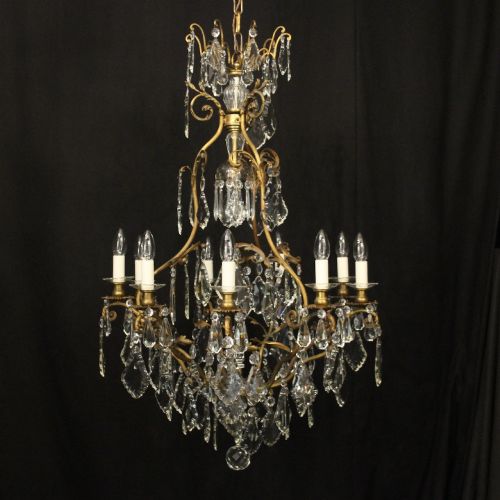
A gilded cage chandelier takes the form of an open metal framework enclosing numerous lights and cascading crystal drops. When people search for a gilded cage chandelier, they seek a statement overhead fixture that defines a room through opulent metalwork and luminous glass.
Most examples found here hail from France, dating from the nineteenth century up through the nineteen thirties. These pieces often adopt French Rococo, Neoclassical or Louis XVI styles, featuring elaborate gilt framing designed to catch and reflect illumination.
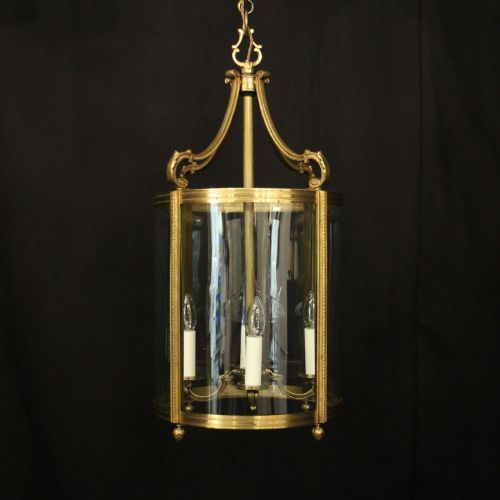
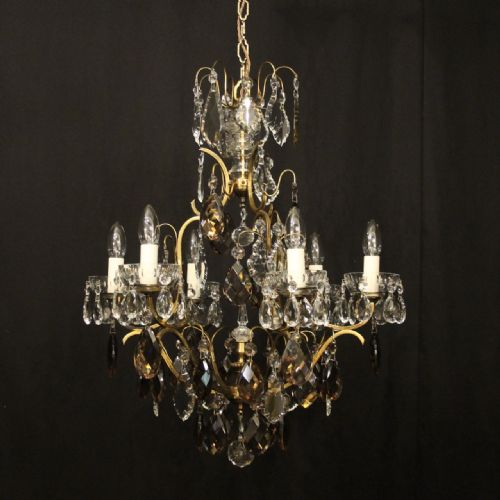
Forms range from multi-armed cage chandeliers holding six to fifteen lights down to hall lanterns and pendant lights. The structure typically wraps around a central cluster of bulbs, dripping with cut crystal or glass pendants.
How they were made
Craftsmen built the skeletal framework using gilded bronze, gilt metal, gilded brass, or ormolu. This metal armature was cast or forged into structural cages, ribbons and floral motifs, then coated in gold leaf or gilt finish.
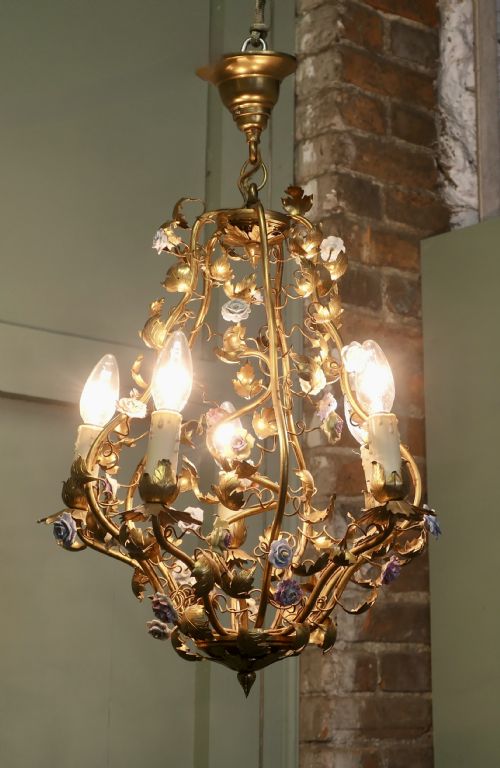
Artisans hung numerous glass and crystal drops, sometimes incorporating amethyst crystal or ceramic flowers. These transparent and coloured pendants were wired or pinned directly to the metal ribs to amplify the brilliance of the candles or early electric bulbs.
Gilded Cage Chandelier Retail Price Guide 2026
Typical asking prices for gilded cage chandelier among the pieces listed under this phrase on Sellingantiques today, from the lower quarter to the upper quarter. They describe what is for sale here now, not the wider market.
What varies in quality
The substance of the metalwork forms the baseline of quality, distinguishing solid gilded bronze and ormolu from lighter gilt metal or brass. Heavier bronze castings allow for crisper chased detailing along the scrolling arms and cage straps.
The cut and clarity of the crystal components dictate the upper tiers of craftsmanship. Precision-cut crystal drops refract light with sharper brilliance than plain moulded glass, while the integration of coloured crystal or ceramic elements adds complexity to the design.
The Gilded Cage Chandelier Glossary
- Cage chandelier
- A lighting fixture featuring an open metal framework that encloses the internal light points, typically draped with glass crystals.
- Ormolu
- Gilding technique involving the application of finely ground high-carat gold to a bronze object.
- Toleware
- Enamelled and painted metalware, occasionally incorporated into floral chandelier branches.
- Pendant lantern
- An enclosed or semi-enclosed hanging light fixture designed for halls or high ceilings.
- Cut crystal
- Glass shaped with faceted surfaces designed to maximise light refraction.
Gilded Cage Chandelier: Frequently Asked Questions
What is a cage chandelier?
A cage chandelier is a hanging light fixture built around an open metal skeletal frame. This structure shapes the silhouette while supporting internal lights and cascading crystal drops.
These pieces draw the eye upward and distribute ambient light across a space. The design originates in historic European lighting traditions.
How do I date these chandeliers?
Dating relies on stylistic markers, framing materials, and construction techniques found in the metalwork. Pieces span the nineteenth century through the nineteen thirties, often reflecting specific historic revival periods.
Earlier nineteenth-century examples tend to utilise heavy gilded bronze and intricate hand-chased details. Later twentieth-century variants often employ simpler gilt brass or metal frames.
Where should I hang one?
These fixtures suit principal reception rooms, grand hallways, and dining spaces with adequate ceiling height. Their reflective crystal and gilt surfaces require clearance to hang safely and function as a focal point.
Matching the scale of the chandelier to the room ensures the metal cage and glass drops command the appropriate presence.
Are they wired for electricity?
Most surviving examples have been adapted for modern electrical supplies over time. The internal wiring runs through the central stem to power multiple bulb holders.
Buyers should inspect the internal wiring setup upon acquisition to ensure compatibility with contemporary domestic standards.