
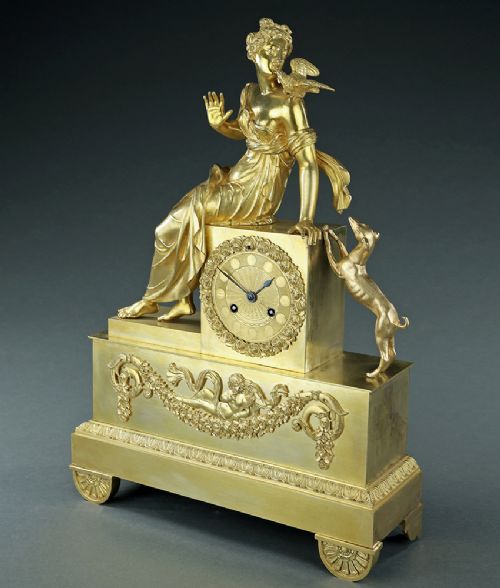

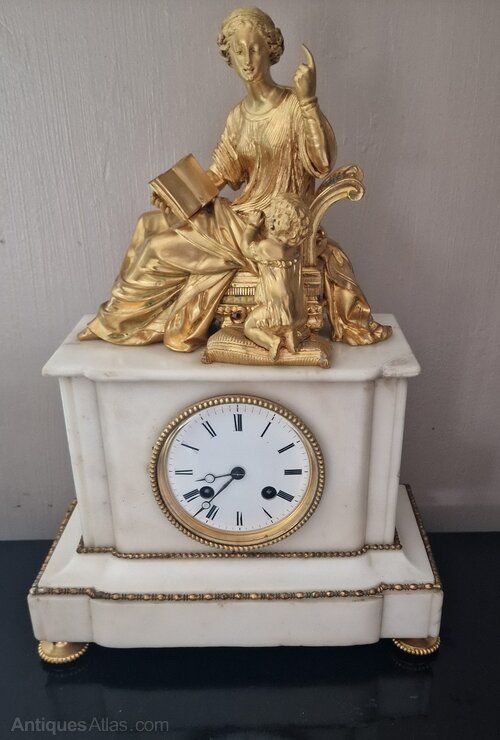


Gilded Bronze Figure Clock
These gilded bronze figure clock examples bring neoclassical or rococo presence to a room through cast metal and figural sculpture.
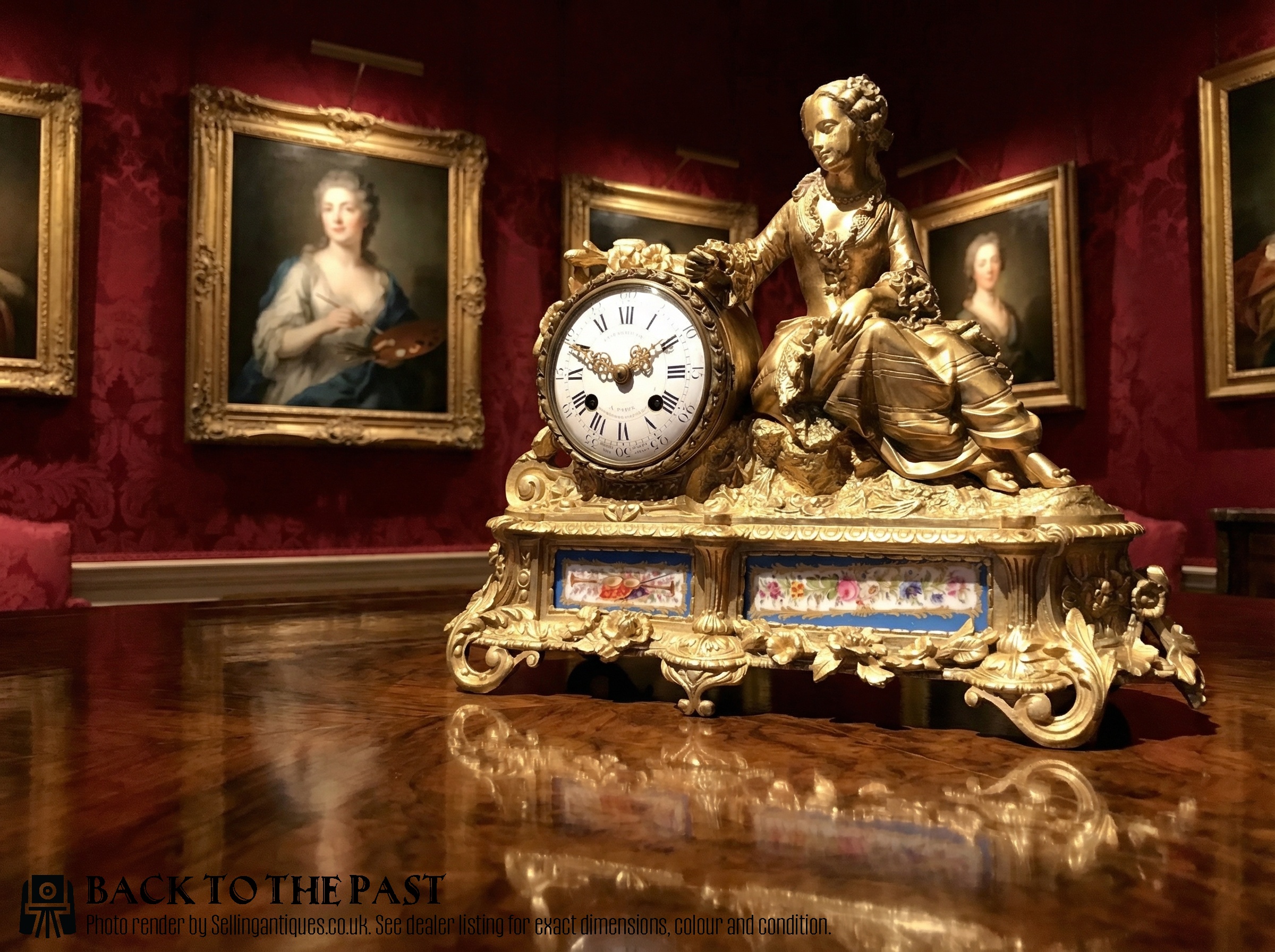
Gilded Bronze Figure Clock
A gilded bronze figure clock combines timekeeping with sculptural metalwork, frequently cast in forms depicting mythological figures, putti, or allegorical subjects. These pieces predominantly originate from nineteenth-century French workshops, spanning styles from Empire and Rococo Revival to Louis XVI.
Mantel clocks dominate the selection, often accompanied by matching garniture sets or rendered as cartel wall clocks and longcase variants. Buyers encounter works incorporating classical deities such as Diana or personifications of virtues like chastity alongside the clock dial.
Materials and construction methods
Maker workshops utilised ormolu, gilt bronze, and standard bronze for the sculptural elements, often pairing the cast metal with contrasting marble bases. Enamel dials and brass movement components complete the construction, occasionally protected by glass bezels.
Foundries employed traditional lost-wax or sand-casting techniques to shape the bronze figures and ornate mounts before applying mercury gilding or modern electroplating methods. Skilled artisans chased the cooled metal surfaces by hand to sharpen details on drapery, hair, and foliate scrolls.
Distinctions in quality and execution
Superior examples display crisp, deeply chased casting where facial expressions, fabric folds, and botanical motifs remain sharp and well-defined. Lesser pieces often exhibit softened contours and shallow detailing resulting from worn moulds or hurried finishing.
The weight and integration of the marble or bronze base, alongside the clarity of the enamel dial and the presence of a named maker's stamp on the movement, separate standard production items from masterworks.
Berger Paris·Deniere Et Fils·Japy Freres
The Gilded Bronze Figure Clock Glossary
- Ormolu
- Finely chopped gold amalgamated with mercury and applied to bronze through a heating process. This traditional technique creates a durable, rich golden surface sheen found on nineteenth-century French pieces.
- Garniture set
- A clock accompanied by matching side ornaments such as urns or candelabra. These matched groupings create a balanced decorative arrangement on a mantelpiece.
- Cartel clock
- A wall-mounted timepiece housed within an ornate, scrollwork frame made of metal or wood. They free up surface space while maintaining sculptural presence.
- Putto
- A plump, winged infant figure frequently depicted in mythological scenes. Sculptors integrated these playful figures into the sides and bases of figural clocks.
- Chasing
- The manual process of refining cast metal using small punches and hammers. Artisans utilise this technique to add texture and clarity to hair, feathers, and decorative mounts.
Gilded Bronze Figure Clock: Frequently Asked Questions
How do I wind a vintage clock?
Use the appropriate key on the winding arbors located on the dial face, turning gently until resistance indicates the mainspring is fully tensioned.
Avoid over-winding the mechanism, as this can snap older steel springs and require professional repair.
Where should I place a heavy bronze clock?
Position the piece on a sturdy, level mantelpiece or console table capable of supporting the substantial weight of marble and bronze.
Ensure the surface does not experience vibrations from foot traffic or doors that could disrupt the pendulum's beat.
How do I identify a Louis XVI style clock?
Look for symmetrical neoclassical motifs, including classical columns, urns, ribbons, and torch reliefs cast in ormolu and bronze.
These designs favour geometric lines and architectural restraint compared to the asymmetrical curves of earlier rococo pieces.
Why does my clock run fast or slow?
Changes in temperature, humidity, and the position of the regulating nut on the pendulum rod affect the timekeeping speed.
Adjust the small nut up to shorten the pendulum and speed up the beat, or down to slow the movement.