
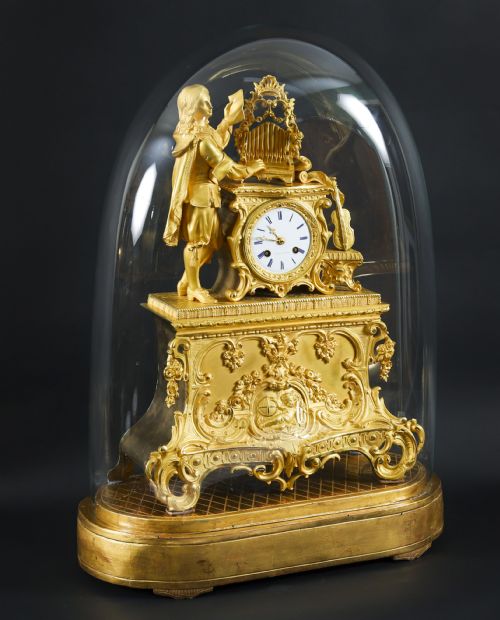


Gilded Bronze Clock Sevres
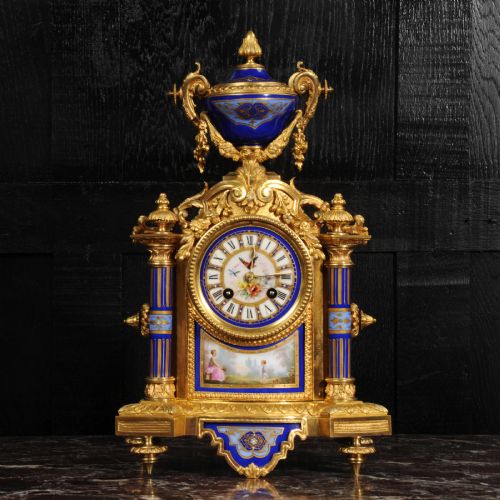
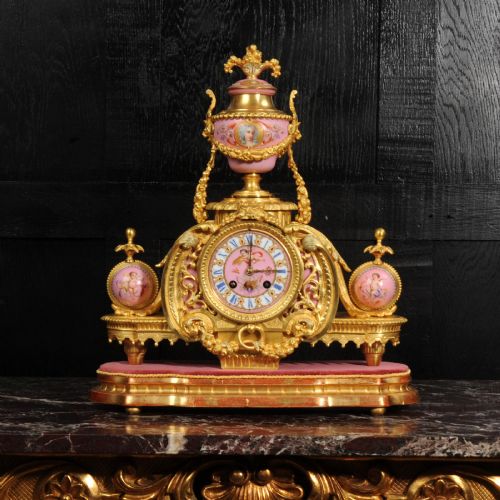
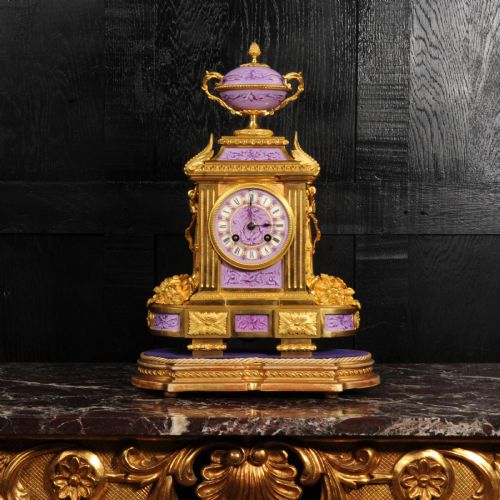
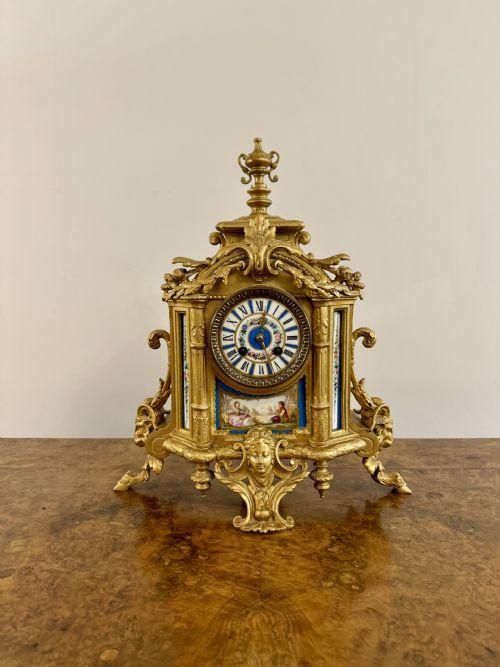
These gilded bronze clock sevres pieces combine heavy gilt metalwork with painted ceramic panels to anchor a traditional room.
Gilded Bronze Clock Sevres
When you search for gilded bronze clock sevres, you examine nineteenth-century French mantel pieces that pair cast metal mounts with ceramic elements. The most common format on this page is a freestanding mantel clock, often accompanied by matching garnitures or vase sets.
The objects stem from periods including the Victorian era and the 1850s through the 1890s. Makers and designers working in Paris produced these items in revival styles such as Louis XVI and French Rococo.
Mantel clocks dominate the selection, frequently presented on matching stands or beneath glass domes. These works functioned as central timekeepers and decorative ornaments for grand nineteenth-century interiors.
Materials and construction methods
Foundries cast bronze, brass, and gilt metal into elaborate frames featuring scrollwork, foliage, and architectural motifs. Artisans then applied fire-gilding or surface plating to achieve the characteristic ormolu sheen.
Clockmakers integrated porcelain panels and dials painted with floral or figural scenes, drawing upon the aesthetics associated with Sevres. Glass components, enamel chapter rings, and bell-striking mechanical movements completed the assembly.
Materials recorded across the inventory include gilt bronze, brass, glass domes, and hand-painted ceramic panels.
Evaluating craftsmanship and detail
The standard of a gilded bronze clock sevres depends on the crispness of the metal casting and the depth of the gilding. Superior examples exhibit sharply chased foliage and finely hand-painted ceramic plaques rather than flat stencilling.
The reputation of the horologist also distinguishes pieces within the range. Clocks bearing signatures from established Paris makers command attention for the precision of their internal movements alongside their decorative mounts.
Japy Freres·Achille Brocot·Leroy Paris·Henri Jacot·Vincenti of Paris·Miroy Freres
The Gilded Bronze Clock Sevres Glossary
- Ormolu
- A method of applying finely ground high-carat gold to a bronze object using a mercury amalgamation process. This technique produces a deep, warm lustre characteristic of nineteenth-century French metalwork.
- Garniture
- A set of decorative objects designed to be displayed together on a mantelpiece, usually comprising a central clock flanked by matching urns or vases.
- Lyre clock
- A timepiece shaped like the ancient musical instrument, featuring an open-frame body mounted in gilt bronze and flanked by porcelain elements.
- Enamel
- A glassy substance fused to metal dials through firing to create smooth, durable white surfaces for painted numerals.
Gilded Bronze Clock Sevres: Frequently Asked Questions
How do I wind my clock?
Most mechanical movements require a key to tension the springs through dedicated winding holes on the dial face. Care must be taken not to over-wind the mainspring.
Consult the specific movement type to determine whether the clock strikes on the hour and half-hour via a bell or a gong.
Where should I place a mantel clock?
These heavy pieces require a stable, level surface such as a mantelpiece, sideboard, or sturdy table. Placing them away from direct sunlight and drafts preserves the gilt finish and internal oils.
Many nineteenth-century examples sit on wooden plinths or beneath protective glass domes that help keep dust away from the delicate ormolu mounts.
How do I identify Louis XVI style?
Louis XVI style pieces rely on symmetry, straight architectural lines, urn motifs, and neoclassical swags rather than the asymmetrical curves of earlier Rococo designs. Gilded bronze mounts often incorporate classical column details and formal leaf banding.
The porcelain panels on these clocks typically feature softer pastel palettes and pastoral scenes framed by disciplined gilt borders.
Why does my clock need professional service?
Vintage mechanical movements accumulate dust and old lubricants over decades, which causes friction and stops the pendulum. Professional cleaning and adjustment restore reliable timekeeping without harming antique brass gears.
Clockmakers can also stabilise delicate porcelain dials and secure loose ormolu mounts using period-appropriate methods.