




Gilded Bronze Candleholder
These gilded bronze candleholder examples bring nineteenth-century French and Victorian weight to a mantelpiece.

Gilded Bronze Candleholder
A gilded bronze candleholder brings nineteenth-century decorative lighting into domestic spaces through pairs of candelabras and candlesticks. Buyers searching this phrase encounter nineteenth-century production, spanning French Rococo Revival, Louis XVI, and Victorian interpretations.
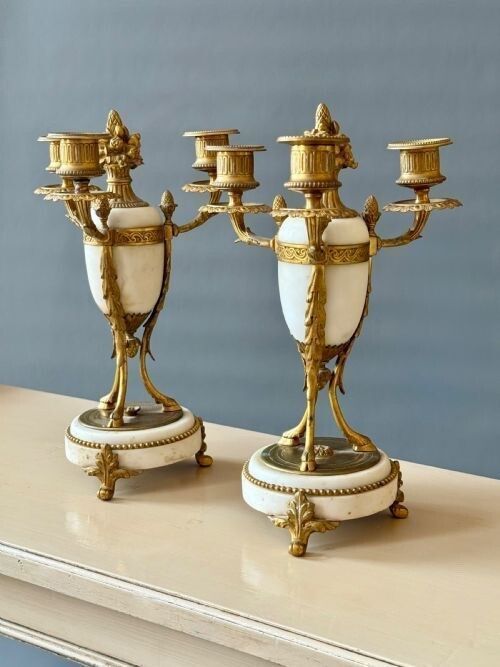
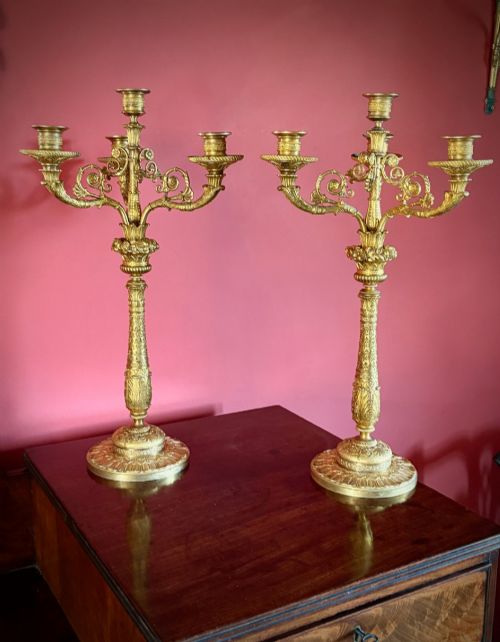
Most pieces seen here take the form of paired candelabras or candlesticks originating from the mid to late nineteenth century. Ormolu and gilt bronze dominate the selection, frequently paired with white marble bases or patinated bronze details.
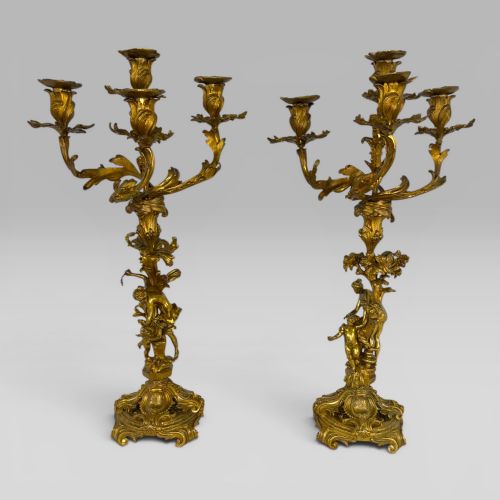
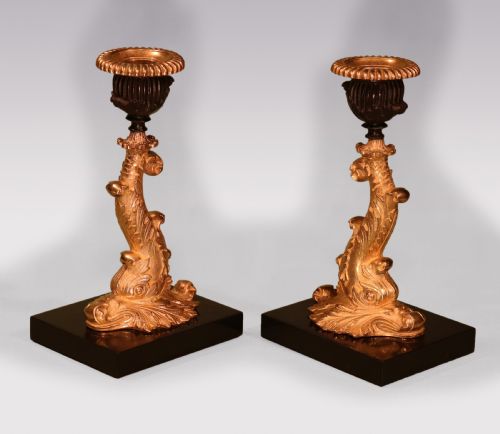
The objects range from single-branch candlesticks to multi-light candelabra branches involving cherubs, putti, and dolphin motifs. French workshops and Victorian makers supply the heavy cast metal forms found in these listings.
How they were made
The manufacturing process relies on casting bronze, brass, or ormolu into intricate figural and architectural shapes. Gilt layers are then applied over the base metal surfaces to achieve a bright, reflective finish.
Many examples combine contrasting materials, uniting gilded bronze with white marble plinths or dark patinated bronze sections. Subsidiary elements like cloisonné panels or carved stone components are integrated into the primary metal frames.
Materials appearing across current items include ormolu, gilt bronze, brass, patinated bronze, and white marble.
What varies in quality
Quality shows in the crispness of the chased detail across the cast bronze and ormolu surfaces. Finer examples retain sharp relief on figural elements like cherubs and putti, whereas weaker pieces display softer, worn contours.
The choice and integration of secondary materials also divide the range. Superior objects combine substantial white marble bases and heavy cast mounts with tight joints, while simpler items utilise lighter brass components.
The Gilded Bronze Candleholder Glossary
- Ormolu
- A gilded bronze technique utilising a mercury amalgam to apply gold to a bronze object. This process creates a durable, warm yellow metallic finish found on nineteenth-century French pieces.
- Candelabra
- A branched candlestick designed to hold multiple taper candles simultaneously. These fixtures often feature removable branches to function as single sticks.
- Patinated bronze
- Bronze that has been chemically treated to produce a darkened surface coloration. It provides contrast against bright ormolu highlights in figural compositions.
- Louis XVI style
- A neoclassical design vocabulary characterised by straight lines, symmetry, and classical motifs. Pieces in this style reject curving rococo forms in favour of architectural restraint.
- Rococo Revival
- A nineteenth-century movement reviving eighteenth-century asymmetry, scrollwork, and naturalistic flora. This aesthetic drives the ornate shaping seen on many period candelabras.
Gilded Bronze Candleholder: Frequently Asked Questions
How do I clean gilded bronze?
Dust the surface gently with a soft, dry microfibre cloth to remove accumulated particles without scratching the thin gilt layer. Avoid chemical dips, abrasive pastes, or vigorous rubbing that can strip away the historical ormolu finish.
For stubborn grime, use a slightly damp cloth with mild soap, drying the metal immediately afterwards. Preserving the original patination ensures the piece retains its historical character.
Were these pieces meant for candles?
Nineteenth-century workshops produced these items specifically to hold wax tapers for interior lighting before the widespread adoption of gas and electric illumination. The sockets and drip pans caught melting wax during evening use in parlours and dining rooms.
Many surviving examples retain their original sconces and wax catchers intact. Modern owners frequently display them unlit as decorative mantel objects rather than functional lighting.
How do I date a pair?
Examine the casting quality, fastening screws, and stylistic markers to determine the approximate decade of production. Mid-nineteenth-century pieces often display heavy Victorian or Rococo Revival casting, while later examples incorporate tighter neoclassical proportions.
Compare the base materials, such as white marble or patinated bronze, against known period manufacturing standards. Subtle variations in the chasing work provide clues to the workshop era.