




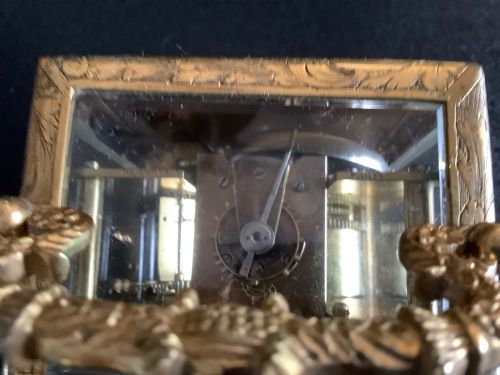

Gilded Brass Mantle Clock
A gilded brass mantle clock brings nineteenth-century French or Victorian weight, cast metal, and visible mechanical work to a room.
Gilded Brass Mantle Clock
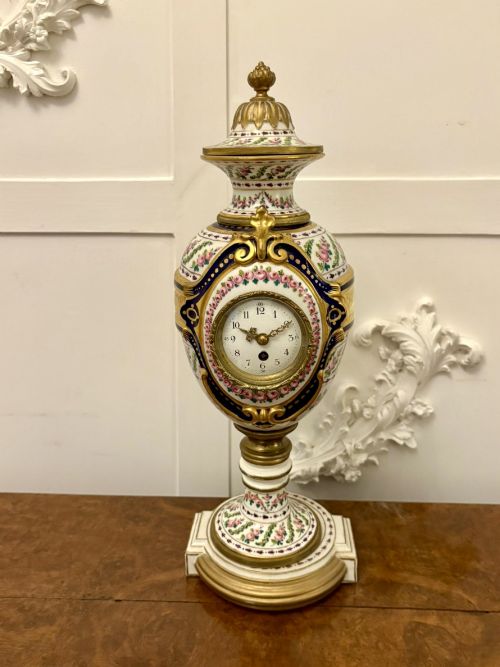
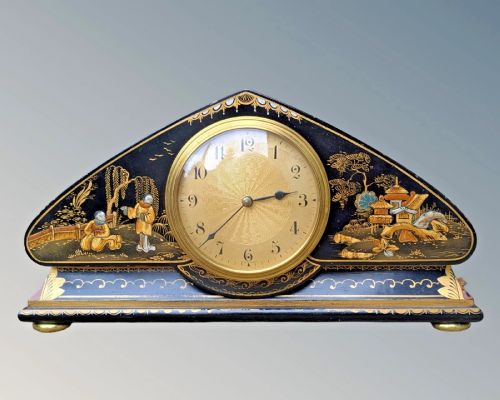
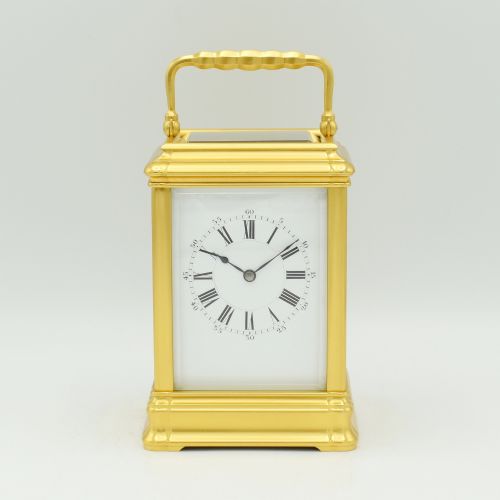
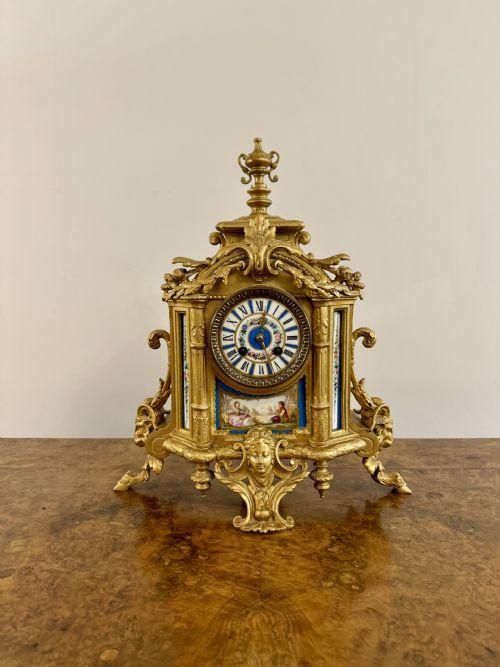
A gilded brass mantle clock sits heavy on a shelf or sideboard, grouping cast metal housings with painted porcelain dials and glass panels. The selection runs from portable carriage designs to large architectural cases and four-glass regulators.
Most pieces seen here belong to the nineteenth century, emerging from Victorian and French revival workshops between eighteen-fifty and nineteen-hundred. They combine timekeeping with decorative casting, showing influences from Rococo, Second Empire, and Louis XVI styles.
Forms range from simple brass rectangles to urn shapes, lion mounts, and elaborate rococo scrolling. Buyers encounter mantel clocks, carriage clocks, and occasional wall or bracket pieces.
How they were made
Cases use brass, gilt metal, ormolu, and gilt bronze, often cast in sections and finished with hand chiselling or mercury gilding. Glass panels reveal the interior movement, while enamel dials carry painted roman or arabic numerals.
Many incorporate porcelain panels, hand-painted scenes, or champlevé enamel work set directly into the metal frame. Movements operate on eight-day springs, frequently featuring striking mechanisms or alarm functions.
Materials appearing across the inventory include solid brass, gilt bronze, champlevé enamel, hand-painted porcelain, and blown glass domes.
What varies in quality
The weight and depth of the metal casting distinguish finer examples, where crisp detail in the foliage and figures remains sharp across the surface. Thinner stampings and soft, rounded edges point to simpler mass production.
Dial preservation and the presence of hand-painted porcelain or champlevé enamel elevate a piece. Original glass domes and matching mercury-gilded finishes maintain the structural integrity of the original design.
Henri Jacot·C. Detouche·Margaine·Philippes Paris·Drocourt·Paul Garnier·Dehné
The Gilded Brass Mantle Clock Glossary
- Ormolu
- A technique of applying finely ground high-carat gold to a bronze base using mercury. This creates a warm, lasting finish common on French nineteenth-century pieces.
- Champlevé
- An enamelwork technique where troughs are hollowed out of a metal surface, filled with vitreous enamel powder, and fired. The resulting coloured patterns sit flush with the surrounding brass.
- Carriage clock
- A small, portable spring-driven timepiece designed for travel, enclosed in a brass frame with glass sides and a swinging handle on top.
- Crystal regulator
- A mantel clock featuring bevelled glass panels on all four sides, allowing an unobstructed view of the mechanical movement and compensating pendulum from any angle.
- Gorge case
- A stepped, rectangular brass carriage clock case with characteristic mouldings around the top and base, often housing a platform escapement.
Gilded Brass Mantle Clock: Frequently Asked Questions
How do I wind a mantel clock?
Insert the key into the winding square on the dial and turn it gently clockwise until resistance is felt. Stop immediately to avoid over-tensioning the internal spring.
Most movements require winding once a week to maintain proper tension for the eight-day gear train.
What is a four-glass clock?
A four-glass clock is a mantel timepiece enclosed by thick bevelled glass panels on the front, back, and both sides. This construction exposes the entire movement and pendulum to view.
They gained popularity during the late nineteenth century, particularly in French workshops producing elegant shelf clocks.
How do I set the time safely?
Move the minute hand slowly in a clockwise direction until the correct time is reached. Avoid turning the hands backwards, as this can jam the striking train.
Allow the clock to finish its chime sequence fully before advancing the hands past the hour or half-hour marks.
How do I identify a French movement?
French movements of this period often bear stamped foundry marks, serial numbers, or maker initials on the back brass backplate. They frequently use silk-suspension or pendulum regulation systems developed in Paris.
Many also feature bell or gong strikes that ring on the hour and half-hour.