


Gilded Brass Horology
Gilded brass horology brings together precision timekeeping and rich metalwork, offering striking clocks that anchor a room with period character.
Gilded Brass Horology
When buyers search for gilded brass horology, they encounter a range of mantel clocks, carriage clocks, and clock garnitures originating from nineteenth-century France and Britain. These pieces span the Victorian and Regency eras, as well as specific decades such as the eighteen-fifties, eighteen-eighties, and eighteen-nineties.
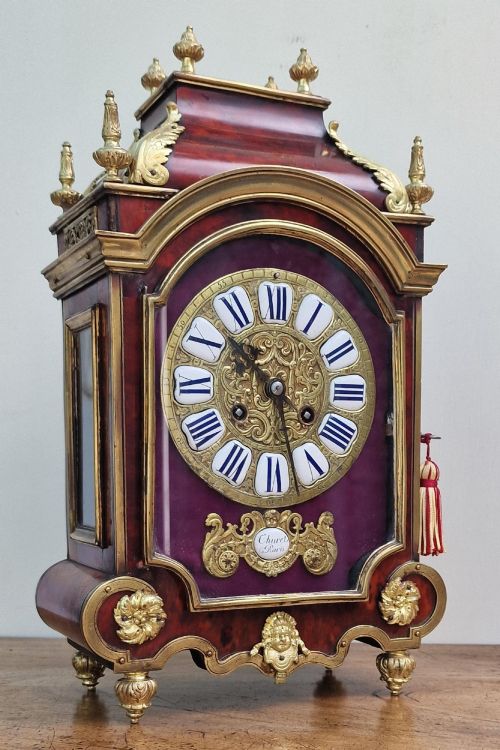
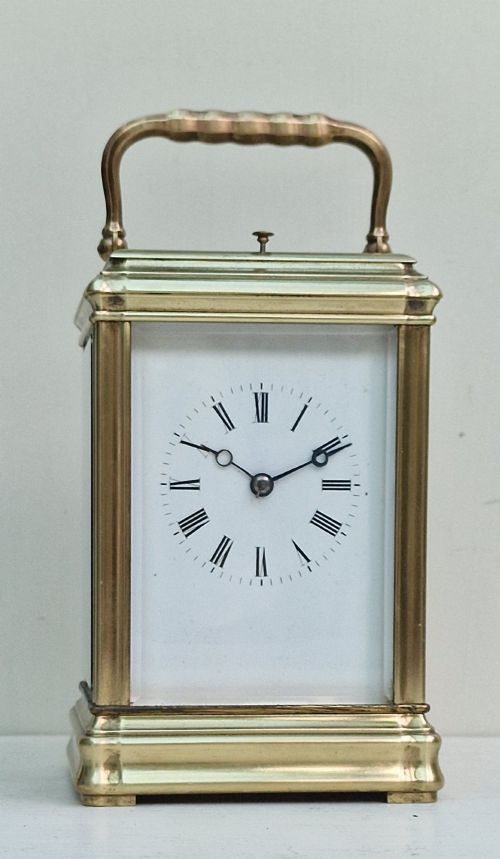
The most common form met on this page is the portable carriage clock, often housed in a gorge case with glass panels, alongside substantial mantel clocks styled in French Neoclassical, Louis XVI, and Rococo designs. Makers and horologists represented include Paul Garnier, Drocourt, and Japy Freres.
Regional variations appear between French carriage clocks designed for travel or export, such as models for the Chinese market, and English fusee mantel clocks by makers like John Barwise and Henry Jones.
Factors that separate examples
Quality rests in the crispness of the cast metal ornamentation, the depth of the gilding or ormolu, and the complexity of the internal movement. Pieces featuring grande sonnerie striking, repeating functions, or additional complications like calendars and thermometers demonstrate higher manufacturing ambition.
The integrity of the enamel dial, the presence of matching original travelling cases, and signed movements by renowned makers such as Drocourt or Paul Garnier elevate an example above standard production pieces.
Materials across these listings include brass, gilt bronze, ormolu, tortoiseshell, enamel, and marble.
Paul Garnier·Drocourt·Japy Freres·John Barwise·Henry Jones·C. Detouche·Le Roy·Baetens·Alfred Hollinge·Thuret·Joseph Soldano
The Gilded Brass Horology Glossary
- Gorge case
- A stepped brass carriage clock case style with a rounded top and distinctive mouldings. This architectural housing became standard for finer nineteenth-century portable clocks.
- Fusee
- A conical pulley used in clock movements to equalise the torque of the mainspring as it unwinds. This mechanism ensures more consistent timekeeping throughout the power reserve.
- Grande sonnerie
- A complex striking train that chimes both the hours and the quarters automatically on every quarter-hour. It represents a high level of horological skill.
- Ormolu
- Finely ground high-carat gold mercury-gilded onto a bronze or brass base. This technique creates a rich, durable golden surface seen on luxury French clocks.
- Enamel
- Fused glass powder applied to metal dials and fired at high temperatures. It provides a smooth, permanent white or coloured surface for clock numerals.
Gilded Brass Horology: Frequently Asked Questions
What is a carriage clock?
A carriage clock is a small, portable spring-driven timepiece designed for travel by nineteenth-century travellers. They typically feature glass panels and a folding handle on top.
Most examples sit inside brass or gilded cases, housing eight-day movements that often include alarm or striking complications.
How do I wind my clock?
Winding requires using a matching key inserted into the winding squares on the dial or backplate. Turn the key gently until you feel resistance, taking care not to over-wind the mainspring.
Keep the winding key in a safe place so it stays with the clock for future use.
What is a repeating clock?
A repeating clock sounds the last hour and quarters on demand when a small button or plunger on the case is pressed. This allowed owners to check the time in the dark without lighting a candle.
This complication requires an additional gear train within the movement.
How do I date a brass clock?
Dating relies on maker signatures, style markers like Victorian or Regency aesthetics, and technological changes in escapements and case design. Patents and maker registration numbers stamped on movements also provide clues.
Comparing the case architecture to known French and English production periods helps narrow the decade.