
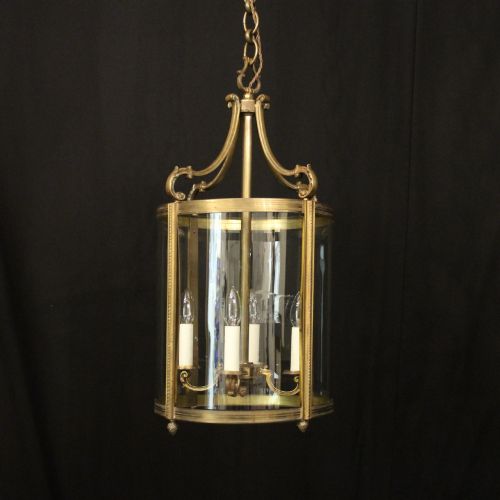
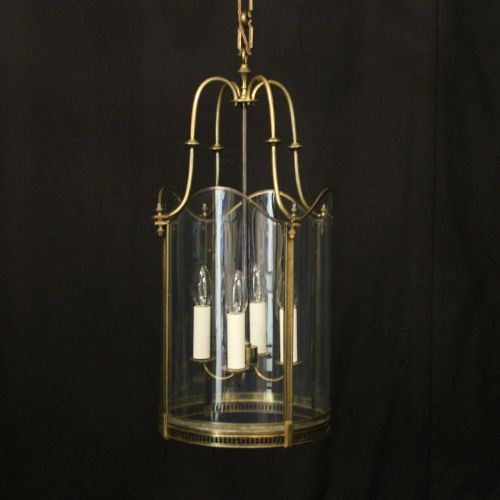
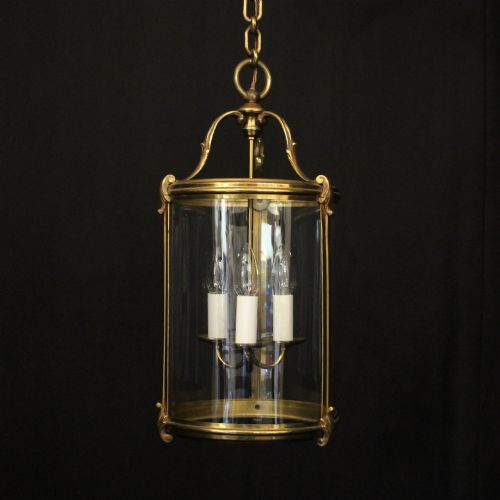
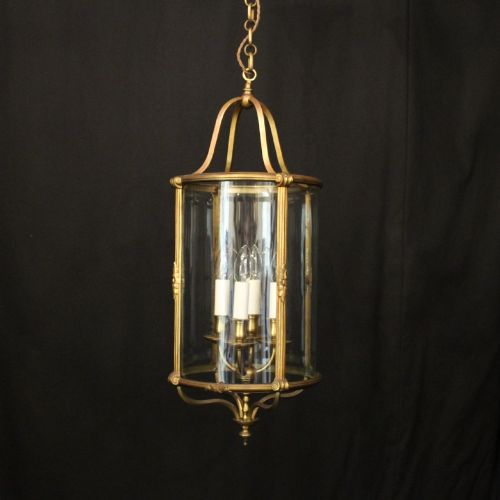
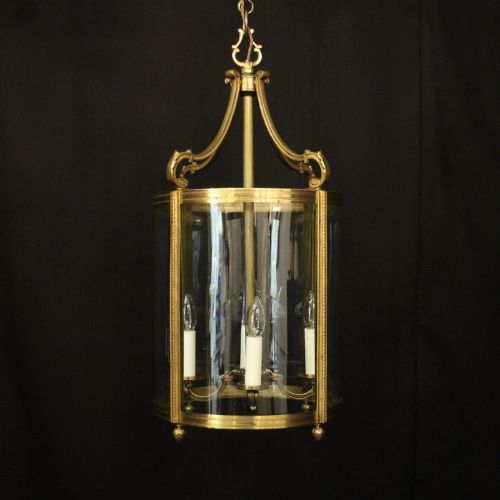


Gilded Brass Hall Lantern
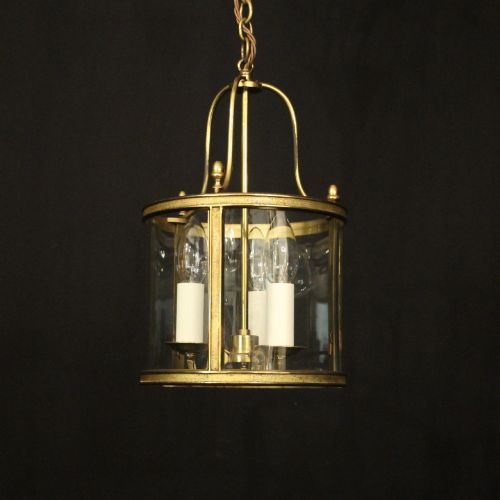
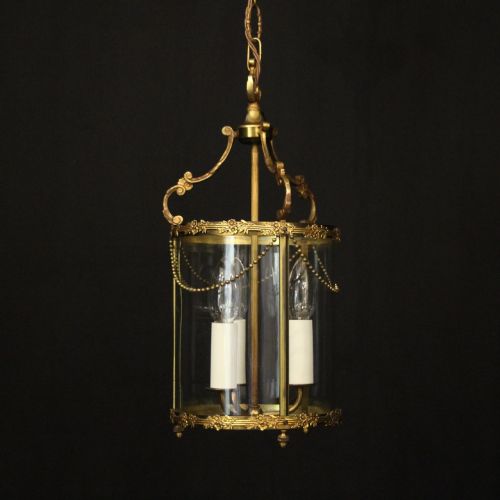
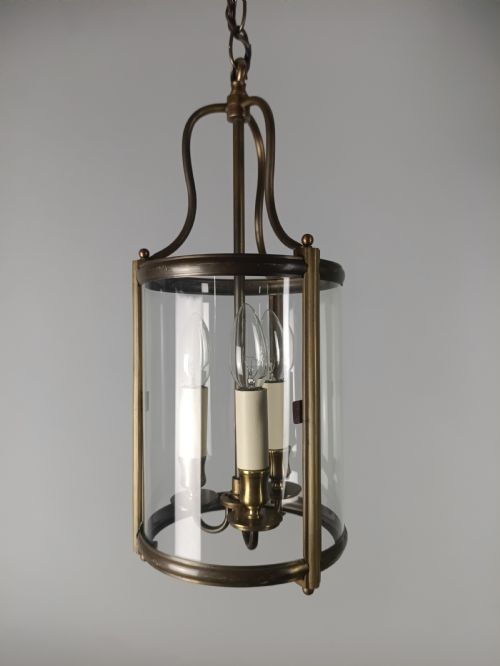
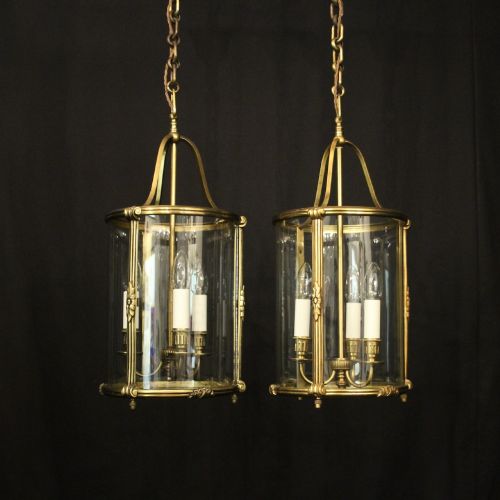
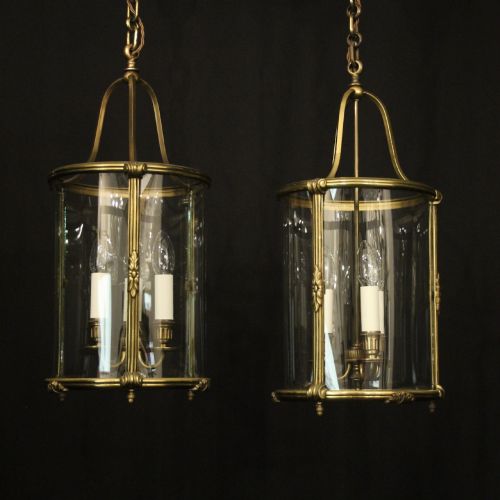
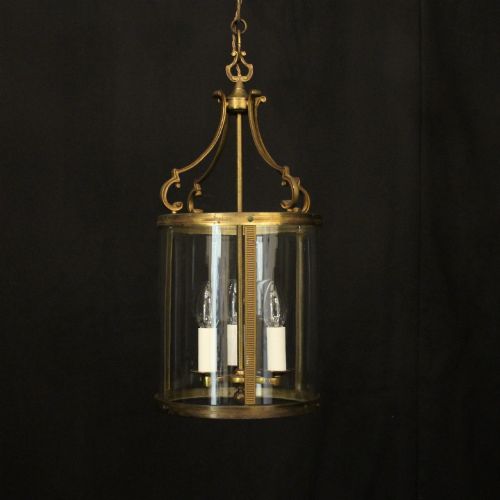
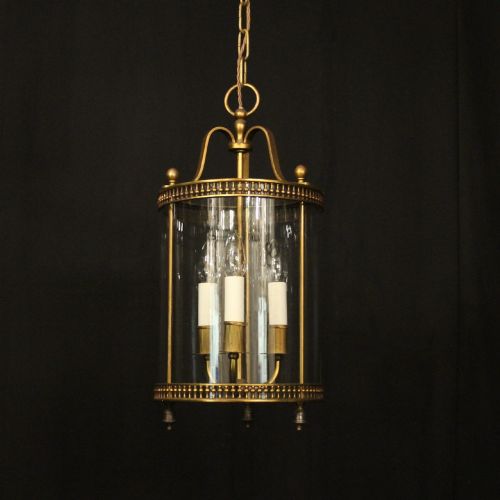
These gilded brass hall lanterns bring weight and warmth to an entrance, casting clear or convex light from French and English workshops.
Gilded Brass Hall Lantern
A gilded brass hall lantern provides ceiling illumination for entryways, passages and stairwells, functioning as both a practical light source and a decorative focal point. When searching this phrase, a buyer meets hanging fixtures designed to cast light downwards and outwards through glass panels.
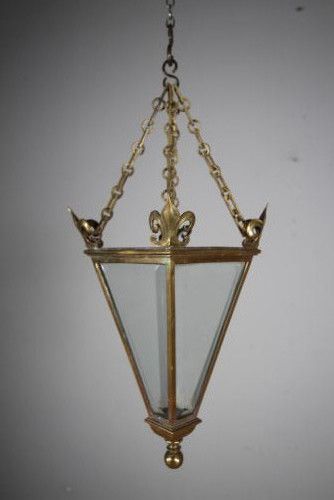
The selections span the nineteenth and early twentieth centuries, with significant representation from French and English makers. Common forms include single, twin, triple and four-light pendant fixtures, often shaped with convex or hexagonal frames.
How they were made
Makers constructed these lanterns using cast brass, bronze and ormolu, applying a gilt finish to the metalwork to enhance reflection. Glass panels, including bevelled and convex plates, fit into the metal frames to enclose the bulbs or candles.
Designers drew upon French Neoclassical, Rococo, Gothic and Empire styles, often incorporating detailed ornamentation such as scrolling foliage and cast mounts into the hanging structures.
Listings include nineteenth-century and early twentieth-century examples featuring French Neoclassical, Rococo, Gothic and Empire styles.
What varies in quality
The refinement of the casting and the depth of the gilding separate standard examples from finer works. Heavier cast brass frames and crisper decorative details indicate superior craftsmanship in the metalwork.
The complexity of the glass panels also distinguishes pieces, with heavy bevelled or convex panes requiring greater skill to cut and fit into the hexagonal or circular frames than flat plain glass.
The Gilded Brass Hall Lantern Glossary
- Gilt bronze
- Metal alloy coated with a layer of gold, providing a durable and reflective finish used in high-end decorative lighting.
- Convex glass
- Curved panes that project outwards, designed to diffuse light across a wider angle in hall lanterns.
- Ormolu
- Finely chased and gilded brass applied to decorative objects and light fittings, popular in French furniture and metalwork.
- Bevelled glass
- Panes with edges cut and polished at an angle, creating prismatic light effects when illuminated.
- Regence period
- A French design style bridging the Louis XIV and Louis XV periods, characterised by early rococo curves and symmetry.
Gilded Brass Hall Lantern: Frequently Asked Questions
How do I hang a hall lantern?
These ceiling fixtures suspend from chains or rods attached directly to a ceiling rose. Professional installation ensures the weight of the cast metal frame is safely supported.
Placement typically centres the lantern within an entryway or above a hallway, allowing adequate clearance for foot traffic underneath.
What periods do these lanterns come from?
The available pieces originate primarily from the nineteenth and early twentieth centuries. Examples range from Victorian and Edwardian periods up to the 1930s.
Stylistic influences often reference earlier historic designs, such as eighteenth-century Regence or Gothic revivals.
Are these lanterns wired for modern electricity?
Many surviving fixtures have received modern wiring to accommodate contemporary bulbs safely. Some listings specify rewiring work undertaken by previous owners.
Buyers should verify the internal electrical fittings to confirm compatibility with standard domestic power supplies.
How do I clean gilded brass?
Gentle dusting with a soft, dry cloth preserves the fragile gold leaf or gilt surface on the metal frame. Avoid harsh chemical cleaners that can strip away the gilding.
Glass panels can be removed carefully or wiped in place using standard glass cleaner applied to a cloth.