


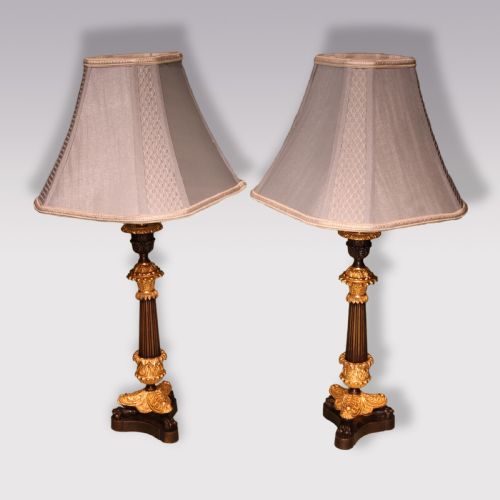


Gilded Brass Bedside Lamps
These gilded brass bedside lamps bring warmth and decorative weight to a room, offering the classic glow of cast metal combined with period form.
Gilded Brass Bedside Lamps
When you search for gilded brass bedside lamps, you are looking at small lighting pieces that use brass, ormolu, or gilt metal to catch the eye beside a bed or in a sitting room. The selection spans the nineteenth century through to the early decades of the twentieth century, taking in Regency, Victorian, and Edwardian eras alongside continental revivals.
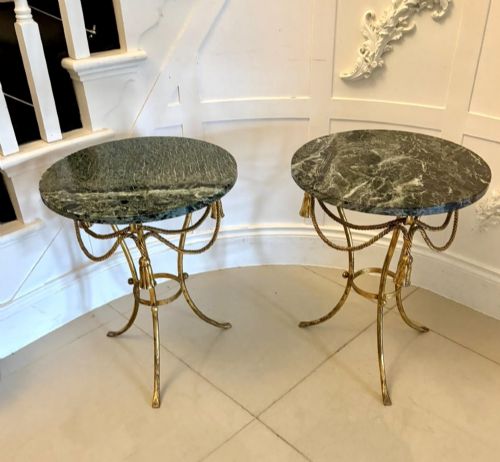
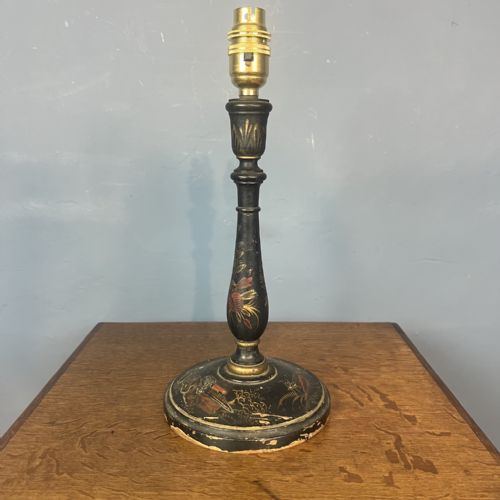
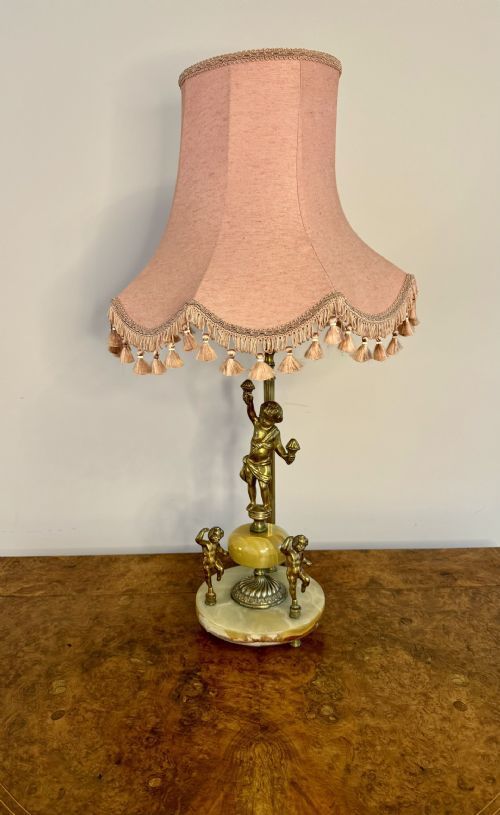
You are most likely to meet pieces cast in French Louis XVI style, Neoclassical designs, and Rococo Revival forms, frequently paired with marble bases or fabric shades. Some examples adapt earlier candlestick forms or incorporate patinated bronze alongside the gilt surfaces, while others draw on Hollywood Regency or Edwardian chinoiserie tastes.
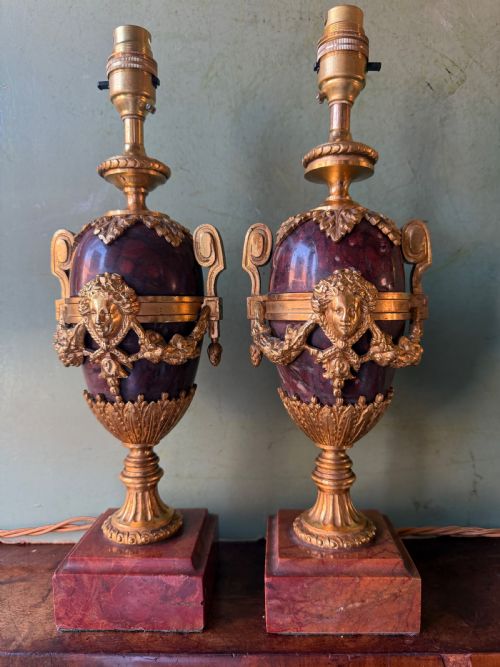
The objects listed range from simple candlestick conversions to substantial mounted pieces involving rouge or verde marble, and occasionally porcelain elements like cobalt blue hand-painted bodies. Pairs appear often, making them suited to placement on matching side tables or flanking a bed.
How they were made
The construction relies on metalcasting, utilising brass, bronze, spelter, or gilt metal shaped into intricate mounts, columns, and figures. Ormolu and gilt bronze finishes involve applying gold leaf or mercury gilding to a bronze or brass base, creating a durable and rich surface sheen.
Stonework often forms the structural foundation, with verde marble, rouge marble, and onyx incorporated to add weight and colour contrast. Fabric shades complete many of the pieces, while hand-painted details on elements like cobalt blue ceramic bodies introduce further colour.
The listings feature pieces spanning the 1850s to the 1930s, uniting French Empire, Louis XVI, and Edwardian styles through the shared use of brass, ormolu, and marble.
What varies in quality
The sharpness of the metal chasing separates the superior casts from softer, later reproductions or simpler commercial pieces. Crisp relief on acanthus leaves, classical urns, and figurative mounts shows the hand of a skilled bronze worker.
The quality of the materials themselves defines the hierarchy, from dense natural marbles and heavy fire-gilded ormolu down to lighter spelter and standard brass plating. Heavier, more substantial stone bases and genuine bronze cores indicate a higher grade of manufacture.
The Gilded Brass Bedside Lamps Glossary
- Ormolu
- Gilded bronze, typically produced using a mercury amalgamation technique on a bronze base during the eighteenth and nineteenth centuries. This process yields a deep, enduring golden lustre that resists tarnishing.
- Spelter
- A zinc-based alloy used as a cost-effective alternative to bronze in decorative metalwork. It is softer and lighter than true bronze, often painted or electroplated to resemble gilt metal.
- Verde marble
- A dark green decorative stone with lighter veining, frequently used for architectural details and lamp bases. It provides a striking visual contrast against bright ormolu mounts.
- Louis XVI style
- A neoclassical design movement rooted in the eighteenth century and revived later in the nineteenth century. It is characterised by straight lines, symmetry, and classical motifs such as ribands and urns.
- Chinoiserie
- European artistic style reflecting Chinese motifs and techniques, popular in Edwardian decorative arts. It often appears on lacquered lamp bodies and furniture.
Gilded Brass Bedside Lamps: Frequently Asked Questions
Are these lamps safe to use today?
Many antique lamps retain older wiring or conversion fittings that need checking by a qualified electrician before use. Rewiring allows you to integrate them safely into modern domestic sockets.
Original brass and ormolu components remain sturdy, but the internal flex and lamp holders should be updated to meet current standards.
How do I clean gilded brass?
Dust gently with a soft, dry cloth to remove surface particles without wearing away the thin layer of gold. Avoid harsh chemical cleaners or abrasive polishes that strip the gilding.
Water can seep into stone bases or damage fabric elements, so keep moisture away from mixed-media pieces during routine maintenance.
Can I find matching pairs easily?
The selection includes several matched pairs, particularly among the nineteenth-century French ormolu and marble pieces. Sourcing true pairs ensures symmetry on bedside tables.
Single lamps also feature in the listings, offering options for smaller spaces or eclectic interior arrangements.
How do I identify the period?
Stylistic clues such as Regency classical lines, Victorian revival ornamentation, or Edwardian chinoiserie lacquer point toward specific eras of manufacture. The weight of the metal and the type of marble also offer clues.
Castings from the nineteenth century tend to show hand-chased details, whereas twentieth-century items often display smoother, more standardised production marks.