


Sevres Porcelain Table Lamp
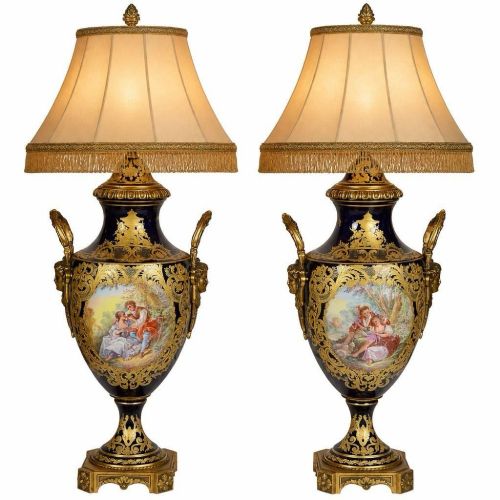
These sevres porcelain table lamp pieces bring nineteenth-century French chateau elegance into a room through hand-painted bodies and rich ormolu mounts.
Sevres Porcelain Table Lamp
A sevres porcelain table lamp combines nineteenth-century French ceramic bodies with metal mounts, drawing from styles such as Louis XVI, French Rococo Revival, and Napoleon III. These pieces originate from the nineteenth century, including specific years like 1870, 1880, 1890, and 1900.
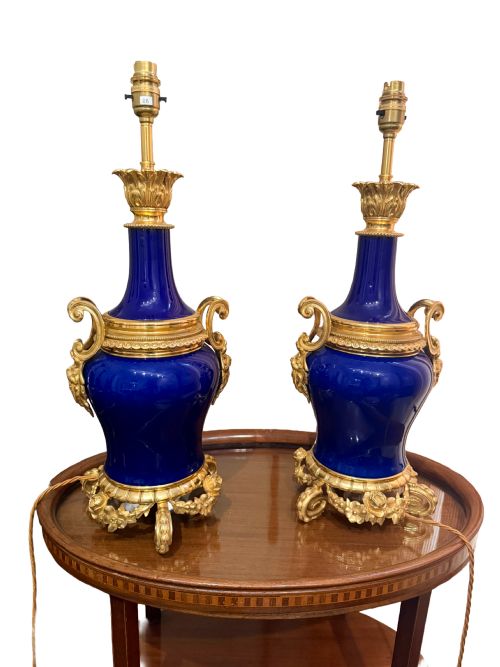
The form often derives from converted vases or oil lamps, featuring hand-painted decoration across coloured glazes like cobalt blue, bleu celeste, and bleu royale. Pairs and single examples appear frequently across these listings.
Makers and workshops produced these items within French decorative traditions, utilising vase forms that later received electrical fittings for domestic use.
Materials and construction methods
Craftsmen shaped porcelain bodies and applied hand-painted details, frequently featuring pate sur pate techniques on coloured backgrounds. Rich glazes define the ceramic surface before metalwork integration.
Ormolu, gilt bronze, brass, and gilt metal mounts frame the porcelain, secured with cast components in French neoclassical and rococo styles. Fabric and silk elements complete the upper portions where shades are fitted.
Listings feature periods spanning from 1870 to 1900, alongside materials including porcelain, ormolu, gilt bronze, silk, and glass.
Distinctions in quality and execution
The precision of hand-painted artwork on the porcelain body separates standard examples from finer works, particularly in floral or figurative detail. Richness in the cobalt blue or bleu celeste glazes sets a higher standard.
The weight, chasing, and crispness of the ormolu or gilt bronze mounts dictate the overall calibre of the piece. Finer items display intricate casting work that integrates seamlessly with the ceramic form.
The Sevres Porcelain Table Lamp Glossary
- Ormolu
- Gilded bronze or brass mounts applied to furniture and ceramics. This technique was widely utilised in nineteenth-century French decorative arts.
- Bleu celeste
- A bright sky blue ceramic ground colour. This hue frequently appears on nineteenth-century French porcelain and vases.
- Pate sur pate
- A method of porcelain decoration where liquid clay is painted in successive layers to create a low relief design. It produces a cameo-like effect on coloured grounds.
- Bleu royale
- A deep royal blue ceramic glaze. It provides a dark backdrop for hand-painted details and gilt highlights.
- Napoleon III
- A nineteenth-century French design style incorporating eclectic revivals of historical aesthetics. This period heavily influenced ornate lamp mounts.
Sevres Porcelain Table Lamp: Frequently Asked Questions
How do I light a sevres porcelain table lamp safely?
Most of these pieces have been converted from oil lamps or older wiring systems to modern electrical standards. It is advisable to have a qualified electrician inspect the internal cord and bulb holder before daily use.
Ensure that the shade weight remains proportional to the brass or ormolu mounts. Using low-heat LED bulbs helps protect the hand-painted porcelain and gilt surfaces from thermal stress over time.
Where should I place these lamps in a room?
The rich cobalt blue or bleu celeste glazes and gilt bronze mounts work well on sideboards, consoles, or large desks. Their height and decorative presence suit formal sitting rooms or studies.
Keep them away from direct sunlight to preserve the hand-painted pigments on the porcelain. Placing them on stable surfaces prevents accidental knocks to the ormolu bases.
How do I date a nineteenth-century French lamp?
Dating relies on stylistic markers from periods like Louis XVI style, Napoleon III, or specific decades between 1870 and 1900. The style of the ormolu chasing and the character of the hand-painted glaze offer key clues.
Examine the base construction and any metal fixings for manufacturing traits of the late nineteenth century. Archive comparisons with dated pieces also assist in narrowing down the decade of production.
Are these lamps usually found in pairs?
Many examples on this page survive as matched pairs, having originated as decorative garniture vases before conversion. Single lamps also appear frequently in various vase forms.
Pairs offer symmetrical placement options on large pieces of furniture. Single lamps provide a focal point on smaller tables or desks.