


Cobalt Blue Urn Lamp
These cobalt blue urn lamp options bring rich colour and classic French style to an interior, built from porcelain, ceramic, or glass.
Cobalt Blue Urn Lamp
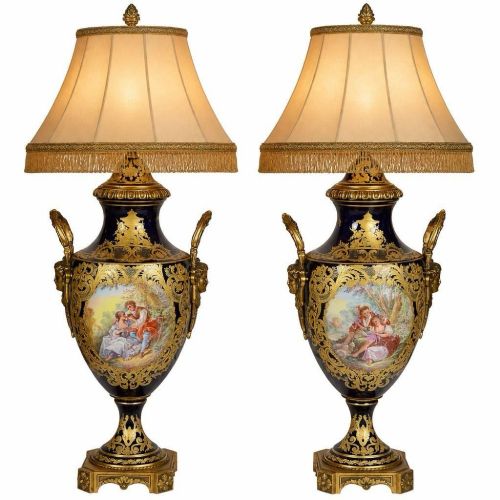
A cobalt blue urn lamp takes a classical vessel form and adapts it for interior lighting, appearing most often as pairs from the nineteenth century. These pieces draw heavily on French Sevres style, French Rococo Revival, Louis XVI Neoclassical, and Chinoiserie aesthetics.
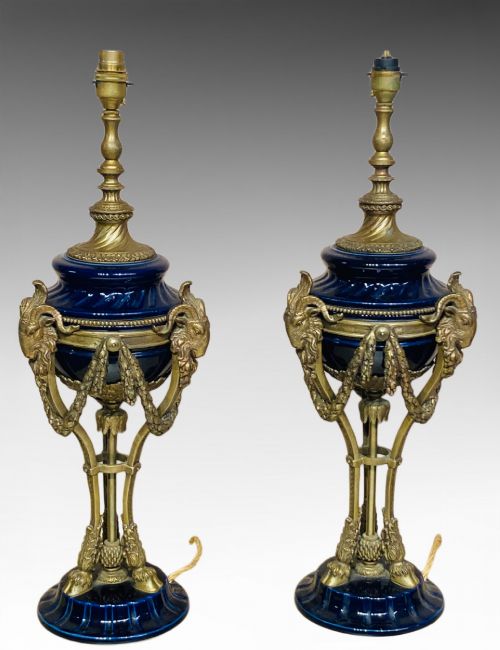
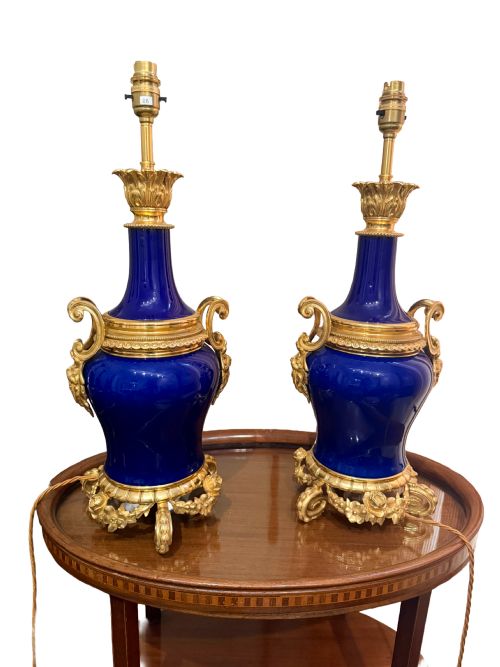
The body of the lamp typically relies on rich blue porcelain, glazed ceramic, or blue glass shaped into an urn or ewer. Makers mounted these bodies on bases and fitted them with ormolu, gilt bronze, or brass to create decorative table lamps.
How they were made
The construction combines ceramic and metalworking crafts, using fired porcelain, glazed ceramic, or glass for the main body. Artisans then applied hand-painted details directly onto the cobalt blue surfaces.
Mounts and decorative accents utilise cast ormolu, gilt bronze, and brass, securing the urn shape and providing a stable base. Fabric and silk shades frequently complete the conversion from vessel to lamp.
Listings feature materials such as porcelain, ormolu, gilt bronze, fabric, brass, silk, glazed ceramic, and wood across nineteenth-century and mid-twentieth-century periods.
What varies in quality
Quality rests in the crispness of the metal mounts and the hand-painted execution on the porcelain or ceramic body. Finer examples display meticulously chased ormolu or gilt bronze mounts that fit the contours of the urn precisely.
The depth of the cobalt glaze and the finesse of any hand-painted decoration distinguish standard production from exceptional work. Heavier ceramic and porcelain bodies combined with substantial brass or bronze components indicate superior manufacture.
The Cobalt Blue Urn Lamp Glossary
- Ormolu
- Gilded brass or bronze used for mounts and decorative trim on furniture and ceramics. This technique was widely employed in French decorative arts during the eighteenth and nineteenth centuries.
- Sevres style
- A design aesthetic imitating the soft-paste porcelain produced by the royal French manufactory. Pieces in this manner feature rich ground colours like cobalt blue alongside hand-painted details and gilt highlights.
- Ewer
- A pitcher or jug with a wide spout and a handle, often produced in ceramic or glass for ornamental purposes. In lighting, these vessels are converted into lamp bases.
- Chinoiserie
- European artistic style reflecting Chinese motifs and techniques. It appears on ceramics and decorative objects within various nineteenth-century interiors.
Cobalt Blue Urn Lamp: Frequently Asked Questions
Are these lamps sold as pairs?
Many listings feature matching pairs, particularly among nineteenth-century French porcelain and ormolu examples. Single table lamps also appear.
Buyers seeking symmetry for a mantelpiece or sideboard gravitate towards the paired options.
What periods do these lamps date from?
The selection spans the nineteenth century, including specific dates such as eighteen-seventy, eighteen-eighty, eighteen-ninety, and nineteen-hundred, alongside mid-twentieth-century pieces.
French styles dominate this era, particularly Sevres style and Rococo Revival designs.
What materials make up the body?
Bodies consist primarily of porcelain, glazed ceramic, or blue glass shaped into urns and ewers. Ormolu, gilt bronze, and brass provide the structural mounts.
Fabric and silk complete the upper portion as shades.
How do I style an urn lamp?
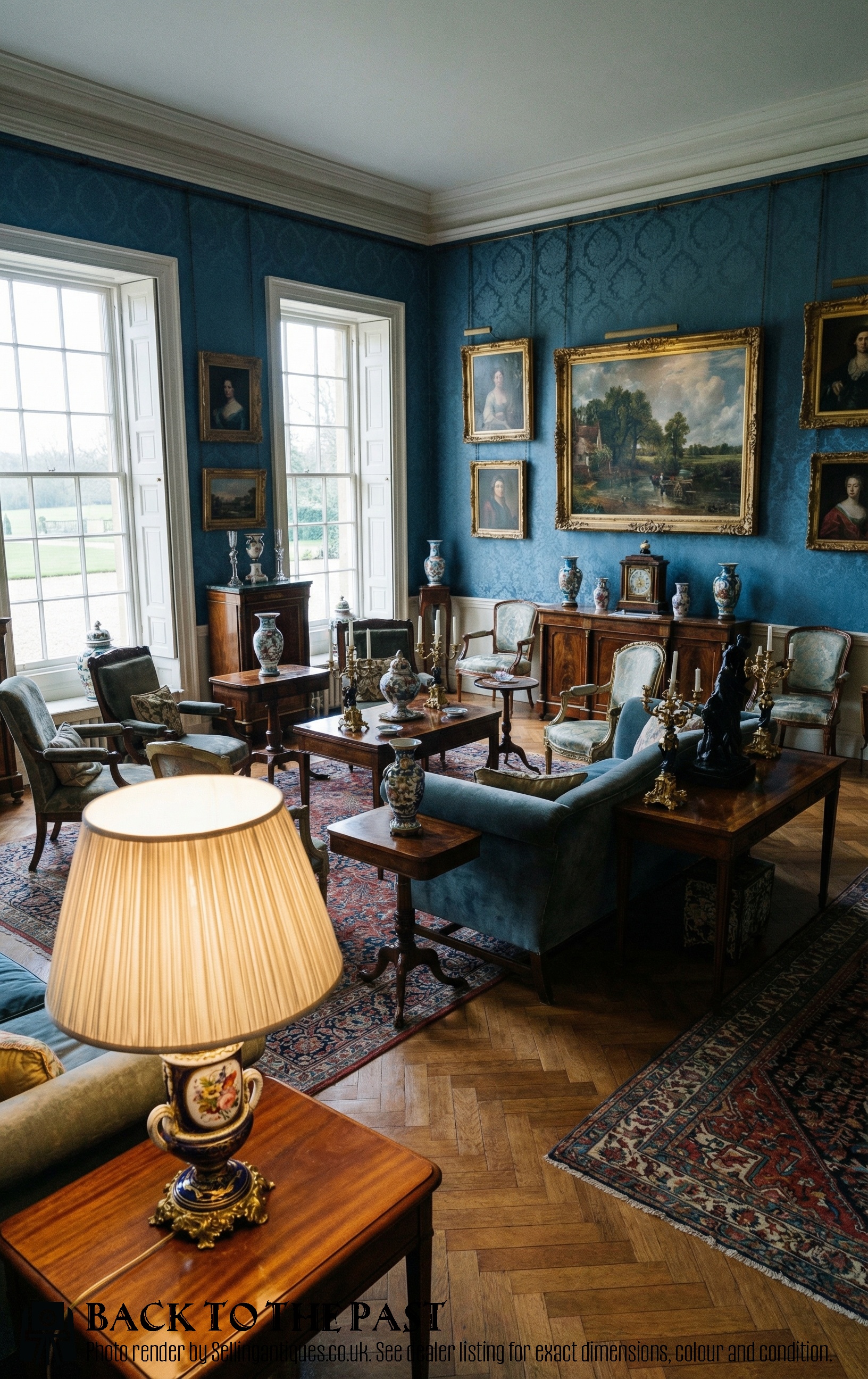
These lamps suit traditional rooms, drawing attention when placed on side tables, chests, or desks. The rich cobalt blue and metallic mounts introduce strong colour.
Pairing them with neutral walls lets the hand-painted porcelain and gilt bronze stand out.