
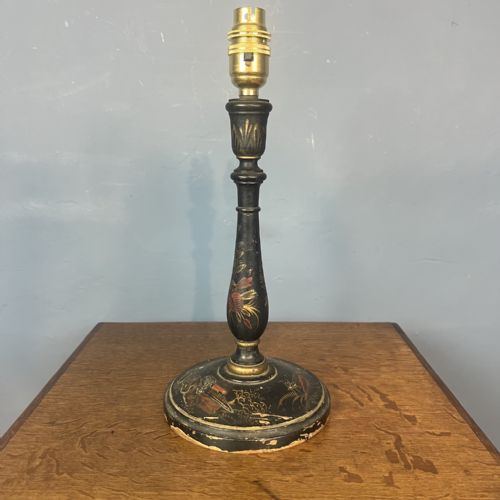
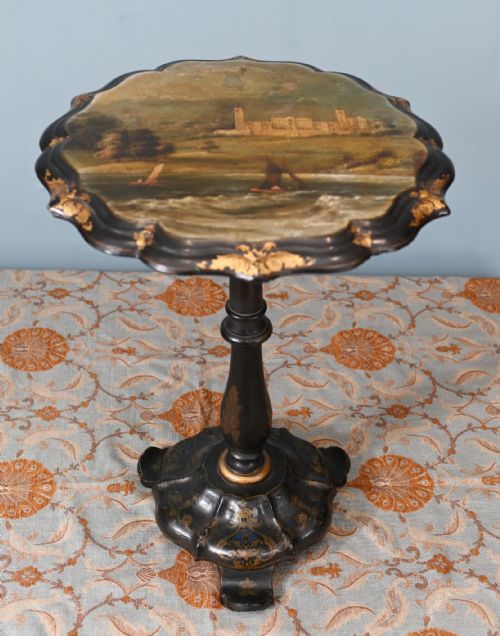


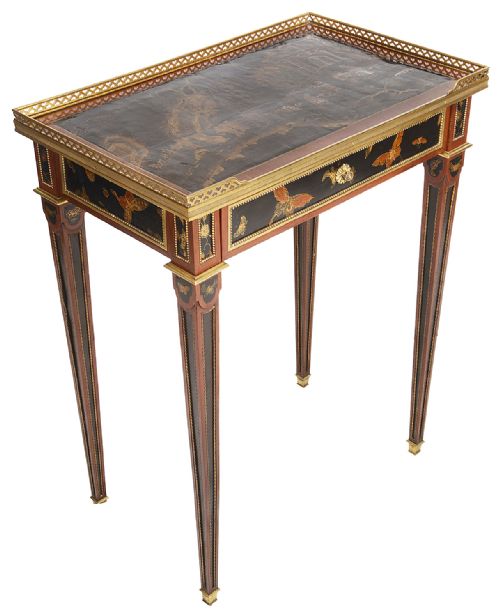
Gilded Black Table Lamp
These gilded black table lamps bring together deep dark surfaces and bright metal leaf to anchor a room.
Gilded Black Table Lamp
A gilded black table lamp combines dark painted or lacquered surfaces with bright gold leaf details, creating a striking contrast that catches the light. The selections here span the eighteenth century, the nineteenth century, and early decades such as nineteen ten, nineteen twenty, and nineteen thirty.
Forms cross over between lighting and furniture adaptations, drawing on Chinoiserie, Victorian, Edwardian Chinoiserie, Aesthetic Movement, French Empire, and Spanish Baroque styles. Alongside actual table lamps, the evidence includes occasional tables and side tables that share the same dark and gilded palette.
Materials and construction
Pieces are built from wood, brass, and ebonised or lacquered wood, often finished with paint and delicate gold leaf applications. Surfaces receive layers of lacquer or dark paint to achieve a deep black ground before metal leaf is applied by hand.
Construction methods reflect the period of origin, from nineteenth-century joinery to earlier hand-carved wooden bases and converted vase bodies. Fabric elements frequently complete the lighting pieces to diffuse the glow against the dark stands.
Materials across the listings include brass, fabric, wood, lacquer, gold leaf, ebonised wood, and paint.
Assessing quality and finish
Quality rests in the depth of the dark finish and the precision of the applied gold leaf. Smoother lacquer work and well-preserved surface decoration distinguish finer examples from simpler painted items.
The integrity of the underlying wood or brass structure matters just as much as the surface ornamentation. Pieces that retain their original decorative scheme show superior handwork in the detailing of motifs and borders.
The Gilded Black Table Lamp Glossary
- Chinoiserie
- European interpretation of Chinese and East Asian artistic traditions, often featuring figures, landscapes, and gold motifs on dark backgrounds. It gained particular popularity during the eighteenth and nineteenth centuries.
- Ebonised wood
- Timber treated to imitate expensive ebony, typically through staining and polishing. This dark surface provides an ideal base for subsequent gilding.
- Gilding
- The application of gold leaf or powder to a surface such as wood or metal. This technique highlights carved details and creates contrast against dark paint.
- Aesthetic Movement
- Late nineteenth-century design style that emphasised art for art's sake, drawing heavily on Japanese and other non-Western aesthetics. It favoured decorative surfaces over heavy historic revivalism.
Gilded Black Table Lamp: Frequently Asked Questions
What periods do these lamps come from?
The pieces span multiple eras, including the eighteenth century, the nineteenth century, the Victorian period, and the early decades of the twentieth century.
Designs reflect changing tastes across these centuries, incorporating styles like French Empire, Spanish Baroque, and various forms of Chinoiserie.
How do I care for lacquered surfaces?
Lacquered and painted wood requires gentle dusting with a soft, dry cloth to protect the finish and any applied gold leaf.
Keep these items away from direct sunlight and excessive moisture to preserve the dark ground and metallic highlights.
Are these lamps converted from other objects?
Some lighting pieces originate from earlier objects, such as ceramic vases adapted for electrical fittings over time.
This practice of adaptation was common in the nineteenth century, giving decorative vessels a functional second life as lamps.
What distinguishes Aesthetic Movement pieces?
Aesthetic Movement items focus heavily on visual harmony and decorative motifs influenced by Japanese art rather than strict historical revival.
They often feature dark ebonised wood paired with subtle gilding and painted details suited to late nineteenth-century interiors.