
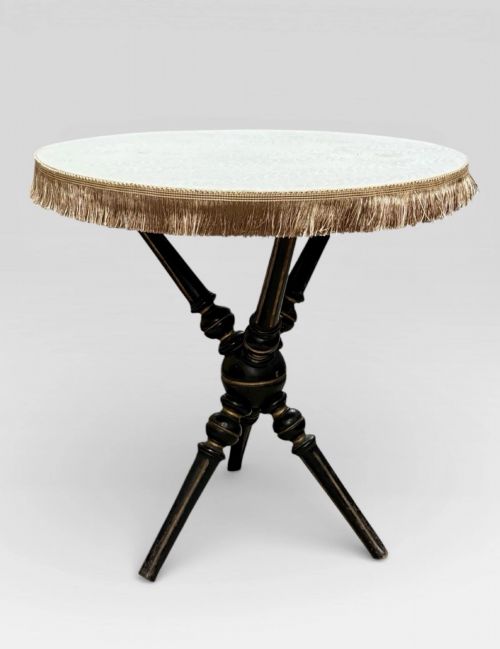


Gilded Black Occasional Tables
These gilded black occasional tables bring dark surfaces and bright highlights together, offering versatile charm for modern rooms.
Gilded Black Occasional Tables
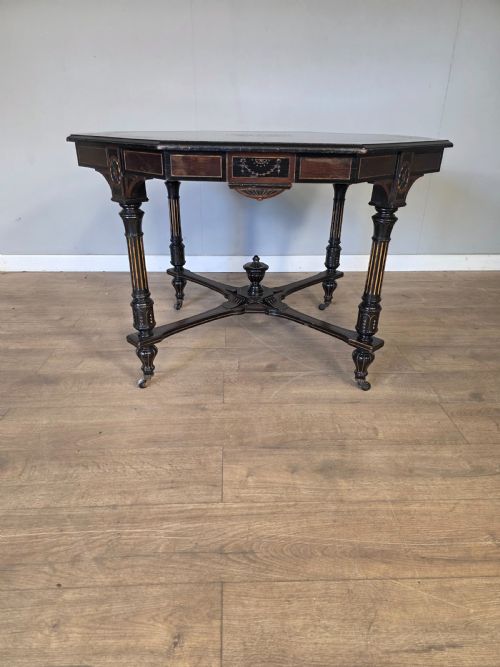
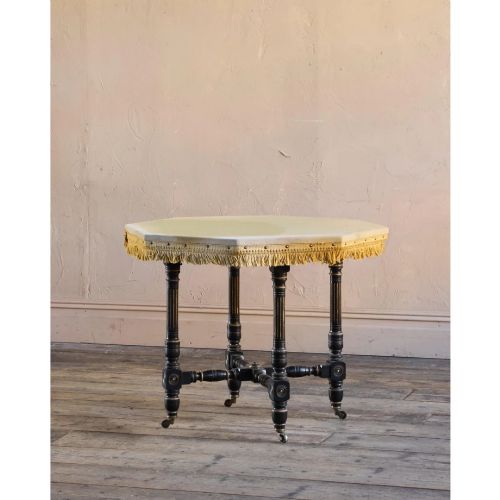
Gilded black occasional tables combine dark finishes with gold detailing, appearing in forms such as centre tables, nests, side tables, and tilt-top designs. The selection draws on periods spanning the Regency era through to the early twentieth century.
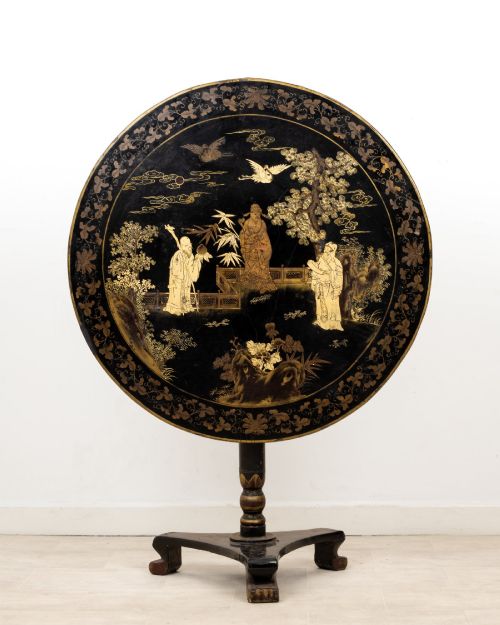
Victorian and nineteenth-century examples dominate the offerings, alongside pieces reflecting Chinoiserie, Aesthetic Movement, and Queen Anne styles. Buyers will frequently encounter side tables and nest arrangements finished in lacquer or ebonised wood.
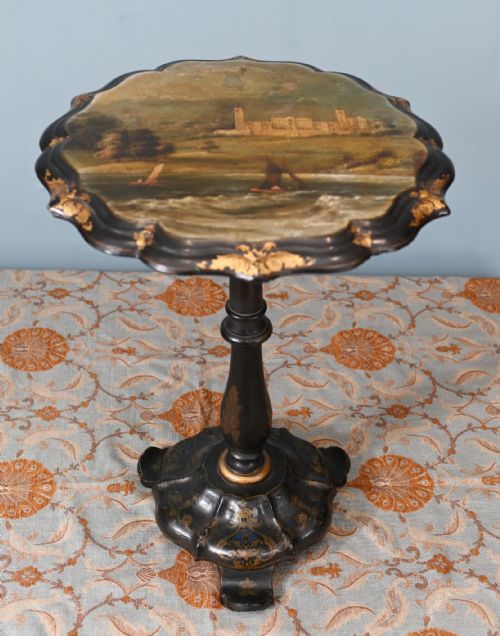
Makers and workshops of the nineteenth century utilised diverse decorative idioms, producing everything from papier-mâché sewing tables to parcel-gilded centre tables. This variety allows collectors to find both formal pedestal designs and informal tray tables.
Materials and construction
Wood serves as the primary structural material, frequently ebonised or finished with dark lacquer to create a uniform black ground. Craftsmen then applied gold leaf or gilt decoration to highlight carved details and painted motifs.
Specialised techniques include Chinoiserie decoration, hand painting, and Boulle-work applied to lacquer and papier-mâché surfaces. Brass fittings and fabric elements appear on specific sewing and occasional forms.
Some nineteenth-century tables served as secret sewing stations, hiding threads and needles beneath their glossy black lids.
Judging quality
The refinement of the hand-painted and Chinoiserie decoration separates standard production from superior examples. Crisp gilding and careful application of gold leaf elevate the visual depth of the black surfaces.
Structural integrity within nests of tables and pedestal bases indicates the standard of original craftsmanship. Well-preserved lacquer and papier-mâché surfaces retain their intended lustre without excessive restoration.
Hindley And Sons
The Gilded Black Occasional Tables Glossary
- Ebonised wood
- Timber stained or painted to imitate ebony. This dark finish provides a sleek background for parcel gilding.
- Chinoiserie
- European interpretations of Chinese and East Asian artistic traditions. Artisans applied these motifs extensively to lacquered tables.
- Papier-mâché
- A composite material made of paper pulp and binder, moulded and hardened. It provided a smooth base for painted finishes on Victorian tables.
- Parcel gilt
- Portions of an object highlighted with gold leaf or paint. This technique accents carved details against a dark painted ground.
- Nest of tables
- A set of graduated tables designed to fit one beneath another. They offer practical surface space while occupying a minimal footprint.
Gilded Black Occasional Tables: Frequently Asked Questions
What styles are common?
Chinoiserie and Aesthetic Movement designs appear frequently among these tables, alongside Regency and Victorian interpretations.
These varied styles reflect nineteenth-century preferences for exotic ornamentation and dark, polished surfaces.
How were they used?
Smaller formats served as side or occasional tables for holding books, tea, or ornamental objects.
Nests of tables provided flexible surface space for entertaining, while work and sewing tables accommodated domestic crafts.
Are nest tables modern?
Graduated sets of tables date back to the nineteenth century, often decorated in black lacquer and Chinoiserie.
Purchasers find multiple examples of nests comprising three or four pieces from that era.
How should I clean lacquer?
Maintain lacquered and ebonised surfaces by dusting gently with a soft, dry cloth.
Avoid harsh chemical cleaners that might damage the delicate gilding and hand-painted details.