
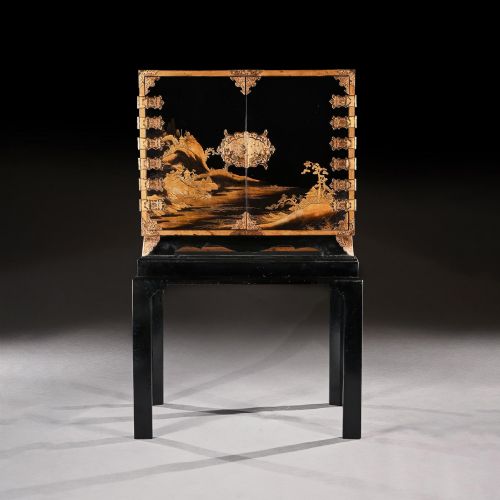
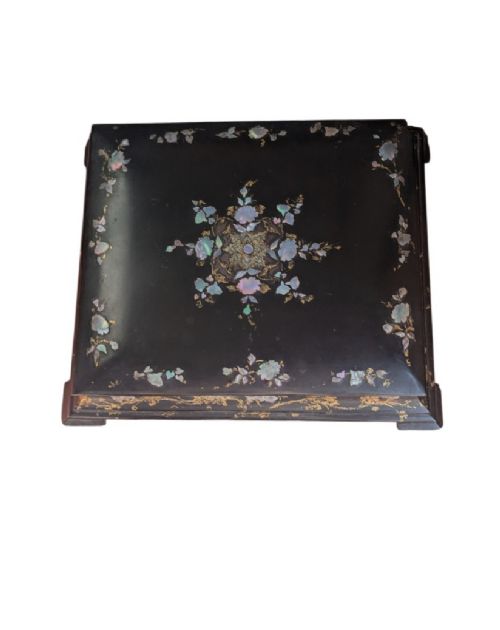
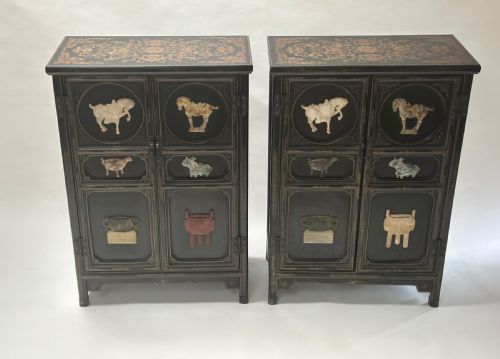
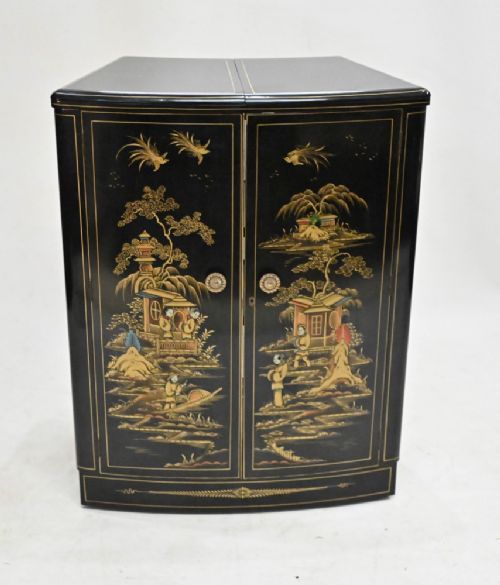


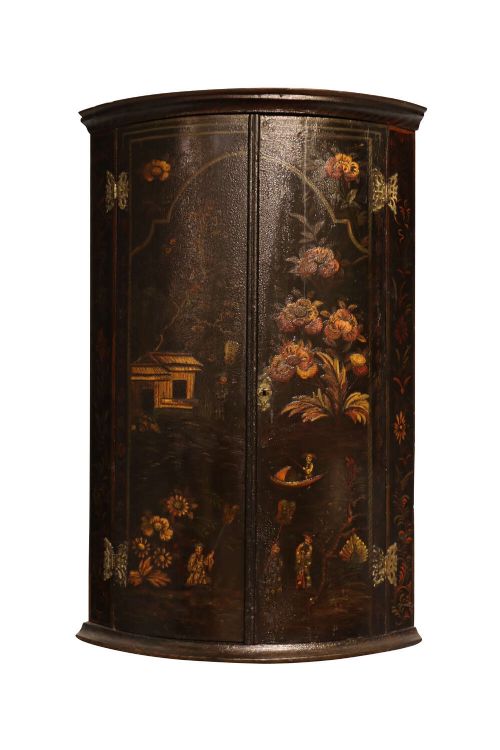


Gilded Black Lacquer Cabinet
A gilded black lacquer cabinet brings deep dark surfaces and golden detail into a room, joining centuries of Asian and European craft.
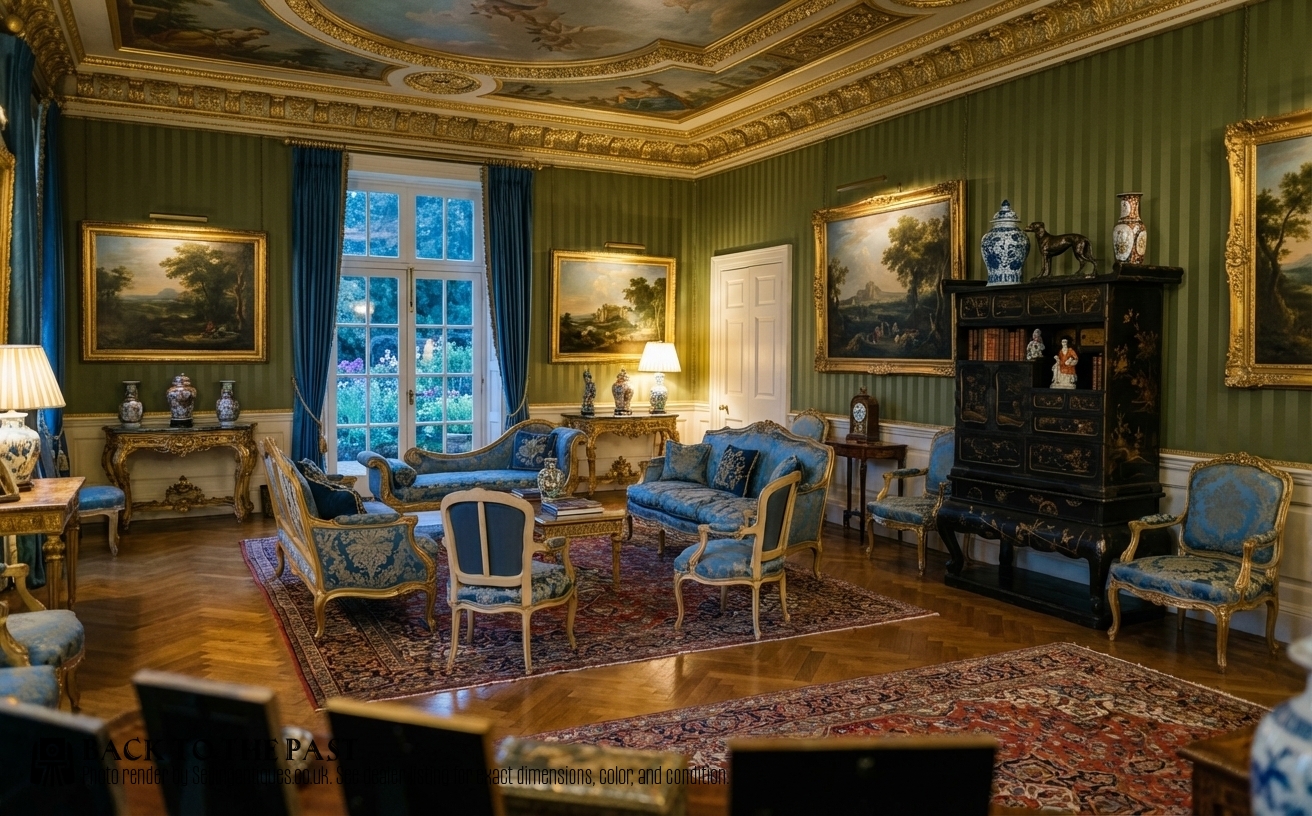
Gilded Black Lacquer Cabinet
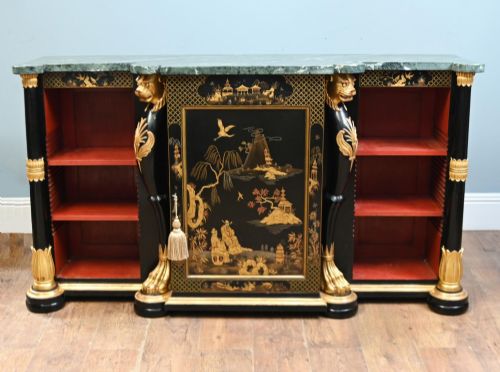
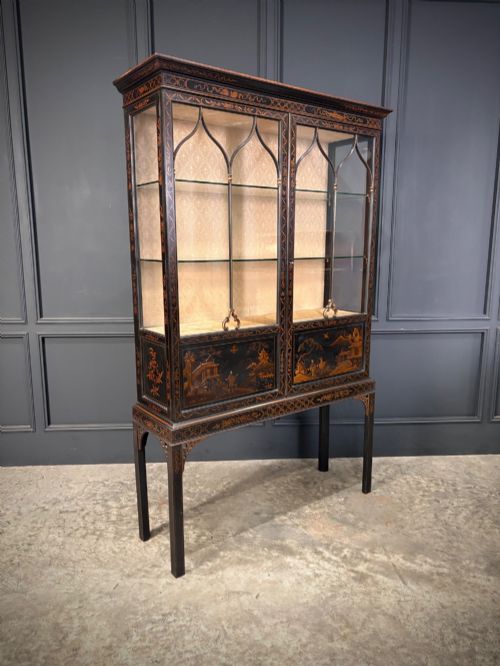
A gilded black lacquer cabinet encompasses a diverse group of storage pieces built across the seventeenth, eighteenth, nineteenth, and twentieth centuries. These works emerge from distinct global traditions, spanning Chinese export pieces, Japanese Meiji period shodana cabinets, and European adaptations in Chinoiserie, Regence, and Art Deco styles.
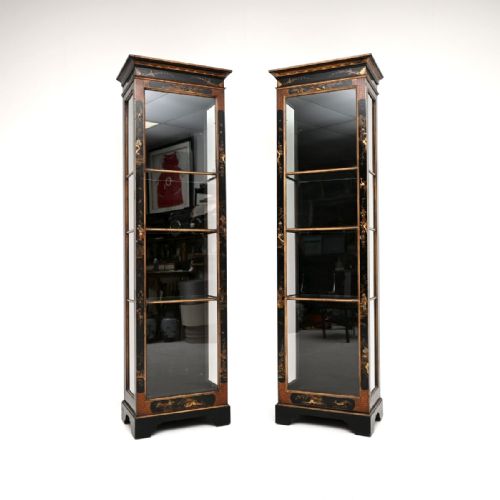
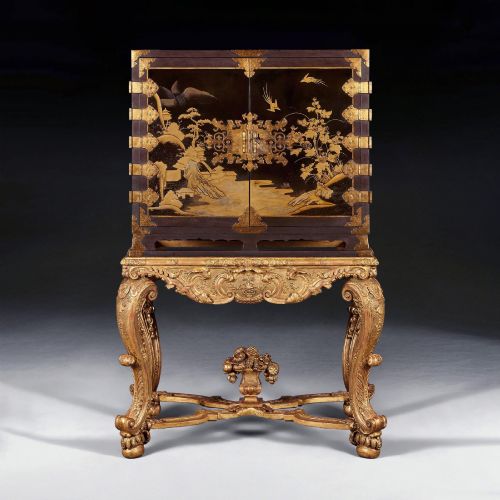
The forms vary widely to suit different domestic uses, ranging from large display cabinets on stands and corner cupboards to compact table cabinets, writing boxes, and drinks cabinets. Pieces from the seventeenth century often sit on elaborate stands, while later nineteenth-century examples include papier-mache stationery and jewellery boxes.
Buyers seeking this phrase encounter both grand architectural furniture designed for formal reception rooms and intimate table pieces intended for precious objects or correspondence. The decoration draws heavily on Eastern motifs interpreted through various historical periods, frequently pairing deep dark finishes with raised gold leaf or metallic painting.
How they were made
The construction of these pieces relies on wood carcasses or papier-mache bodies finished with dark lacquer coatings. Artisans built up multiple layers of lacquer to achieve a smooth, resilient foundation before applying surface decoration.
Gold leaf and gilded details provide the characteristic metallic highlights against the dark background. Master craftspeople utilised pen-work, inlay, and raised lacquer techniques to delineate intricate figurative scenes, landscapes, and floral patterns.
Canine companions appear unexpectedly guarding domestic treasures, as seen in nineteenth-century papier-mache jewellery boxes decorated with dog motifs.
What varies in quality
Quality reveals itself in the depth and execution of the lacquering and the precision of the gilding. Superior examples show crisp, detailed application of gold leaf and delicate brushwork that remains sharp across panels and doors.
The integrity of the underlying woodwork and the sophistication of the associated stands or mounts distinguish exceptional pieces from standard production. Cabinets paired with period stands, such as French Regence frames, demonstrate a higher level of historical design integration.
The Gilded Black Lacquer Cabinet Glossary
- Chinoiserie
- European decorative style reflecting Chinese artistic influences, popular in furniture and interior design across multiple centuries. This aesthetic inspired many of the black lacquer cabinets produced in Britain and Europe.
- Japanned
- European imitation of Asian lacquerwork created by applying layers of varnish and metallic dust. This technique allowed cabinetmakers to replicate eastern aesthetics using local timber.
- Shodana
- Traditional Japanese multi-shelved cabinet designed for displaying small objects of art. These pieces often feature asymmetrical compartments and intricate lacquer decoration.
- Papier-mache
- Composite material made from paper pulp or layers of paper bound with glue, pressed and dried into rigid forms. It provided a smooth base for lacquer and inlay in nineteenth-century boxes and small cabinets.
- Regence
- French decorative style bridging the classical seventeenth-century forms and the lighter Rococo movement. Stands from this period occasionally support imported Japanese cabinets.
Gilded Black Lacquer Cabinet: Frequently Asked Questions
How do I care for a lacquer cabinet?
Keep the piece away from direct sunlight and sudden temperature shifts to prevent the lacquer from drying or cracking. Dust gently with a soft, dry cloth without applying modern chemical polishes.
Maintain stable humidity levels in the room where the cabinet stands. Excessive moisture or dryness can damage both the wooden carcass and the delicate gold leaf decoration.
Where were these cabinets made?
The pieces originate from diverse workshops in China, Japan, and Britain, alongside other European centres. Asian pieces were frequently created for export markets or adapted locally upon arrival in the West.
European makers also produced their own interpretations using local timber and japanning techniques. This cross-cultural exchange shaped the wide variety of styles seen in the listings.
What is the difference between a table cabinet and a cabinet on stand?
Table cabinets are compact pieces designed to sit on top of desks, tables, or chests for storing small items like stationery or jewellery. They offer intimate storage without dominating floor space.
Cabinets on stands are larger architectural items elevated on dedicated wooden frames, which may be carved or gilded. These major furniture pieces function as standalone focal points within a room.
How can I tell an 18th-century piece from a 19th-century one?
Earlier pieces from the seventeenth and eighteenth centuries often feature deep japanning, hand-carved stands, and specific construction methods characteristic of period cabinetmaking. The materials and joinery reflect the hand tools and workshop practices of the era.
Nineteenth-century examples frequently incorporate alternative materials like papier-mache or reflect Victorian and Edwardian revivals of earlier Asian motifs. Examining the interior construction and hardware helps clarify the period of manufacture.