
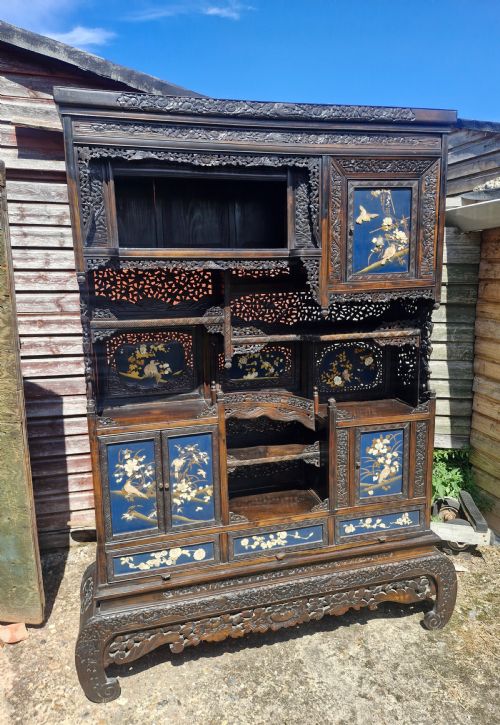


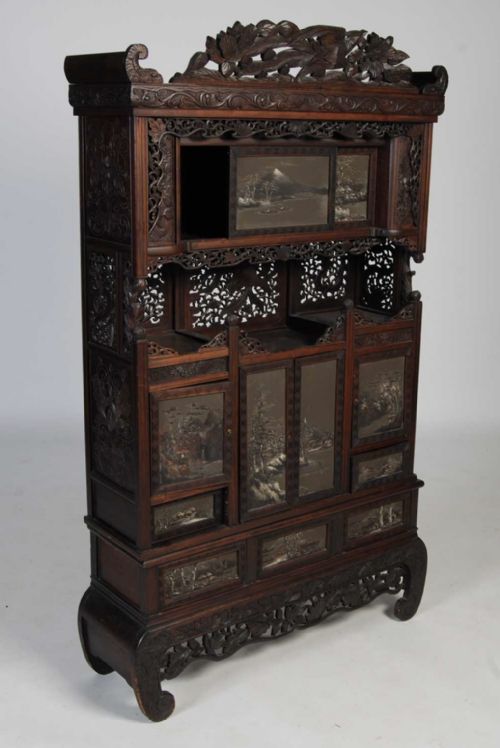


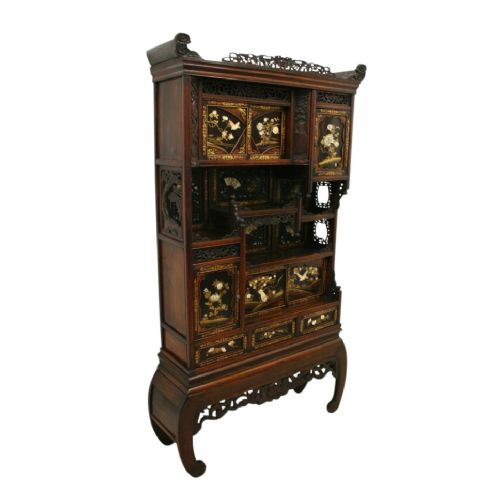

Japanese Shelf Cabinet
A Japanese shelf cabinet brings intricate woodwork and asymmetric display space into a room, offering a functional centrepiece for collections.
Japanese Shelf Cabinet
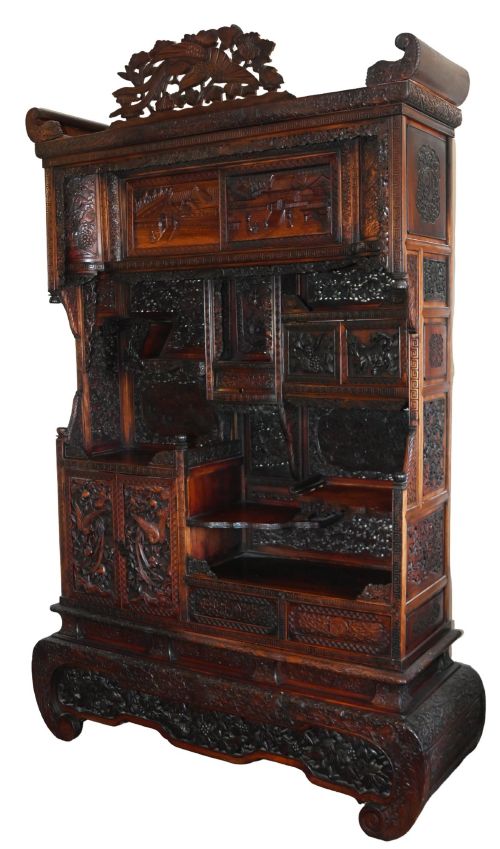
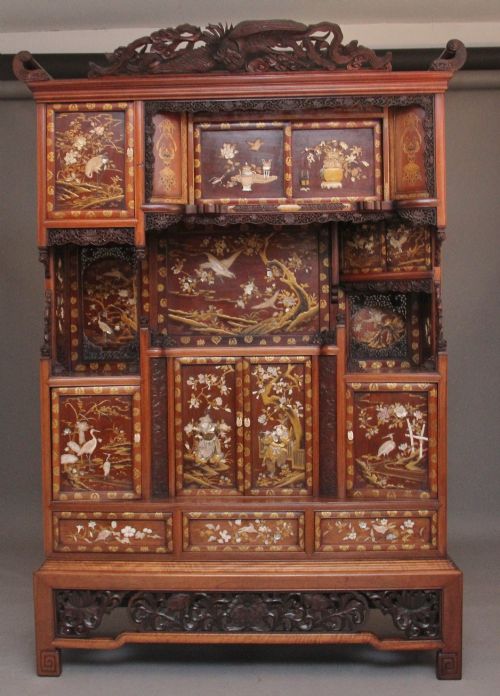
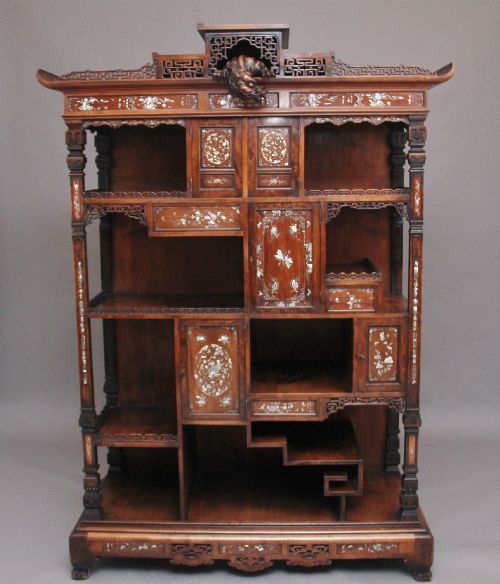
A japanese shelf cabinet encompasses traditional shodana cabinets and display pieces originating from the 19th Century, alongside European interpretations influenced by the Aesthetic Movement. These items serve as storage and display furniture, defined by tiered shelving and enclosed compartments.
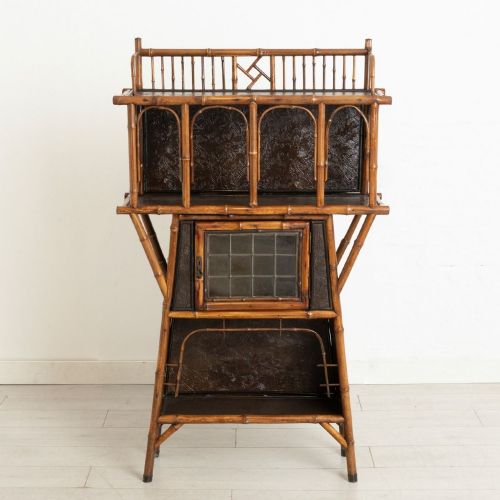
The pieces on this page are most commonly Meiji Period Japanese shodana cabinets or bamboo display cabinets from the late 19th century. Buyers encounter large decorative examples alongside refined pieces associated with London firms such as Liberty and Co.
Object types span display cabinets, cabinets and storage, and specific shodana forms on stands. They draw upon Japanese Meiji Period and Japonisme styles, reflecting international design exchanges of the period.
How they were made
Construction relies upon hardwood, bamboo, and wood frameworks designed to support complex tiered arrangements. Cabinet-makers utilised joinery techniques suited to intricate shelving and internal compartments.
Surface decoration incorporates lacquer, mother of pearl, mother-of-pearl, bone, and carved elements. These materials provide the contrasting textures and inlaid details characteristic of late 19th-century workshop production.
Even the smallest cabinet can contain enough tiny hidden shelves to lose your house keys permanently.
What varies in quality
Quality rests upon the precision of the carving, the execution of the lacquerwork, and the integrity of the structural joinery. Finer pieces demonstrate careful attention to detail in inlaid mother-of-pearl and bone elements.
The status of the design, such as attribution to noted makers like Leonard Wyburd for Liberty and Co, distinguishes standard commercial output from exceptional artistic productions of the period.
Leonard Wyburd for Liberty and Co
The Japanese Shelf Cabinet Glossary
- Shodana
- A traditional Japanese tiered cabinet featuring asymmetric shelves and small cupboards. These pieces were designed for displaying small objects of art.
- Meiji Period
- The era in Japanese history spanning from 1868 to 1912, noted for the export of fine decorative arts to Western markets. Pieces from this time often exhibit advanced lacquer and carving techniques.
- Aesthetic Movement
- A late 19th-century British design movement that championed art for art's sake and drew heavy inspiration from Japanese art. It produced furniture like bamboo display cabinets.
- Japonisme
- The influence of Japanese art and aesthetics on Western culture during the late 19th century. This movement shaped European cabinet-making and interior decoration.
- Mother-of-pearl
- The iridescent internal layer of mollusc shells used extensively for inlay work on lacquer cabinets. It adds reflective contrast to dark wood surfaces.
Japanese Shelf Cabinet: Frequently Asked Questions
What is a shodana cabinet?
A shodana is a traditional Japanese cabinet featuring stepped, asymmetric shelves and enclosed compartments. They were built to display ceramics, bronzes, and other works of art.
On this page, you will find examples dating from the 19th century, reflecting both authentic Japanese export work and British interpretations.
How were these cabinets used?
These pieces functioned primarily as display furniture for prized possessions in drawing rooms and parlours. The varied shelf heights accommodated objects of different sizes.
Today, they serve the same decorative purpose, providing characterful storage for ornaments and curiosities.
How do I style a japanese shelf cabinet?
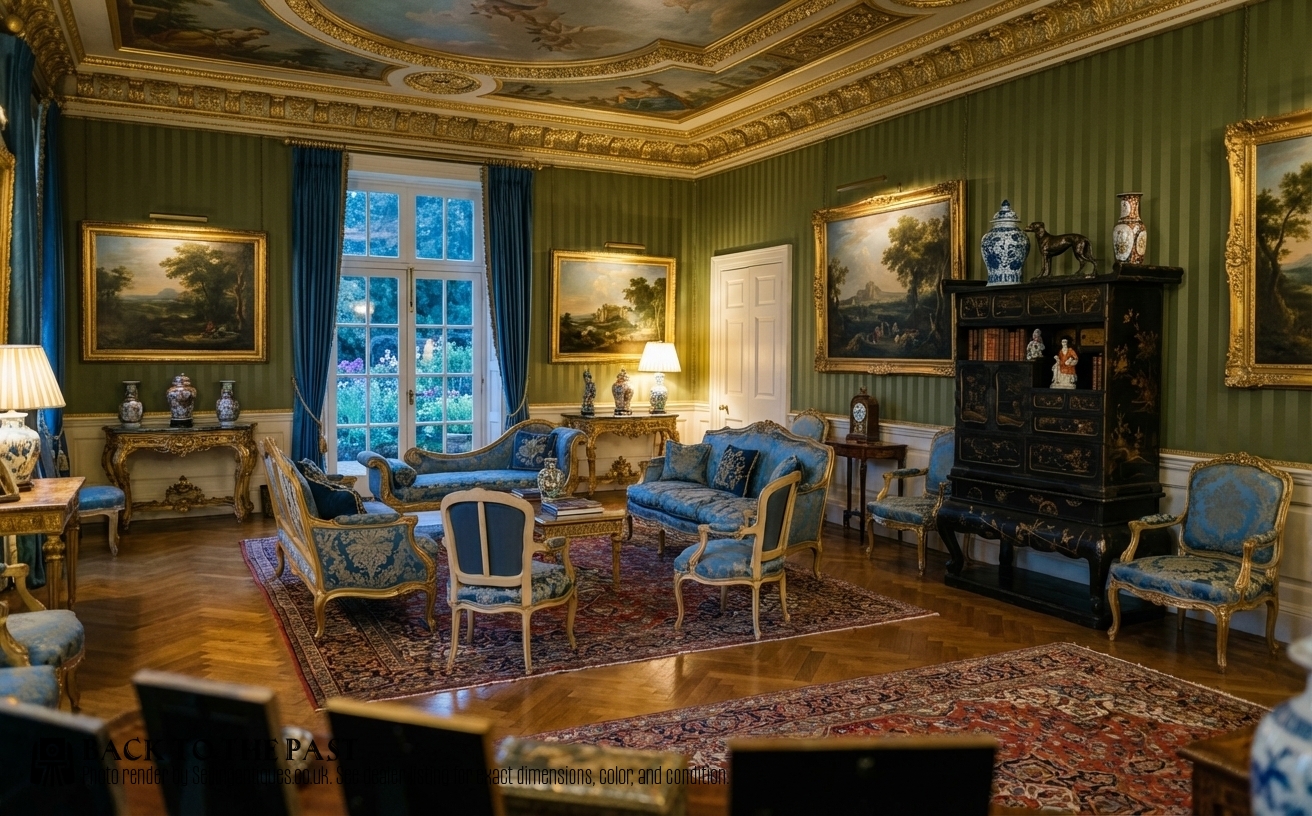
Place the cabinet against a plain wall to let the complex woodwork and asymmetric lines stand out. Avoid overcrowding the tiers so each displayed item remains distinct.
They work well in both traditional period settings and eclectic modern interiors as focal points.
How do I identify a Meiji period piece?
Meiji period pieces date between 1868 and 1912, often displaying intricate lacquerwork, bone inlay, and carved ornamentation. They reflect the high technical skill of Japanese workshops geared toward international export.
European pieces from the same era often utilise bamboo and draw on Aesthetic Movement ideals rather than traditional Japanese construction methods.